
Trump is reshaping global trade
The West is facing a historic turning point. The new American president’s policies and an intensifying global trade struggle are widening the gap between former allies and shifting the balance of power in the world economy. Caught in the middle, Norway faces important choices about trade, resources and future consumer influence.
March 27, 2025 | INTERNATIONAL POLITICS
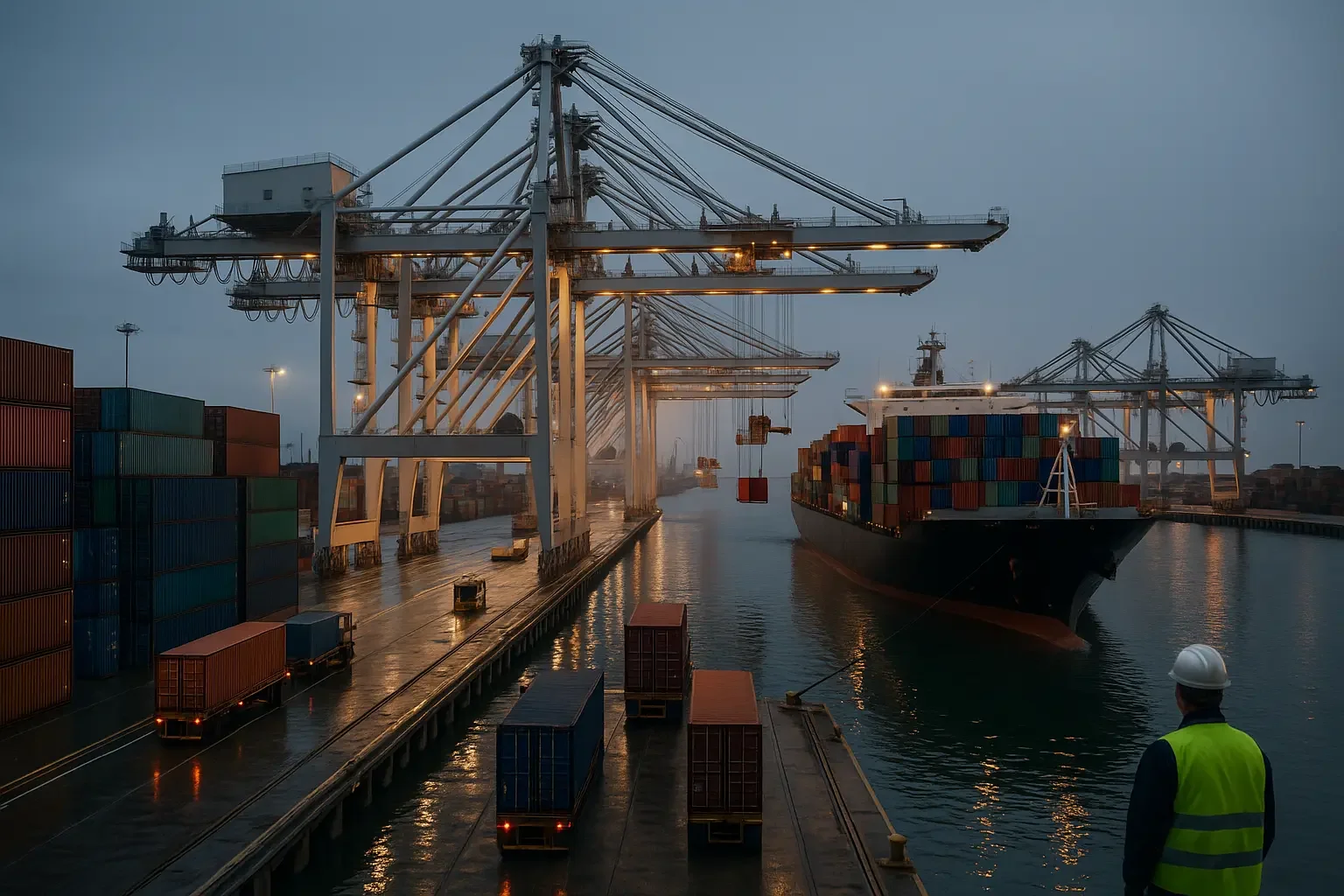
Image by AI/S&P
Trade war
Since the American president took office on January 20, the Western order as we knew it has begun to fray. The trade war is splitting the West between the United States on one side and Europe, Canada, Australia and New Zealand on the other.
Global trade changed significantly from 1978 to 2020. Until the mid-2000s, America’s main competitors were Germany and Japan. As online commerce surged around the turn of the millennium, China entered a period of enormous trade expansion. By 2008 China had overtaken the global market, continuing its rise until 2020, when it held 14.7 percent of world trade. The U.S. had only 8.1 percent, followed by Germany at 7.8.
Freight traffic
Seaborne cargo traffic has nearly tripled in the same period, fueling a surge in emissions. For comparison: in 2005 a single oil tanker polluted as much as the two million fossil-fuel cars on Norwegian roads. That puts things into perspective.
The US has been outmanoeuvred by China
The U.S. has been decisively outmaneuvered by China, which the president now sees as America’s primary adversary. Russia poses no real threat to the U.S. economy, while Putin has offered the U.S. minerals—something that explains Trump’s interactions with him. Without sufficient access to minerals, it will be impossible for the U.S. to take significant market share from China. This underpins Trump’s push for a mineral deal with Ukraine and his ambitions regarding Greenland and Canada.
The American president seems unconcerned about boycotts of U.S. goods; his goal is primarily a strong domestic market in which the country is self-sufficient in goods and services. High tariffs on foreign cars, for example, would lead to more American cars being sold. That is unlikely to worry either the president or the owner of Tesla, despite the widespread boycott of the American brand.
Norwegian exports
Norwegian exports go mainly to the United Kingdom and Europe – crude oil, gas and fish. In addition, large volumes of fish are exported to China and the United States. Norway has substantial deposits of rare earth elements, and these will become the country's next major export commodity. It does not appear, however, that Norwegian authorities recognize that the ongoing contest over minerals is a significant bargaining card.
SOURCES
United Nations
World Market, animated chartUnited Nations
World Trade and seaborn cargoStatistisk Sentralbyrå
Fossil-fuel cars in NorwayStatistisk Sentralbyrå
Norwegian export
Content on Society and Politics is based on reliable sources and actual events, providing a news-oriented perspective intented for further debate. To access the article’s author and the related debate, membership on Hudd is required.
