
Stoltenberg’s Book Has Many Words, but Little News
This week, the book titled On My Watch was published, covering Stoltenberg’s ten years as Secretary General of NATO. The book contributes little to world history, but it reveals a great deal about Stoltenberg himself. Perhaps not in the way he intended.
October 1, 2025 | INTERNATIONAL POLITICS
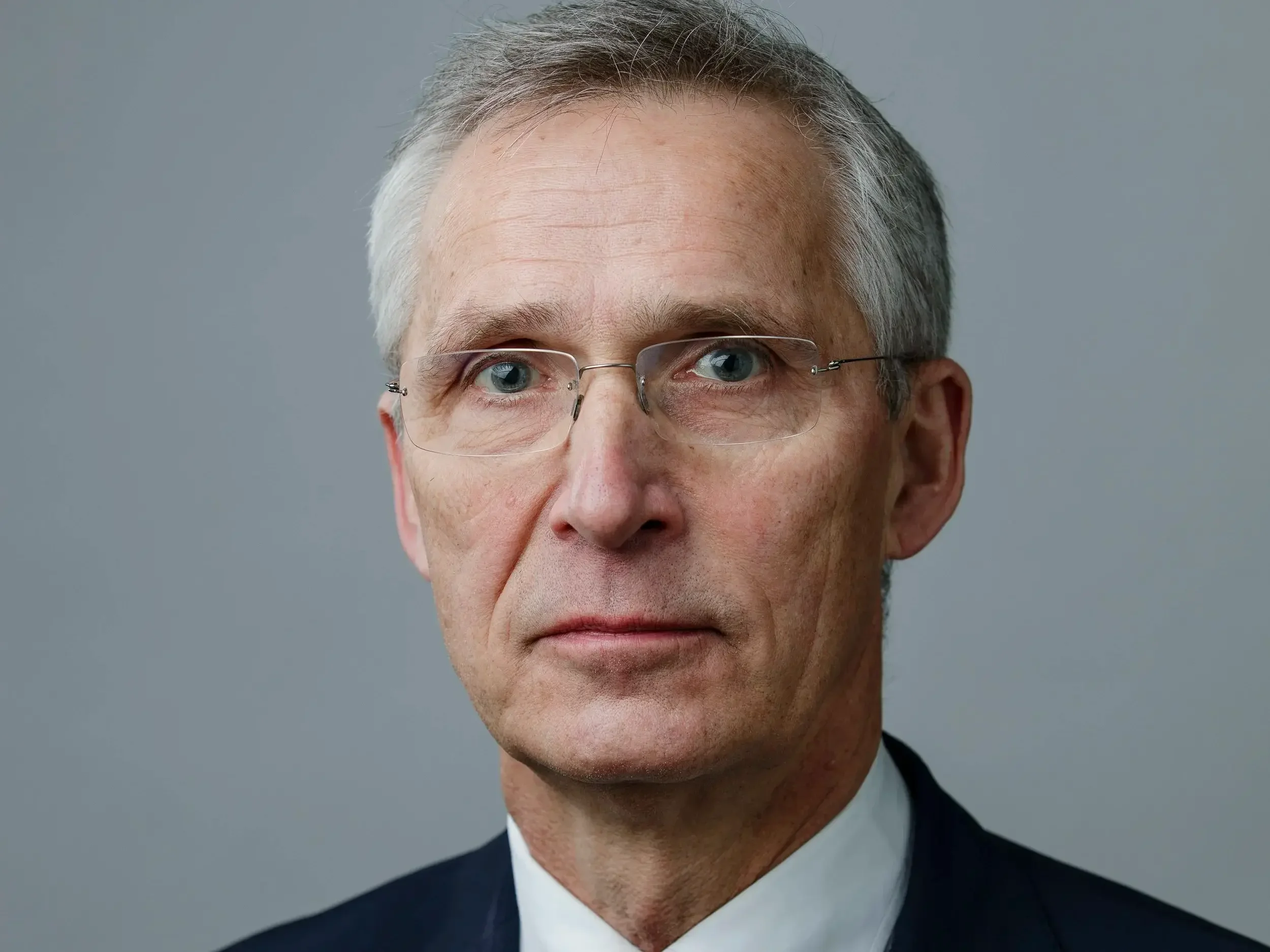
Image: Regjeringen.no, Torgeir Haugaard / Forsvaret
There is little resembling suspense in this book; if anything, it lies in the transcripts of conversations and meetings with U.S. President Donald Trump. Let us be clear: the book is boring. Following the news over these years has been far more exciting. The book refers to Trump’s conversations and speeches, which contain the same as what he conveyed on TV. Stoltenberg was NATO chief from 2014, Trump assumed the presidency in January 2017 and held office until 2021, when Joe Biden took over. Stoltenberg continued as NATO chief until 2024 and returned as Norway’s finance minister at about the same time Trump became president again at the beginning of this year.
The only thing in this book that may have some news value is that Trump, early in his first presidential term, suggested that if Norway did not want to pay the 2% of GDP he demanded from all NATO countries, a graded membership could be an alternative. This was an idea Trump had, not necessarily only for Norway, but one he thought could be a good solution for several countries. It is therefore incorrect what has appeared in some media in the past few days—that Trump wanted to kick Norway out of NATO.
Stoltenberg describes how, already from 2014, there were demands from the U.S. and President Obama that member states must increase NATO’s budget to 2% of GDP. An agreement was made that this should happen within ten years. In this context, one must take into account that in 2014 tensions rose between Russia and Europe as a result of Russia’s annexation of Crimea from Ukraine. In fact, it emerges that the U.S. demand for greater contributions from member states dates back to when NATO was established in 1949. Stoltenberg makes no secret that, as NATO Secretary General, he supported the U.S. demand; the challenge was persuading the other NATO members to do the same. This is where Trump’s method created resistance. His style was direct and demanding, far from normal diplomatic rules. He used every opportunity to point out that EU countries had to contribute more. He was particularly irritated with Germany. He threatened to withdraw the U.S. from NATO, and confrontations arose where Stoltenberg describes how he calmed down situations that occurred to a greater or lesser degree at every NATO summit.
Stoltenberg sticks to facts and gives seemingly sober descriptions of what happened. As mentioned, most of this is already known through other channels. What is more interesting is how Stoltenberg describes his own role and how he thinks.
Stoltenberg writes that he did not expect Trump to be elected president. When it nevertheless happened, he instructed NATO staff to refer to the president respectfully and did not allow jokes about Trump. His view was that the staff was there to gain Trump’s trust. Stoltenberg led by example; he says he praised Trump to win his trust. He even coined the term “The Trump Effect,” giving Trump credit for increased NATO contributions—even though this had been a NATO demand for years. Another method was that instead of presenting a country’s contribution as a percentage of GDP, he gave the amount in currency, since it sounds larger than a percentage. Methods that, according to Stoltenberg, worked well on Trump. Furthermore, Stoltenberg used the same flattering approach when speaking in the U.S. or being interviewed by American media; he praised Trump even though he knew it could irritate Democrats and later contributed to Trump’s re-election.
Another of Trump’s pet issues during his first presidential term was the Nord Stream gas pipelines from Russia to Germany. The U.S. president could not accept that Europe, in this way, helped finance Russia. But the EU member states would not make changes; some believed trade with Russia made Putin more friendly, others thought cutting gas supplies would have too great consequences for their own countries. Stoltenberg writes that Norway supported Nord Stream because it established infrastructure that Norway could connect to in order to sell more gas to Europe. It appears in the book as if Stoltenberg remained neutral on the matter on NATO’s behalf.
Stoltenberg tells about his upbringing and youth at home with Karin and Thorvald, the latter serving twice as foreign minister and once as defense minister (Labour Party). For Stoltenberg, it was so natural to socialize with politicians, diplomats, and even Russian intelligence that he only later in his NATO role realized it was special.
Stoltenberg describes himself as conflict-averse, something his father considered a good trait for a NATO leader. The world needs more leaders who are conflict-averse, Thorvald reportedly said, and Stoltenberg describes it as his strongest quality. His weakest quality, impatience, he claims was trained and improved during his time as NATO chief. He has learned to enjoy polishing sentences in diplomatic ways and now believes that a comma can change the world.
He further describes how he changed his position on cluster munitions. He says he was relieved when the U.S. sent cluster bombs to Ukraine as NATO countries’ other weapons stockpiles were being depleted. This, despite the fact that as Norway’s prime minister, he was the first to sign a declaration banning cluster munitions.
In other areas too, he has changed during this period. He values luxury after living in the grand residence with three staff in Brussels. He also describes entering historic buildings and halls, and what it feels like to give speeches where great leaders have spoken before him. He writes what they said in their speeches and what he said in his. It is hardly intended, but it can be perceived as both starstruck and as if he wants to place himself in the line of great leaders.
Stoltenberg was born in 1959 and describes how, through his parents and the Cold War, he has a relationship with World War II. He also describes his ties to Russia and Eastern Europe, which he wished to use as NATO chief. But his desire for dialogue with Russia met resistance. As mentioned above, Russia annexed Crimea the year Stoltenberg became NATO chief. Few believed in dialogue, some warned against it. He nevertheless persuaded them to try. To Trump, he said it was possible to have a dialogue with Putin, something he had good experience with as Norway’s prime minister. Stoltenberg got enough support to attempt dialogue with Russia, but it was torpedoed when he had to expel NATO delegates from Russia who had been exposed by the CIA as intelligence officers. This ended with Russia recalling all its NATO delegates, and the dialogue ceased. Putin, for his part, mocked Stoltenberg and said he had not been senile when he was prime minister of Norway. The book does not mention what damage may have been caused to NATO by having Russian delegates at a time when relations between Russia and NATO shifted from acceptable to tense.
In the book, Stoltenberg describes several situations where he avoids answering direct and uncomfortable questions, either because he did not want to or could not answer. This applied both to heads of state and to journalists. It would have been nearly impossible for Stoltenberg not to mention this in the book; otherwise, he could have been accused of lying. By laying out events as he does, he simultaneously reveals what actually happened. Some of these situations look bad; he withheld actual information and responded with evasions to direct questions. He actually does the same in the book, twisting it into being a good skill—his ability to avoid answering.
He also describes how he prioritized work over family, which meant that Ingrid, his wife, had to change her career plans along the way. Each time, he reportedly sold new positions as if they were only temporary. He is not a feminist, even if he, as a Norwegian politician, likes to present himself as one. Ingrid, for her part, participates in Stoltenberg’s work by socializing with and visiting other heads of state socially. Stoltenberg does not hide that personal relations and social gatherings play a role in political and diplomatic work, something he describes in relation to convincing Turkish President Erdogan to accept Sweden as a NATO member.
Throughout the book, Stoltenberg draws lines from his early socialist project and belief in lasting peace between East and West, where trade was an important factor. He also notes that China has achieved what no one thought possible: that a communist state could develop a market economy and become the most powerful trading partner in the world.
It is, however, striking that Stoltenberg hardly mentions the two major drivers of the geopolitical situation: minerals and China. He does not mention how important and central Ukraine’s mineral resources are for the EU, NATO, the U.S., and Russia. The areas Russia has occupied in Ukraine are rich in critical minerals essential for weapons production. The EU imports about 80% of its mineral needs from China due to a lack of resources on its own continent. Regarding China, Stoltenberg does write that they support Russia’s war by providing technology and weapons, but he does not mention that they also supply critical minerals to Russia and restrict mineral deliveries to Western weapons production. Stoltenberg only gives a brief account of how NATO has recognized the threat from China and implemented various programs, but not at a level that inspires confidence.
Finally, let us return to Stoltenberg’s early time as NATO chief. He was invited to the European Council to give a speech on defense security, a gathering of EU heads of state and government. Stoltenberg said to them: “No one in this assembly has fought harder for the EU than I have.” Some looked puzzled. He continued: “Norway is the only country in the world that has managed to negotiate a membership agreement with the EU only to vote it down—not once, but twice. Both times I participated with zeal and commitment on the losing side.”
NATO and the EU had no history of cooperation when Stoltenberg became NATO chief. Stoltenberg agreed with the EU’s two top leaders, Jean-Claude Juncker and Donald Tusk, to strengthen cooperation. They would regularly attend each other’s summits and hold informal working dinners. During Stoltenberg’s time, the relationship between NATO and the EU grew much closer, something that also created friction within the EU. Some countries, such as France, Germany, and Italy, wanted to build an alternative to NATO, something Stoltenberg advised against because he believes it is impossible. He does not explain why, but this is where the access to critical minerals comes in. One may ask why Stoltenberg does not elaborate on this in the book, but the obvious conclusion is that it would stand in the way of Stoltenberg’s own ambitions.
It is quite clear, both from this book, Stoltenberg’s career path, and years of relationship-building with EU leaders, that Stoltenberg has replaced his original socialist project with the EU project. There is a fundamental belief in large international communities and organizations behind everything Stoltenberg does. This must be seen in connection with Stoltenberg’s ambition for Norway to become an EU member. That the Labour Party keeps the EU debate away from the Norwegian people is nothing but strategy; the majority in Norway still opposes EU membership. Few realize that we are already rushing into the EU through the EEA agreement. It may prove a major mistake that Norway does not discuss other alternatives like the UK, especially from a security perspective.
The final and decisive step in EU implementation will come during this parliamentary term, when the Labour government has on its agenda the introduction of the EU’s mineral regulation CRMA, which will give the EU authority over valuable critical minerals on Norwegian soil. Trump wants both a mineral and weapons deal with Norway. Stoltenberg’s and the Norwegian Prime Minister Jonas Gahr Støre’s EU ambitions are the real reason why Norway has not entered into a tariff agreement with the U.S. that would allow Norway to achieve military security independent of NATO. Read more about the mineral situation here.
Stoltenberg is not a visionary politician and, in that sense, has no significance for geopolitics and history; rather, he is a tool for strong leaders who set the direction. Nevertheless, Stoltenberg may end up as an EU leader. Ideally, it should be a problem for Stoltenberg that, through this book, he has revealed double standards in many areas. Stoltenberg is a man who says what he must to achieve what he wants, and he believes he is entitled to do so.
The book largely explains why Stoltenberg returned to Norway as finance minister. He must keep himself relevant and maintain close relations with EU leaders to achieve his personal ambition. His supporters should seriously consider whether Stoltenberg is leading Norway in a direction that actually secures the country in the way they believe.
Stoltenberg, for his part, has high thoughts of himself. He is pleased with his own strategy and believes that he kept NATO together. He even writes that NATO was stronger when he left than when he took over. Many would disagree, pointing out that while European countries have increased both defense budgets and weapons production, the credit largely belongs to the United States.
That the book is being published the same week that NRK, Norway’s state broadcaster, is airing a three-part documentary about Stoltenberg and NATO is no coincidence. The whole thing appears to be profiling Jens Stoltenberg.
SOURCES
Gyldendal
På min vakt
Content on Society and Politics is based on reliable sources and actual events, providing a news-oriented perspective intented for further debate. To access the article’s author and the related debate, membership on Hudd is required.
