
Australia Secures Its Position as Norway Falls Behind
Trump’s deal with Australia sharpens the global race for critical minerals. Norway, led by Prime Minister Jonas Gahr Støre, remains passive — making the country exposed. At home, Støre faces mounting criticism over broken promises and weak leadership, while his partner, Finance Minister Jens Stoltenberg, keeps a low profile.
October 21, 2025 | INTERNATIONAL POLITICS
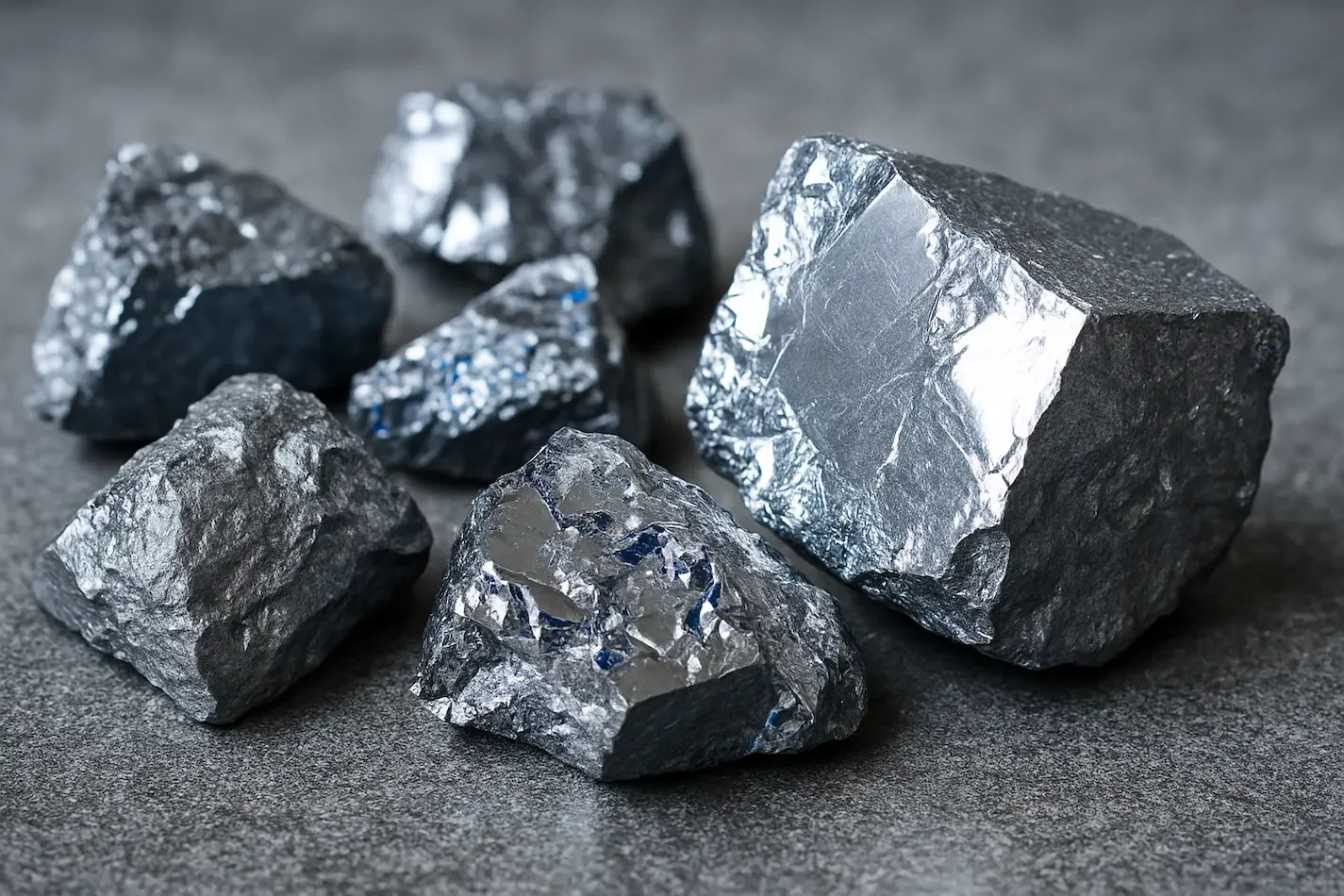
Image by AI/S&P
Norway is still sitting on the fence
The Norwegian government, led by Prime Minister Jonas Gahr Støre, has yet to act to safeguard the country’s mineral industry and defense security through a trade agreement with Trump. The time window for Norway may be closing.
Today, the U.S. president signed an agreement with Australian Prime Minister Anthony Albanese on joint investments in the mineral sector and simultaneously approved the delivery of submarines to Australia. Trump stated: “In about a year from now, we’ll have so much critical mineral and rare earth elements that you won’t know what to do with it.”
The Labour government is putting Norway at risk
The government has placed Norway in a highly vulnerable position, something few Norwegian citizens are aware of. Critical minerals are Norway’s key bargaining chip with Trump, but that leverage will disappear if he secures sufficient supplies elsewhere. The prime minister plans to transfer control over Norway’s mineral resources to the European Union through a regulation known as the Critical Raw Materials Act, under which the EU will provide investment and facilitate foreign capital, read more here. Norway does not require outside financing to develop its mineral industry, unlike many other nations. The state has the Norwegian Sovereign Wealth Fund, which should be used to secure future revenues from national resources, following the proven model of Norway’s oil industry and the fund itself. It remains unclear why Støre has decided against using the fund for this purpose, as he keeps his cards close to his chest and shows little transparency as a leader.
European mineral shortage
Society and Politics has published several analyses on Europe’s growing dependency on critical minerals, read more here. China holds the world’s largest mineral reserves and has maintained an almost total monopoly over many rare earth elements and strategic raw materials. This dominance has given Beijing both economic and military leverage — the latter because these materials are essential for the production of modern weapons systems. To strengthen U.S. global influence, Trump must alter this balance and secure a stable supply of minerals for both civilian and defense industries. He has signed mineral agreements with other countries, launched new extraction projects on U.S. soil, and invested in foreign mining companies, including in Canada.
Europe now finds itself in a precarious position and aims, through large-scale development, to achieve 35% self-sufficiency in critical raw materials by 2030, the bulk of which is to come from recycling. There are simply not enough mineral resources within Europe for the continent to become self-reliant.
Even if the EU meets its production targets, the bloc faces a serious challenge: the 2023 strategy did not account for mineral demand in a wartime scenario. There are no public figures showing how great that demand would be or how much Europe could supply domestically, but it is likely a very small share, given that the EU currently imports between 80 and 90 percent of these materials from China.
Europe's dependence on the US in NATO
This year’s developments have left NATO with a significantly weakened defense capability without the United States. Trump has not personally reaffirmed his commitment to Article 5 of the NATO Treaty — the cornerstone of collective defense — but has instead pledged to supply weapons under arms agreements, as he did during his speech to the United Nations in September.
While the Norwegian government has yet to negotiate a trade deal with the United States that could strengthen the country’s defense security, Trump has now signed a mineral agreement with Australia. Although Trump’s remark was bold — it takes many years to establish new mineral operations — the window of opportunity for Norway is shrinking with each new agreement or measure he initiates. It may have been this that Trump referred to when, during a press conference following the peace agreement in Egypt, he remarked: “What happened to Norway?” Norway’s prime minister left before the press conference, where the other heads of state participated, telling Norwegian media that he needed to return home in time for the opening address to Parliament.
The Norwegian government has made a series of missteps in recent months, read more here. Last week, it faced strong criticism for breaking election promises after presenting next year’s national budget, read more here. It appears that the leadership duo, Prime Minister Jonas Gahr Store and Finance Minister Jens Stoltenberg, have lost control of both public administration and national security. Public trust has eroded — and the consequences for Norway’s security could prove far more serious.
SOURCES
European Union
Critical Raw Materials Act (CRMA)The White House
President Donald Trump’s Address to the United Nations General Assembly, September 2025The New York Post
Trump asks “What happened to Norway?”
Content on Society and Politics is based on reliable sources and actual events, providing a news-oriented perspective intented for further debate. To access the article’s author and the related debate, membership on Hudd is required.
