
The Conservative Wave Has Reached Norway
The rise of conservatism is no longer just an American phenomenon. It is reshaping Norwegian politics, deepening divisions, and raising questions about the role of religion in public life.
September 15, 2025 | NORWEGIAN POLITICS
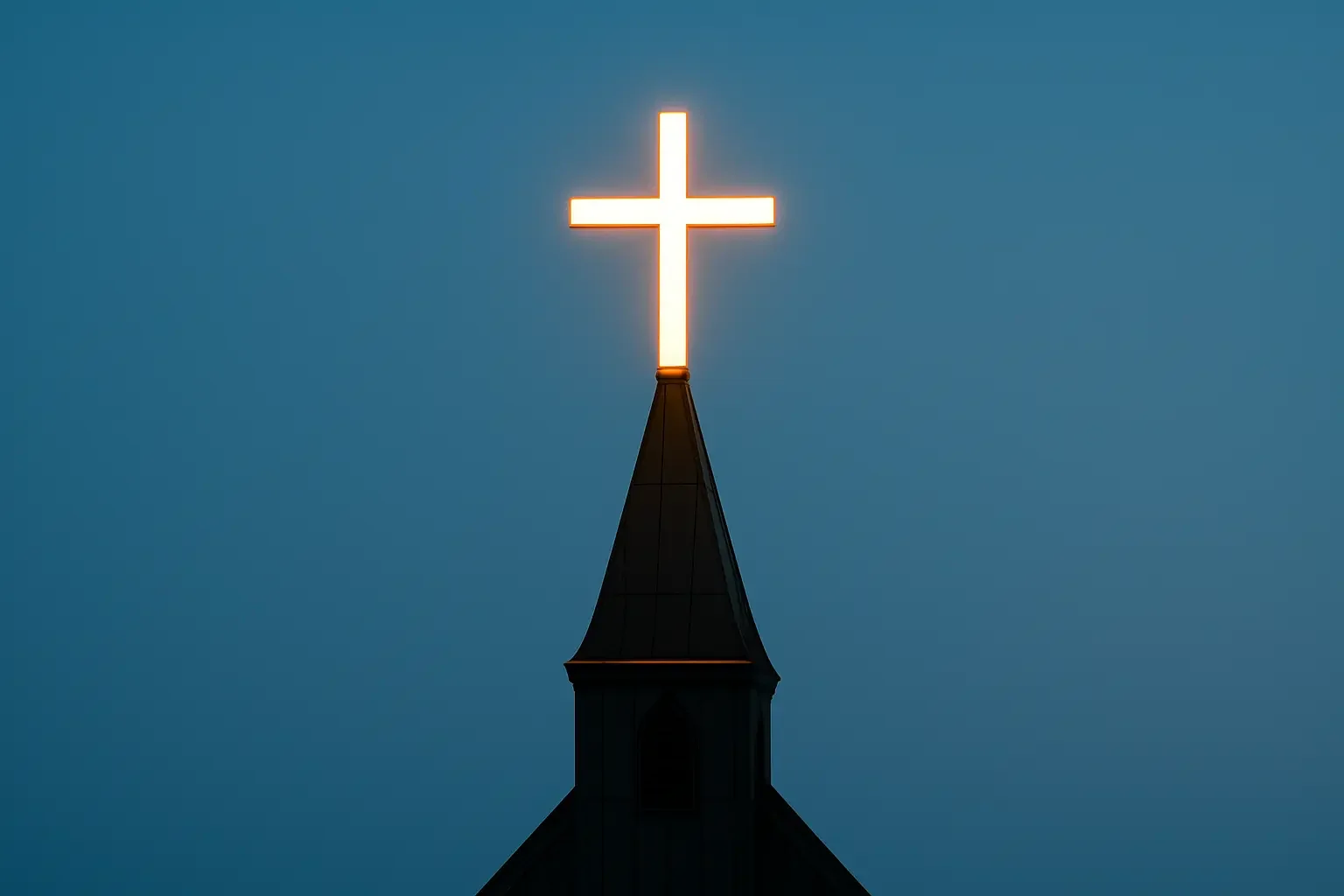
Image by AI/S&P
In today’s public debate, many different political terms are thrown around, making it difficult to arrive at a shared understanding. For clarity, let us outline the spectrum: at the far right we find right-wing extremism, followed by conservatism and then capitalism. On the far left, we encounter left-wing extremism, then radicalism and finally socialism. This framework helps describe where a given policy falls on the left–right scale. Other terms are also in circulation, but it is worth noting in particular that the Norwegian party Venstre defines itself as liberal.
Our focus here is conservatism, the opposite of radicalism. Conservatives will often argue that radicals are more extreme than they are, but this is not the case by definition. The conservative wave has, however, intensified polarization between the political wings.
In an earlier article here on Society and Politics we highlighted five belief systems: religious, philosophical, political, economic and scientific. These systems are interconnected, shaping the lives we lead and the choices we make, read more here. Conservatism is rooted in Christian values, representing a politics in which a religious belief system is given significant weight. In the United States, the conservative wave helped carry Donald Trump to the presidency, and it has also contributed to America’s support for Israel in the war against Palestine.
The results of Norway’s parliamentary election show a marked advance for conservatism here as well. The Progress Party (FrP) achieved its strongest result ever, while the Christian Democratic Party (KrF) survived the electoral threshold by returning to its conservative roots. The murder of conservative political activist Charlie Kirk in the United States last Wednesday will likely fuel both conservatism and polarization, not only in America but also in Norway.
Below we reference an interview from TV Visjon Norge with Christian Democratic leader Dag Inge Ulstein, recorded on April 4 this year. In preparing this article, we revisited the interview and were struck by the religious framing and rhetoric. It is sharper than the impression left by mainstream media during the election campaign.
Conservatism is cause for concern. Not because of religion in isolation, but because a religious belief system comes to define politics.
SOURCES
Det Store Norske Leksikon
ConservatismDet Store Norske Leksikon
RadicalismDet Store Norske Leksikon
Liberalism
Content on Society and Politics is based on reliable sources and actual events, providing a news-oriented perspective intented for further debate. To access the article’s author and the related debate, membership on Hudd is required.
