
Jens Stoltenberg is not the same politician who left
Just a few months after returning to the Labour government as Minister of Finance, Stoltenberg appears to be an undemocratic politician
May 26, 2025 | NORWEGIAN POLITICS
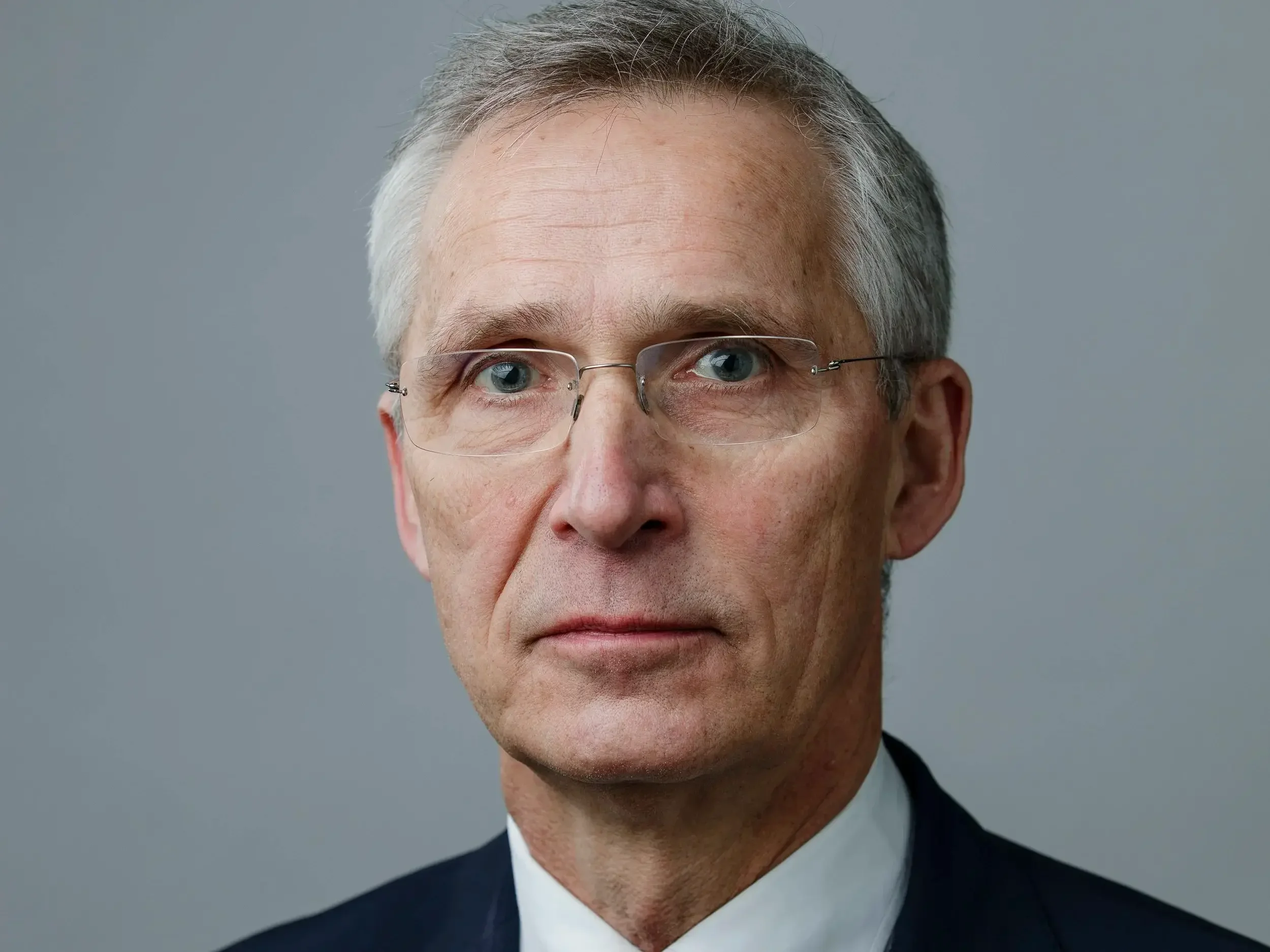
Image: Regjeringen.no, Torgeir Haugaard / Forsvaret
Stoltenberg was popular and respected
When Jens Stoltenberg stepped down as Prime Minister in 2013, he was a popular and respected politician. After ten years as one of the world’s most powerful leaders in NATO, this perception was reinforced. Jens Stoltenberg was received with enthusiasm when he became Minister of Finance in February. In these strained times, many find it difficult to see Jonas Gahr Støre, Erna Solberg or Sylvi Listhaug as national leaders with authority—regardless of political stance.
Back in 2013, Stoltenberg was perceived as a representative of the people and enjoyed broad support as Prime Minister. He was regarded as a politician who respected and safeguarded the democratic principle of public influence. His popularity was likely shaped by his impressive political career and his handling of the terrorist attack against the Labour Party in the government quarter and at Utøya in 2011.
Strategic maneuvering over minerals
Things quickly slipped for Stoltenberg. After just under a month, he began to claim that Norway could end up outside the EU’s tariff wall as a result of the trade war, something he calls a “triple squeeze.” We were also warned that Norway would be at the back of the queue to negotiate with the United States, which was unlikely given that Donald Trump wants mineral supplies from Norway. Indeed, Prime Minister Støre and Finance Minister Jens Stoltenberg met the American president in Washington as early as April 24.
After the much-publicized meeting, it is no longer claimed that we are at the back of the queue; now it is said that further tariff negotiations are pending. This effectively means that the government does not want to enter into a trade agreement with the United States because the Labour Party’s policy is to follow EU policy. The central point is that the Labour Party wants to grant control over Norwegian minerals to the EU in a regulation called CRMA. The government announced this in a press release on March 28, just days before the meeting with Trump, and the significance of this went unnoticed by the Norwegian press.
To deflect from illogical actions that are a result of the government’s uncommunicated strategy, the “triple squeeze” scenario is being used. In reality, a triple squeeze is impossible because it is clearly stated in Article 10 of the EEA Agreement that tariffs between the EU and EEA countries are prohibited. The EU cannot keep Norway outside a tariff wall, so why is Stoltenberg bluffing to the Norwegian people? And even more interestingly, why does he get away with it?
Undemocratic and authoritarian
Let us look at the situation concerning the sovereign wealth fund and Palestine. The UN states in a letter to Stoltenberg that 6.9% of the fund is involved in companies that support or enable serious violations of international law in Palestine. Over the past month, 50 organizations have demanded that the fund withdraw investments from the illegal occupation of Palestine. Furthermore, SV, Rødt and MDG put pressure on Stoltenberg during question time in the Storting last Wednesday. Behind them stand 58% of Norway’s population who recognize Palestine as an independent state. Nevertheless, a seemingly unaffected Stoltenberg told Morgenbladet last Friday that the current ethical guidelines for the sovereign wealth fund are sufficient. Why is Stoltenberg ignoring elected representatives and organizations that represent the people?
Stoltenberg in 2025 behaves as though he, by virtue of himself, knows better than the general public and is therefore not obliged to listen to the people. He appears authoritarian (the definition of authoritarian is to decide over others without a factual reason or justification).
The change in Stoltenberg is confirmed by research
The change in Stoltenberg is not as surprising as one might think. It is confirmed by research on how power can alter a person’s character (see links to relevant research below). It will be interesting to follow how long Stoltenberg can hide behind past achievements before the press and voters expose his new political behavior.
SOURCES
Europalov
EEA Agreement Article 10Regjeringen (Norwegian Government)
Press release on incorporation of the EU’s Critical Raw Materials Act (CRMA)National Library of Medicine
Research on the effects of power
Content on Society and Politics is based on reliable sources and actual events, providing a news-oriented perspective intented for further debate. To access the article’s author and the related debate, membership on Hudd is required.
