

Norwegians lost 3.7 healthy life years in 8 years
Although Norway spends more on health per inhabitant than other EU countries, spending is only mediocre relative to GDP. This is reflected in Norwegians' health: the number of healthy life years fell by almost four in eight years.
April 7, 2025
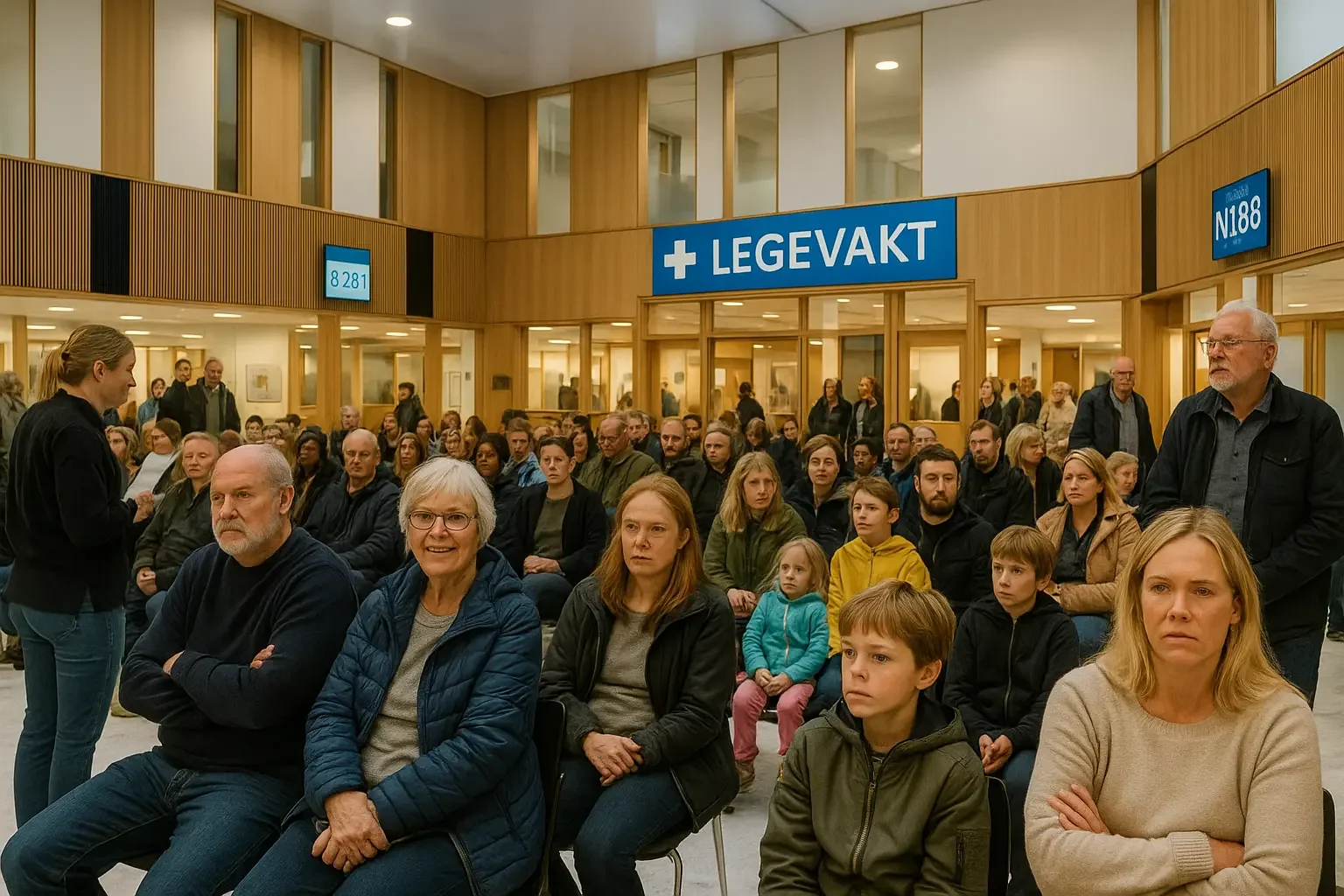
Image by AI/S&P
Europe's most expensive healthcare system
Today is World Health Day, a good occasion to take a closer look at the Norwegian healthcare system. What follows is an overview taken from Eurostat, the EU's own statistical office. The most recent figures available are from 2022.
Norway spent more public funds per inhabitant on health than any other country in the EU/EEA that year, yet we were only in 17th place (out of 33) in spending as a share of gross domestic product. That means healthcare in Norway costs more per head than in the other countries. This does not, however, mean that Norway covers a larger share of inhabitants' health expenses; we are roughly at the average when it comes to out-of-pocket payments.
Mediocre health services
Among the European countries...
Norway spends an average share of its funds on medical treatment and rehabilitation, more on long-term care places, but strikingly little on medical equipment.
Norway performs fewer operations per inhabitant in total than the average; further, the number of keyhole operations is the third lowest per inhabitant in Europe.
Norway has slightly fewer hospital days than the average, and the length of stay has fallen in recent years. Somewhat more men than women are treated.
Norway has an average number of doctors and slightly above average number of midwives. We have by far the highest number of nurses, fully 78.5 per 100,000 inhabitants, with Finland next at 67.5.
The population's "healthy life years", that is, the number of years a person is in good health, fell from 71.1 to 67.4 between 2014 and 2022, almost four years. Women are hardest hit by this decline. It cannot be related to the pandemic, since half of it came before the pandemic and countries that were hard hit came out better than we did — such as Spain and Italy.
Points to systemic failure
From 2020 until now, the Norwegian System of Patient Injury Compensation has received more than 37,000 cases. The Patient and User Ombudsman received 17,723 enquiries last year.
On the basis of the above, it can be concluded that the Norwegian healthcare system is in poor health. This has nothing to do with the people who work in the healthcare system. The high number of nurses in Norway is probably because we have more long-term care places and are more poorly equipped. In that sense, it seems the nurses carry the Norwegian healthcare system on their shoulders.
There is much to suggest, and not only in this sector, that this reflects a systemic failure in the Norwegian bureaucracy. It is a sore point to raise, but both the state and Norwegian municipalities need standardisation and greater efficiency.
The ministries are led by cabinet ministers who set the direction. The systemic failure may stem from a lack of both insight and competence among the ministers, but it may also be because the issue is so inflamed that the political parties do not dare to tackle it.
SOURCES
EU Eurostat
Healthy life yearsEU Eurostat
Healthcare expenditureEU Eurostat
Hospital discharges and length of stayEU Eurostat
Surgical operationsNorwegian System of Patient Injury Compensation
Statistics for health personnelThe Patient and User Ombudsman
Annual report
Content on Society and Politics is based on reliable sources and actual events, providing a news-oriented perspective intented for further debate. To access the article’s author and the related debate, membership on Hudd is required.