
LO and the Progress Party clash over support for the green transition
Both the Norwegian Confederation of Trade Unions (LO) and the Progress Party (FrP) should take to the helicopter for a broader view of the mineral industry and the green transition. The need for Norwegian ownership is overlooked by one side, and the need for critical minerals by the other.
August 25, 2025 | NORWEGIAN POLITICS
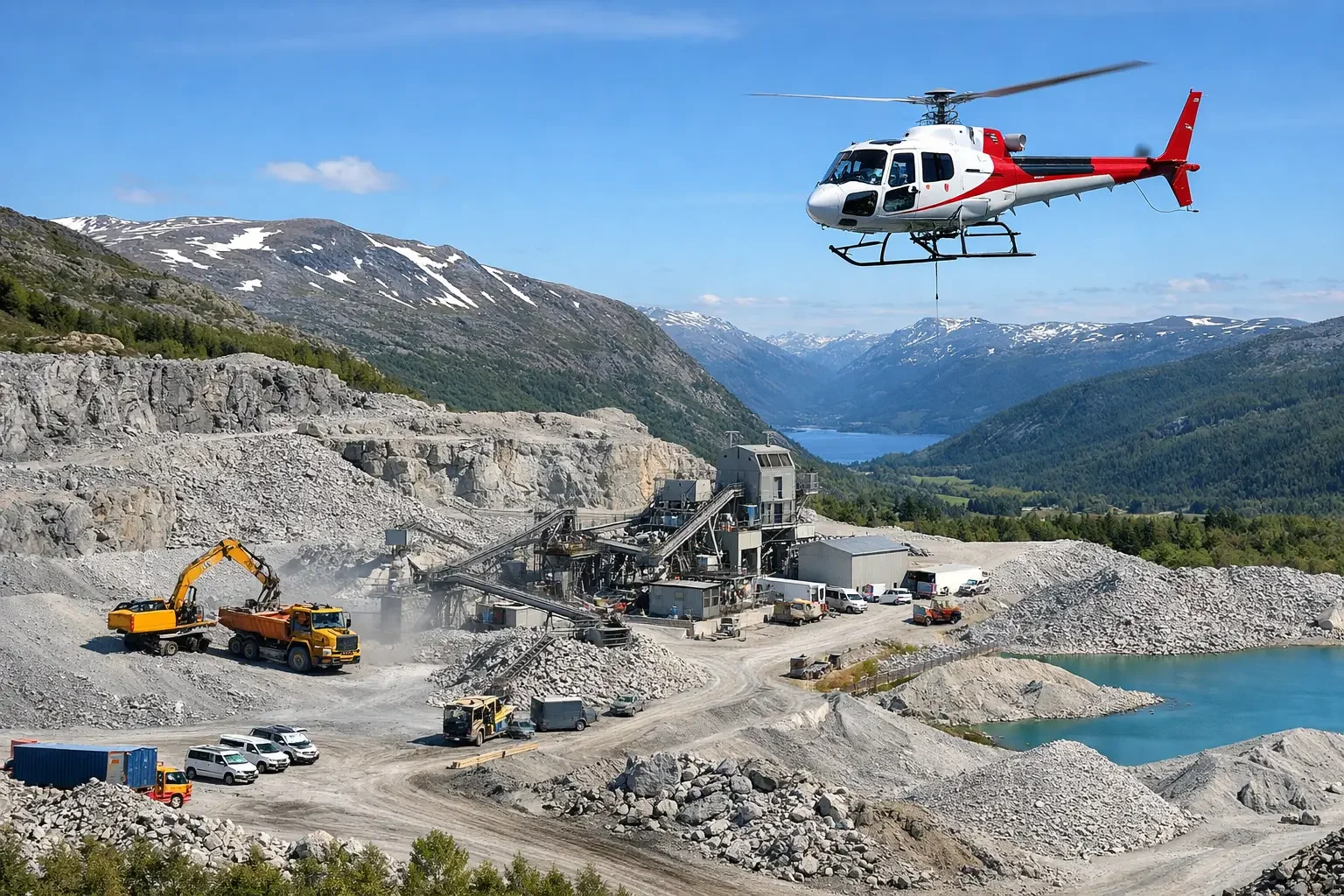
Image by AI/S&P
LO leader Kine Asper Vistnes yesterday launched a strong attack on the Progress Party, which does not want to support the green transition for Wacker Holla Metall in Kyrksæterøra. Sylvi Listhaug (Progress Party), for her part, wants to stop subsidies for various types of industrial projects.
Let us first take a closer look at the smelter in Kyrksæterøra and the role it plays in addition to 250 jobs. Wacker Holla Metall produces silicon metal for the chemical industry. The company needs public support for the green transition in order to become carbon neutral by 2030.
Over the course of this century, the mineral industry will become Norway’s largest industry, because a global race for minerals is under way. To put this into perspective; at the Fens Field in Telemark, critical minerals have been identified that contain 31 times more energy than all the oil and gas extracted from the North Sea throughout history.
The EU is in a particularly vulnerable position on the global market, as there are insufficient mineral reserves on the European continent for the EU ever to become self-sufficient. This represents a highly critical situation for Europe’s defence capability, as minerals are absolutely essential for the production of defence equipment. The EU is not able to defend itself in the long term without assistance from outside.
Back to the smelter in Kyrksæterøra and whether it should receive support for the green transition. The EU has defined 34 minerals as critical. Silicon, which is produced at this smelter, is on that list and should therefore receive support in exchange for a Norwegian ownership stake (there is German ownership).
Samfunn og Politikk has asked the Progress Party how it positions itself on the EU’s Critical Raw Materials Act (CRMA) without receiving a clear answer, but on a general basis the Progress Party supports the mineral industry as a new sector and Norwegian ownership in Norwegian industry. The Labour Party wants to implement CRMA into Norwegian law through the EEA Agreement in the next parliamentary term. In contrast to the Progress Party, it may appear that EU-friendly parties have made rapid decisions on CRMA without familiarising themselves with what the regulation actually entails. A regulation is the EU’s strictest form of legislation; the power cables and ACER were merely a directive, and CRMA will lead to the EU taking control over Norwegian mineral resources. This would be more intrusive than if Norway had given the EU control over oil in the previous century. More information on CRMA and the parties’ positions can be found here.
LO supports the EU’s mineral regulation and will in this way contribute to foreign ownership, social dumping and lower minimum wages in Norway, which will lead to greater inequality between rich and poor.
Norway should support the green transition for the extraction and processing of minerals, but only for critical minerals. China is dumping prices to maintain its global monopoly on minerals; therefore it is necessary for the state to secure domestic production through industrial support. Furthermore, it is essential for Norway that the mineral industry becomes green and Norwegian-owned.
Regardless, the Progress Party and other Norwegian parties need a clear strategy for supporting the green transition. Funding should primarily go to critical minerals. Battery production, wind turbines, etc., should come second. When it comes to Wacker Holla Metall, the Progress Party misses the mark.
SOURCES
NRK
The LO leader criticizes the Progress Party’s industrial policyKystkrafta
About the smelter at KyrksæterøraLO (The Norwegian Confederation of Trade Unions)
On mineral extractionEU
Critical Raw Materials Act and targets for minerals by 2030
Content on Society and Politics is based on reliable sources and actual events, providing a news-oriented perspective intented for further debate. To access the article’s author and the related debate, membership on Hudd is required.
