

Tourists on the way as the tourist tax is debated
Norway expects increased tourism as a result of international unrest. At the same time, the country faces challenges relating to its climate footprint, pressure on nature and local infrastructure. The government wants to meet this with a tourist tax and a targeted push for high-spending visitors.
March 28, 2025
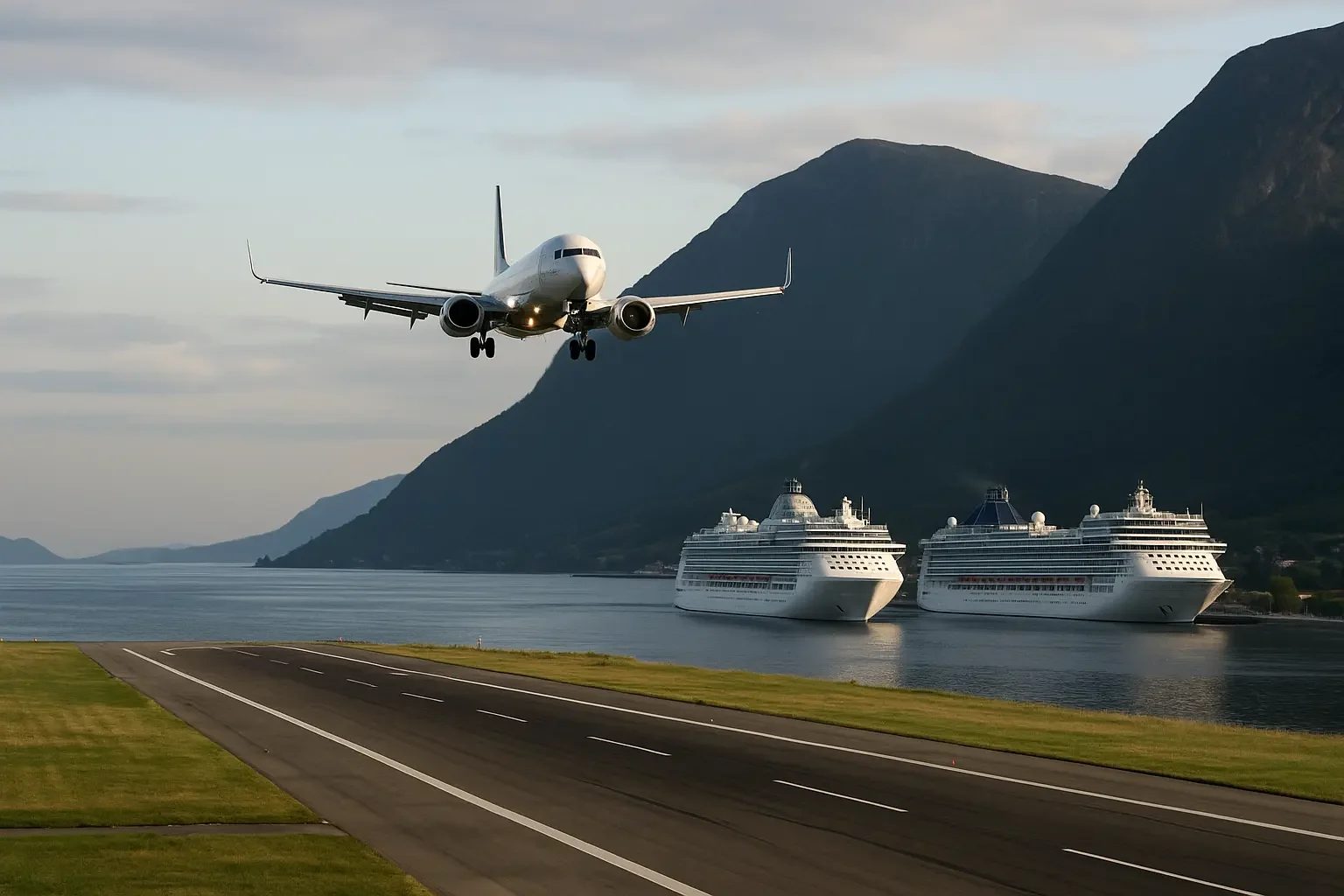
Image by AI/S&P
Increased tourism drives the need for a tourist tax
There is much to suggest that Norway will become a favoured destination this year as a result of the trade war and political unrest. For Norwegian business, tourism is good; for Norwegian nature and infrastructure, not so good. The government has presented this solution: attract high-spending tourists and introduce a visitor contribution, commonly referred to as a tourist tax. It appears the government assumes that high-spending tourists have both the means and the willingness to pay such a tax. But does the arithmetic add up, and will it have any effect?
Tourism does not only bring money and jobs to Norway; it also brings challenges — CO2 emissions, littering and wear on Norwegian nature and infrastructure, congestion and noise, costly rescue operations and higher house prices.
Which tourists pollute the most?
The government appears to have overlooked the fact that the high-spending tourists it wants to attract are precisely the ones who leave the largest CO2 footprint, through air travel and cruise and passenger ship traffic. The government wants to cut the climate footprint from tourism by 50 per cent by 2030, while at the same time wanting more high-spending tourists to come to Norway. That seems contradictory.
Why is the tax placed on accommodation? Norway cannot freely tax tourism in the way that would best serve our country; the Storting has to comply with EU rules when it passes legislation. The tax the government has proposed is therefore a direct result of this.
Littering and wear on nature and infrastructure is a major challenge for municipalities that attract large numbers of tourists. Motorhome tourists are one group that contributes substantially to this, since they can largely settle wherever parking is permitted. They will not be covered by the tourist tax unless they book into a campsite. Does the government believe motorhome tourists will book into campsites — which are, after all, the more environmentally friendly option — to a greater extent if it becomes more expensive?
What about particularly exposed areas?
Some think we should introduce a visitor fee at tourist attractions such as Preikestolen. That would mean Norwegian residents would have to pay as well, because we have to follow the EU rules — and such a solution therefore conflicts with the Norwegian right to roam.
An overlooked element in this debate is the extent to which tourism contributes to pressure on our land. Not only in relation to the right to roam, but also in relation to the property market. Tourism is a driver for the development of cabins, accommodation, roads, car parks, airports and quay facilities. In some areas we are gradually eating into land that might have been reserved for housing development in order to bring prices down. In this context we should also remember that housing construction provides more stable jobs than seasonal tourism.
While we are debating this topic, we are entering a new tourist season in which the challenges are the same as they have been for many years. VisitNorway will soon publish its travel barometer for 2025, which will give us indications of how this year will turn out.
SOURCES
The Norwegian Government
The government's legislative proposal on visitor contribution (tourist tax)Visit Norway
Norwegian tourism strategyEuropean Union
Tourist taxThe Norwegian Government
Tourism – Status report after two years 2024Confederation of Norwegian Enterprise
Tourist tax and alternativesABC Nyheter
The Centre Party withdraws its support for the tourist tax
Content on Society and Politics is based on reliable sources and actual events, providing a news-oriented perspective intented for further debate. To access the article’s author and the related debate, membership on Hudd is required.