

Will this be a polarising election campaign?
If the EU becomes an issue in this year's election campaign, it will happen in the shadow of the geopolitical situation and the threat from the east. The campaign could prove more divisive than unifying, at a time when we need the nation to stand together.
March 24, 2025
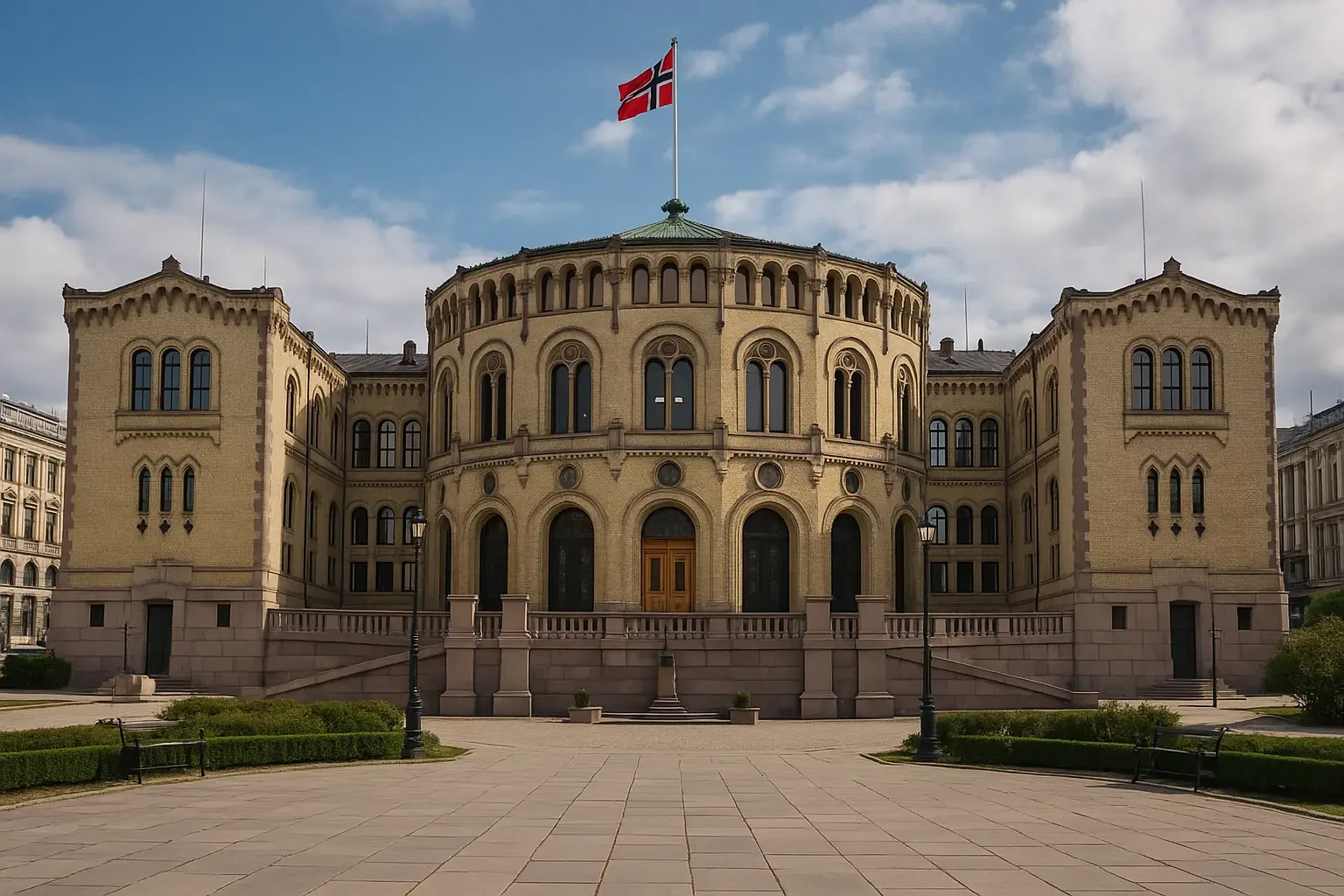
Image by AI/S&P
The EU as an election campaign issue?
Questions are being raised about whether the EU will become the defining issue of this year's election campaign. Will it mean that party-political ego, for the first time in the Storting's history, overcomes the unifying force of nationalism?
Historically, the Storting stands united in difficult times, as it did during the coronavirus pandemic. The political parties were surprisingly agreed on the strategy; in reality there was no opposition. Over the past month or so we caught a glimpse of a unified Storting once again — but now it appears to be slipping away.
Political turmoil abroad and at home
This year's peculiar sequence of events began with unsettling statements and orders from American President Donald Trump, who took office on 20 January. On 5 February the Centre Party left the Store government as a result of Labour's alignment with the EU — a situation that appears to have been engineered by Prime Minister Jonas Gahr Store. Through the past year Labour had seen record-low support, and dissatisfaction with the Prime Minister had been building. And it turned out that Store had another ace up his sleeve: he called our political hero Jens Stoltenberg into service. The effect was immediate; the polls rose and the criticism of Labour subsided. Now we can only wait and see whether the effect lasts longer than Stoltenberg holds his post in government.
The upshot was that the political opposition was sidelined, at the same time as the world order as we knew it was being threatened by Trump's moves on Greenland, Ukraine and NATO — and not least by his friendly disposition towards Russia's President Vladimir Putin. For the first time since glasnost and the fall of the Berlin Wall in 1989, Norway faces an imminent threat of war. In this situation the force of nationalism found its way to the politicians in the Storting, and they quickly united around foreign and defense policy. It is a fine thing when this happens, and it seemed the Norwegian people felt safer for it.
Political games
But then it gradually dawned on the opposition that, over the course of a month or so, they had been parked by a spectacular piece of political maneuvering the likes of which we have not seen this century. And in an election year, no less. Now that Labour is no longer sailing troubled waters, its political competitors must find some other wave than distrust of the government to ride in this campaign.
The Liberal Party, fearing the electoral threshold, was first out of the gate and declared an EU fight. They went straight for the issue most certain to generate debate in Norway. Not just debate — the EU question has produced polarization on both occasions it has gone to a referendum. Erna tried to urge restraint on the Conservatives, but was voted down at the party's national convention over the weekend. Campaign-hungry Conservative politicians want to surf the same wave as the Liberals, hoping to whip up an EU tsunami.
For the Centre Party it is an almost spiritual gift — a reincarnation of a former golden age within reach. Nobody can ride the EU wave like they can. We are talking about the 1993 election, when they took their best result ever with 16.9 per cent of the vote in the run-up to the 1994 EU referendum. That was the same year Labour won the famous 36.9 per cent that would later cause trouble for Thorbjorn Jagland.
Although this is presented as a wry sideways glance, we ought to discuss whether this is the right time for an EU fight. Is it right of the politicians to subject us to a polarising EU debate at a time like this? And is there a danger that Labour's third ace up the sleeve is to sneak us still further into the EU without our noticing, as Liberal leader Guri Melby claims? Should we expect all the parties to put both EU alignment and the EU fight on hold until the world is a calmer place — so that we can both keep the people united in a difficult time and make a qualified, rather than fear-based, choice about EU membership?
Content on Society and Politics is based on reliable sources and actual events, providing a news-oriented perspective intented for further debate. To access the article’s author and the related debate, membership on Hudd is required.