A media house's contribution to the political power game
Developments in the U.S. show how a democracy can be weakened, In Norway we are seeing signs that ought to be taken seriously. In their handling of EEA and EU questions, key cabinet ministers have created a picture of an acute threat, which is endorsed by the country's largest newspaper.
April 17, 2025
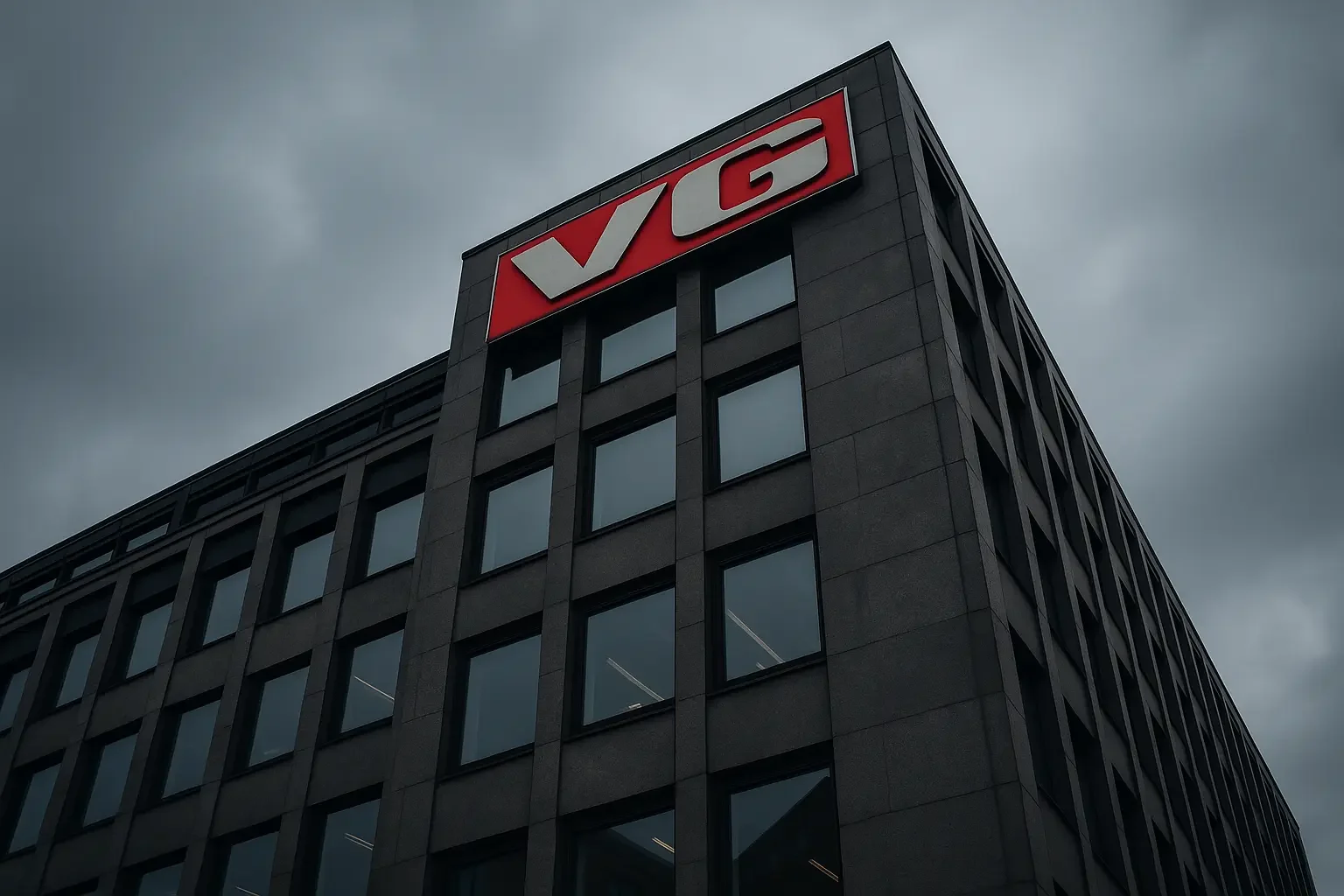
Image by AI/S&P
Democracy under pressure
Norwegians like to think of Norway as the most democratic country in the world, but let us challenge that idea.
In an op-ed in Aftenposten, Johan Andreas Trovik examines how democracy in the United States is under threat. Trovik writes about Trump and his lackeys: "Perhaps one of the crises they themselves are creating will be precisely what they need for a decisive consolidation of power." In other words: the crises Trump and his supporters are creating may in turn hand them total power in the form of authoritarian rule.
The democratic process surrounding the EU
Norway voted no to the EC/EU in 1972. The EEA Agreement was concluded in 1992 and entered into force in 1994. Many held that the EEA Agreement broke with the 1972 referendum, but the Storting rejected putting it to a vote. A new referendum on full EU membership was held in 1994, in which the people again voted no.
Last autumn the Labour Party — where the majority, and Store himself, are pro-EU — entered a crisis. Tonje Brenna, an EU opponent, was informally floated as a rival candidate to Store. The crisis ended with the Centre Party, also an EU opponent, leaving the government after an ultimatum from Store to implement key EU directives ahead of the coming election. Stoltenberg, pro-EU, became the new finance minister. A new and unexpected, but popular, constellation of power had been formed. In the period since, EU directives have been approved at a rapid pace and Tonje Brenna has been placed on the sidelines.
The Prime Minister rejects an EU debate within his own party
The opposition now wants a new EU debate, since the international picture has changed substantially. So do Labour's own EU opponents, who put forward a motion at the party conference in April. It was rejected by Store; no democratic process was carried out and the motion was never put to a vote. Independently of Labour, the Norwegian people have voted no to the EU, and Store is not only the leader of Labour — he represents the entire nation. Six out of ten want a new referendum, according to a survey by Opinion.
The narrative of Prime Minister Store and Finance Minister Stoltenberg
The period after Trump became president created great uncertainty around tariff barriers. Store and Stoltenberg actively reinforced the situation with statements such as "No one will be hit as hard as Norway" and "Norway is at the back of the queue." At the same time, the refrain was that the EU could erect a tariff wall and that Norway had to get on the "inside" of it.
The tariff-wall narrative was not scrutinised by the press; it was never brought out that tariffs are PROHIBITED under Article 10 of the EEA Agreement. The EU would have to depart from the agreement should tariffs on Norway ever become relevant — which would be an extensive and drawn-out process. But this has never been a live issue for the EU; what it can do is impose tariffs on individual products under certain conditions.
Through statements such as "I have had in-depth conversations with," "we have built relationships over many years" and "they understand us," Store and Stoltenberg have to a considerable extent claimed that their own efforts and relationships averted the situation. In reality, the "triple squeeze" was a manufactured picture of fear in which they cast themselves as the nation's rescuers. They personified power over the country's resources and decisions in themselves. We have not seen anything comparable in Norwegian political history.
Backed by the country's largest newspaper, VG
VG has contributed to this case in its customary populist manner; links to two articles are provided below. The first lets Store and Stoltenberg build a narrative of a very serious situation; in the second, the two are presented as rescuers. Society and Politics has asked VG to comment on the matter, without success.
The authorisation granted to cabinet ministers through democratic processes is put at risk when power is personified. It becomes still more dangerous when these individuals are glorified through the media, because it then becomes far harder to get through with concerns.
SOURCES
Content on Society and Politics is based on reliable sources and actual events, providing a news-oriented perspective intented for further debate. To access the article’s author and the related debate, membership on Hudd is required.