

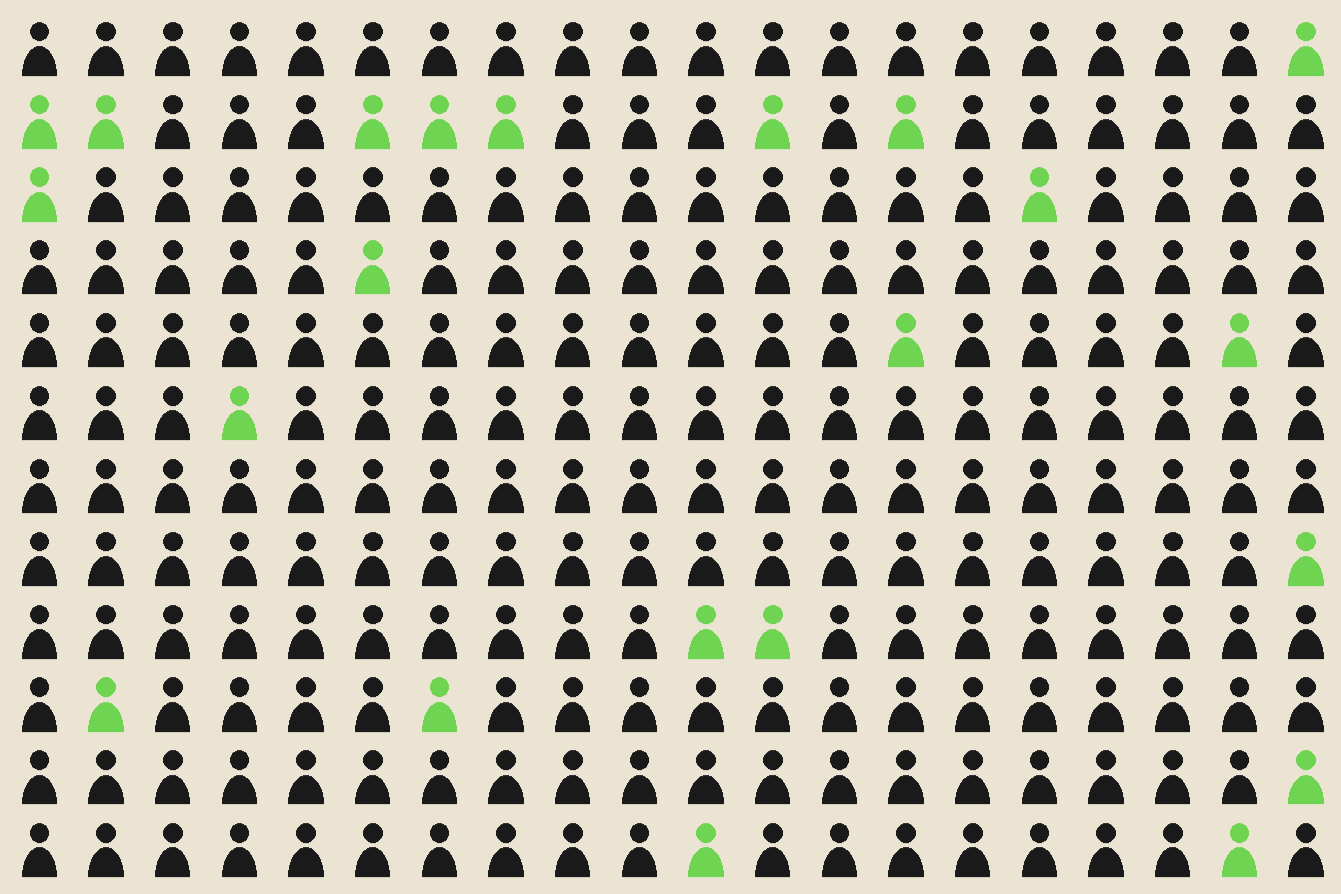
Image by AI/S&P
Not as transparent as it is presented
Accessing the dark web on Hudd requires no special knowledge; there are no encrypted browsers or hidden servers. It is an easily accessible hidden layer inside an apparently transparent social medium.
At least 16,000 groups on Hudd have been created as private, where only invited users are granted access. These groups do not appear in searches or overviews; only the invited members can see that the groups exist and have access to the content.
Inside the Norwegian social medium marketed as safe and local, a large dark web lies concealed from public view.
"People trust our platform"
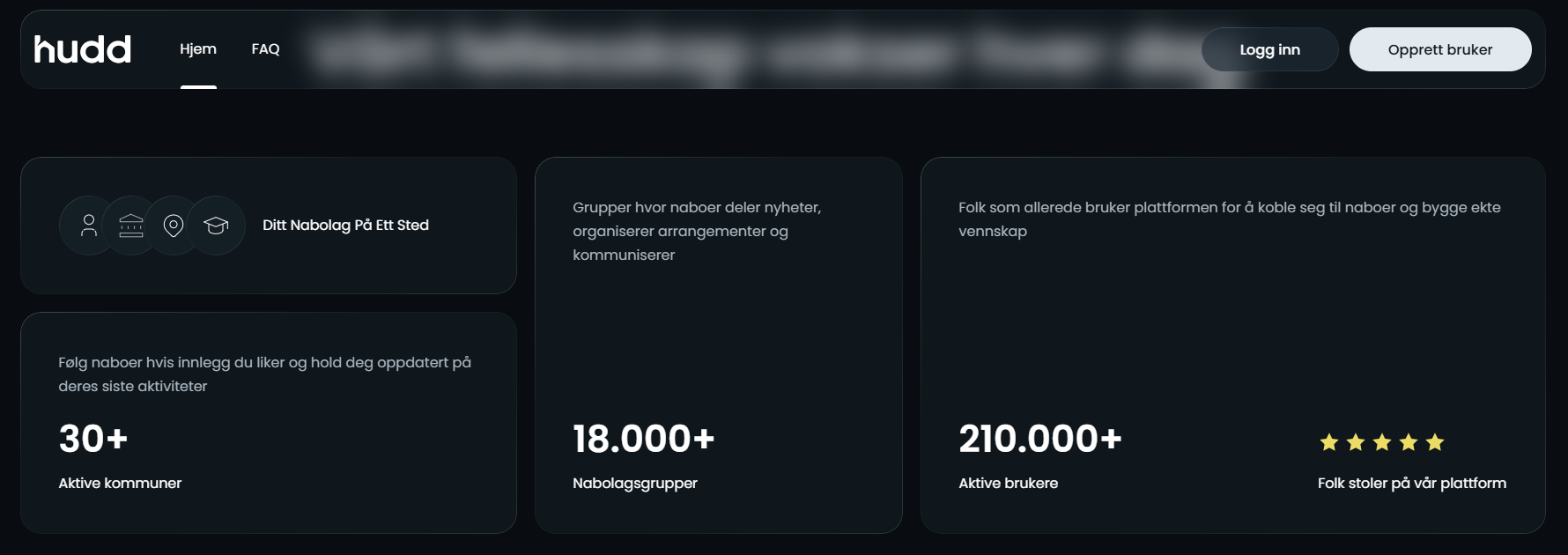
On Hudd's homepage, visitors encounter, among other things, these three pieces of information: 210,000+ active users, 18,000+ neighbourhood groups and "People trust our platform" — accompanied by five stars.
Registration and log-in with Vipps are also central to Hudd's profiling; a 15-year age limit and "real names and verified profiles" are presented as a stamp of safety.
Among other quotes from the company's marketing we find "A safe social medium for those you care about and your local community" and "Hudd brings together people, teams, associations, businesses and municipalities in safe digital spaces where real names and verified profiles are the standard."
Risk associated with known identity
Although you can hide parts of your profile on Hudd, you cannot hide your name or your place of residence. Every time you carry out an activity in the application, your identity is displayed. Other users can see your name and your postal town.
The advantage of private groups is that activity in the groups is only shown to other group members, but it nonetheless constitutes a security risk that the identity of a young, exposed or vulnerable person may be exposed to unwanted members of the group.
When a user is invited into a private group on Hudd, invisible to everyone outside it, the user is part of a closed digital space that is not necessarily safe in the way Hudd claims. It depends on which other users are members of that digital space. Hudd's identity verification does not guarantee that the intentions of all members are good.
It therefore constitutes a security risk that the private spaces on Hudd are hidden from public view. Parents have no overview of the groups that exist in secret on Hudd and thus have no insight into what their young people may be exposed to. Hudd does not differ from other social media in this area.
The police warn about digital spaces
The police warn that social media and closed digital spaces are used for sexual abuse, the sale of narcotics and other crime.
Hudd's marketing may create a false sense of security
Hudd was launched in November 2024. S&P has followed the platform over the past 18 months, and this article is the fourth in the series on the Norwegian social medium — the articles are listed below.
S&P assesses that Hudd, despite Vipps log-in, is not a safe alternative to other social media.
S&P has requested information from Hudd regarding the 18,000+ neighbourhood groups and their visibility. Hudd has not responded to the enquiry.
SOURCES
The police
Warns about sexual extortion on the internetThe police
The police threat assessmentHudd
About Hudd: "18,000+ neighbourhood groups", "210,000+ active users"The number of visible groups on Hudd was counted at 1,611 by S&P on 6 September; the remainder are private and not visible. Visible groups appear under the GROUPS tab in Hudd. A private group created by S&P was assigned group number 18,697. Documentation is available on request via the contact form.
Content on Society and Politics is based on reliable sources and actual events, providing a news-oriented perspective. Learn more about S&P >