


Canada and the EU escalate the conflict with the US
Brussels is inviting Canada to become an associate member of the EU and is moving deeper into the conflict with the US. Trump has so far responded with threats of halting trade and imposing tariffs, but the consequences could be far more serious and extend to NATO.
September 17, 2026
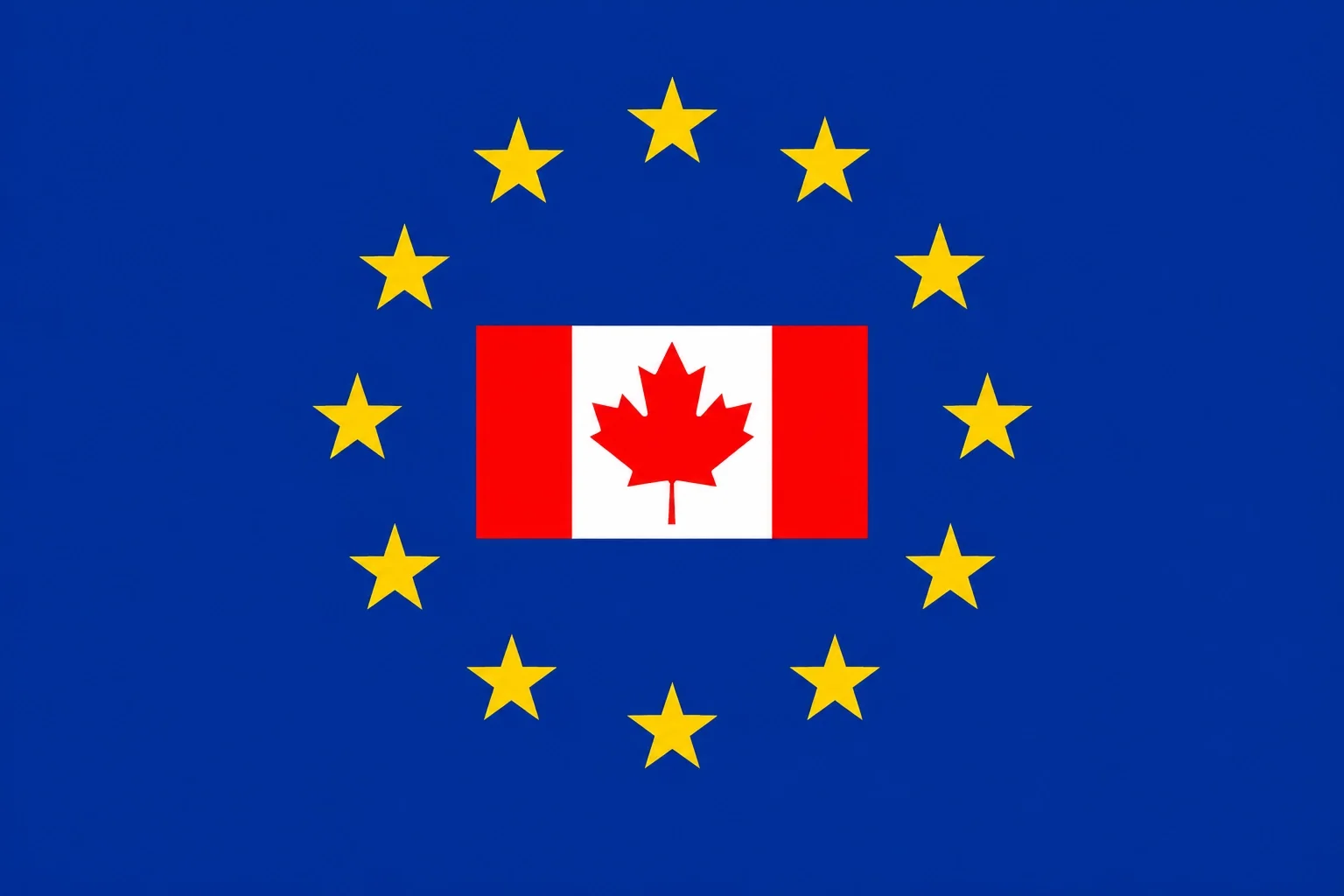
Image by AI/S&P
An alliance between Canada and the EU
Commission President Ursula von der Leyen used her annual State of the Union address on Wednesday to offer Canada a new type of membership; associate member of the EU. Canadian Prime Minister Mark Carney addressed the European Parliament today and described the development as an "alliance of the future".
Donald Trump has said the proposal is a hostile act and is threatening to halt trade and impose heavy tariffs on the EU. The US is already in a trade war with Canada.
Canada offers the EU minerals, gas and defence cooperation
Canada is offering the EU what the union lacks most: energy, critical minerals, defence industry, development of artificial intelligence, data centres, submarine cables and satellite infrastructure. Canada has nickel, uranium, copper, lithium and rare earths. Canada is also proposing easier movement of goods, services and workers in strategic sectors between the parties – which would amount to an extension of the EU's internal market.
Carney has been seeking new alliances since Trump imposed tariffs in the spring of 2025. At the start of 2026, Canada entered into closer trade cooperation with China. Relations between Canada and the US have grown steadily more strained and have developed into a full trade war.
The gains from an alliance lie ten to fifteen years ahead
Energy deliveries from Canada to the EU require infrastructure. Canada's LNG export capacity is in Kitimat on the Pacific coast, built for Asian buyers. The east coast has no export terminal in operation, and the Energy East pipeline project was shelved in 2017. If the gas is to reach Europe, it must first have a terminal to be shipped from.
Around 90 per cent of the world's refining of rare earths takes place in China, and Canadian concentrate is shipped there for processing. An associate membership therefore does not move dependence for critical minerals away from China, but adds an intermediary to it. New Canadian mineral projects are ten to fifteen years away from production.
When it comes to the development of artificial intelligence and new technology, the situation is even worse. Canada and Europe can build infrastructure such as data centres, submarine cables and satellites, while the computer chips required are subject to Chinese or American export controls.
The transport route between Canada and the EU runs across the North Atlantic. That route is secured by a NATO command in Norfolk that is American-led and coordinated with the US 2nd Fleet. Canada has around twelve ageing frigates, and European naval capacity is tied up in the Mediterranean and the Red Sea.
Developing trade and defence cooperation between Canada and the EU requires enormous investment. The cost runs from the moment the projects start, while the gain lies years ahead.
The conflict over critical minerals
The Western conflict between old allies stems from the enormous need for critical minerals for new technology and modern defence equipment. China has held a near-monopoly on critical minerals, which is a threat to Western development of new technology, Western industry and Western defence security.
The EU has very few mineral deposits within its own territory. Through the mineral legislation Critical Raw Materials Act, the target is to be 35 per cent self-sufficient by 2030, the bulk of which is to come from recycling. The EU is already behind in establishing the production facilities required.
The US has established a minerals strategy that is moving quickly. It has invited allies into political partnerships to develop the supply chains for critical minerals. Pax Silica and FORGE are non-binding partnerships in which both Canada and the EU take part. The US, however, wants to form a binding Western minerals market with a guaranteed price floor. This would provide protection against bankruptcy that could draw investors to the mineral industry, which otherwise has to compete with low prices and price dumping from China. The EU and Canada have opposed a price floor. The US has therefore already imposed some tariffs and import bans on critical minerals to give the American mineral industry viable terms and investors. More will follow.
The US may withdraw from NATO
The most serious outcome is nevertheless a defence-related one. The US can withdraw from NATO, something the Trump administration has already considered several times during the current presidential term.
Europe's conventional defence capability rests on the American guarantee. Strategic airlift, tanker aircraft, satellite intelligence, air defence, the nuclear umbrella, as well as the supreme command in Europe are American. If the US withdraws from NATO, European countries are left with a force structure built around capabilities they do not themselves possess.
Russia, with China behind it, would then face a Europe without American deterrence from the Barents Sea to the Black Sea, where the Baltic states, Finland and Norway are most exposed. Putin is unlikely to let the opportunity pass.
In such a scenario, China would strengthen its position further against a Europe cut off from American technology, capital and energy. China is and remains a communist, human-rights-violating one-party dictatorship that free democracies should fear.
RELATED ARTICLES
SOURCES
European Commission
2026 State of the Union Address by President von der LeyenPrime Minister of Canada
Prime Minister Carney meets with President of the European Commission Ursula von der LeyenReuters
Highlights: Canadian PM Mark Carney's speech in StrasbourgThe Guardian
Trump calls EU offer to Canada of associate membership 'laughable', threatens tariffs
Content on Society and Politics is based on reliable sources and actual events, providing a news-oriented perspective.
Learn more about S&P >