

EU Runs Out of Minerals for Weapons After Four Months
The United States has secured global mineral resources this year, while Russia is backed by China. The EU’s mineral shortage is extremely serious; Europe’s arms industry will run out of minerals after only four months.
December 7, 2025 | INTERNATIONAL POLITICS
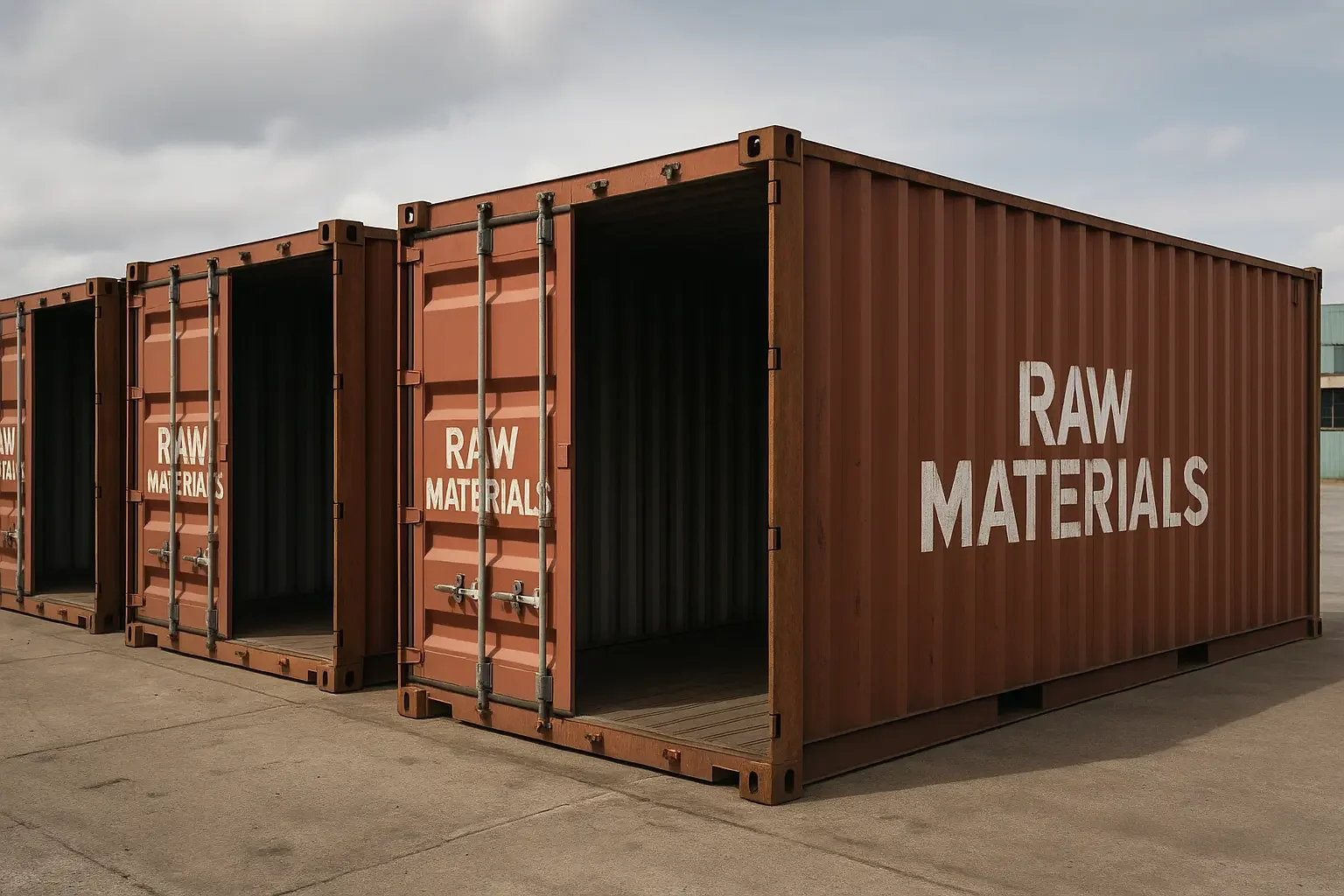
Image by AI/S&P
The European Union has pushed itself into a geopolitical dead end and into a losing battle for control of global mineral resources. European and Norwegian political leaders fail to grasp an essential reality: Norway taking a different strategic path would strengthen both Norway and the EU by securing raw materials vital to Europe — not only minerals, but also oil and gas. Instead, political leaders are convincing the European public that the EU is capable of building a credible defense. It stands as the greatest bluff of modern times. They may mislead the public and the European press, but they cannot mislead Putin or Trump.
Europe has limited mineral resources of its own, and even fewer are being extracted. The EU declines to disclose the scale of the problem, but reliable sources such as Bloomberg report that the Union will meet only 2–3% of its mineral consumption in 2025 through domestic production. Bloomberg also reports that the EU’s mineral reserves would be exhausted after only four months, effectively halting weapons production.
Minerals are indispensable in weapons manufacturing. See the EURACTIV article listed in the sources below for information on the various minerals and how they are used in weapons production.
Several classification terms are used for minerals. “Critical minerals” does not necessarily indicate global scarcity; it often reflects insufficient extraction or limited availability on the market. “Rare minerals” are genuinely scarce. Minerals are also referred to as raw materials or rare earths.
China is the world’s dominant mineral producer, and the EU purchases 80–90% of its mineral needs from China. To reclaim strategic leverage from China, the United States required secure and predictable mineral supplies. This is why President Donald Trump, upon returning to office in January this year, immediately launched a series of decisive measures. The United States has restarted domestic mineral extraction, acquired stakes in mining companies abroad and entered into mineral agreements across the world. Under Pentagon leadership, the United States has also built substantial mineral stockpiles for weapons production. Trump now holds the position of power he has long aimed for, and his actions increasingly reflect this leverage.
In January 2024, the EU adopted the Critical Raw Materials Act, aiming for 35% mineral self-sufficiency — primarily through recycling — by 2030. But the regulation overlooks the massive surge in mineral demand created by war. While the United States has spent this year securing mineral access worldwide, the EU has been slow to respond. This week, the EU adopted the RESourceEU Action Plan, to take effect early next year, with €3 billion allocated. The plan seeks to expand mineral stockpiles, increase recycling, ban the export of certain metals as scrap and establish mineral partnerships with Brazil and African countries. These initiatives face significant uncertainty: agreements must still be negotiated, competitors may obstruct them, and in wartime, external supply lines would be highly vulnerable. The EU now faces profound vulnerability.
The EU provides no information about its wartime mineral needs, but Russia, China and the United States have full insight. Multiple sources report, in line with Bloomberg’s coverage, that the EU holds only a few months’ worth of minerals. Expanding stockpiles, domestic extraction and recycling requires extensive infrastructure and labour and will place heavy strain on the EU economy. Several sources also write that U.S. weapons manufacturers have already secured both stockpiles and long-term mineral access, while European weapons production is already being hindered by shortages.
Europe will remain unable to defend itself for the foreseeable future. The continent remains entirely dependent on the United States in any confrontation with Russia, which is backed by China. China is already supplying Russia with both minerals and weapons. The strategic calculation is straightforward: Russia has better odds if it chooses to act sooner rather than later.
The EU declines to support the U.S. peace plan for Ukraine because it needs the 50% of Ukraine’s mineral reserves it has agreements for — many of which lie in Russian-occupied territory. Even with access to both Norwegian and Ukrainian minerals, the EU would not exceed 50% mineral self-sufficiency, and even that lies many years ahead. The United States holds agreements covering the remaining half of Ukraine’s minerals, and Washington may view limiting EU access as strategically advantageous, reinforcing U.S. leverage over Europe.
Since March, Society and Politics has pointed out that EU policy toward the United States is undermining European interests, and tensions between Washington and Brussels have steadily intensified. Any military support the United States may provide through NATO in a future conflict with Russia will come with substantial demands. Throughout the year, EU leaders have been sawing off, one by one, the very branches of the American tree they are perched on. Many U.S. demands — including halting purchases of Russian oil and gas — have eventually been met. Internal divisions leave the EU slow-moving and poorly positioned in the geopolitical power struggle.
Norway’s Labour government has aligned itself with the EU without critical assessment, supported by the Conservative Party. This trajectory threatens Norway’s sovereignty and could draw the country into a European war that the EU would be unable to win. The upcoming parliamentary confrontation over Norwegian mineral resources will be decisive. The Labour government seeks to grant the EU authority over Norwegian minerals through the CRMA regulation. It would be far more consequential than if the EU had gained control over the Norwegian oil resources back in the 1970s. The strategic importance of minerals is being systematically concealed from the Norwegian population.
The Labour government has ensured that Norway remains one of the few Western countries without a tariff and trade agreement with Trump. Norway could have secured military protection — independent of the EU — through a mineral and weapons agreement with the United States. That opportunity may now be lost. Little consideration has been given to the fact that the EU would be strategically better off if Norway remained outside a potential war with Russia, given the natural resources from Norway that the EU depends on.
SOURCES
Bloomberg
US Firms Are Snapping Up the Rare Earths Europe Needs to RearmWorld Economic Forum
Europe depends on critical rare earths materialsMining.com
US firms are snapping up the rare earths Europe needs to rearmDeutsche Welle
German defense industry hit by rare earths supply risksDeutsche Welle
EU frees billions in bid to reduce China rare earth relianceEuropean Commission
RESourceEU to secure raw materials, reduce dependencies and boost competitivenessEuractiv
How rare earths could make or break the EU's defence ambitionsEU Perspectives
The EU’s critical minerals gap threatens its defence futureThe Guardian
Pentagon stockpiles mineralsEuropean Union
Critical Raw Materials Act
Content on Society and Politics is based on reliable sources and actual events, providing a news-oriented perspective intented for further debate. To access the article’s author and the related debate, membership on Hudd is required.
