

EU Council finally approves trade deal with the US
Nearly a year after the trade agreement between the EU and the United States was negotiated by Ursula von der Leyen and Donald Trump, it has now been approved by the European Council. But the dispute will not be fully resolved until a minerals agreement is in place.
May 20, 2026 | SOURCES | INTERNATIONAL POLITICS
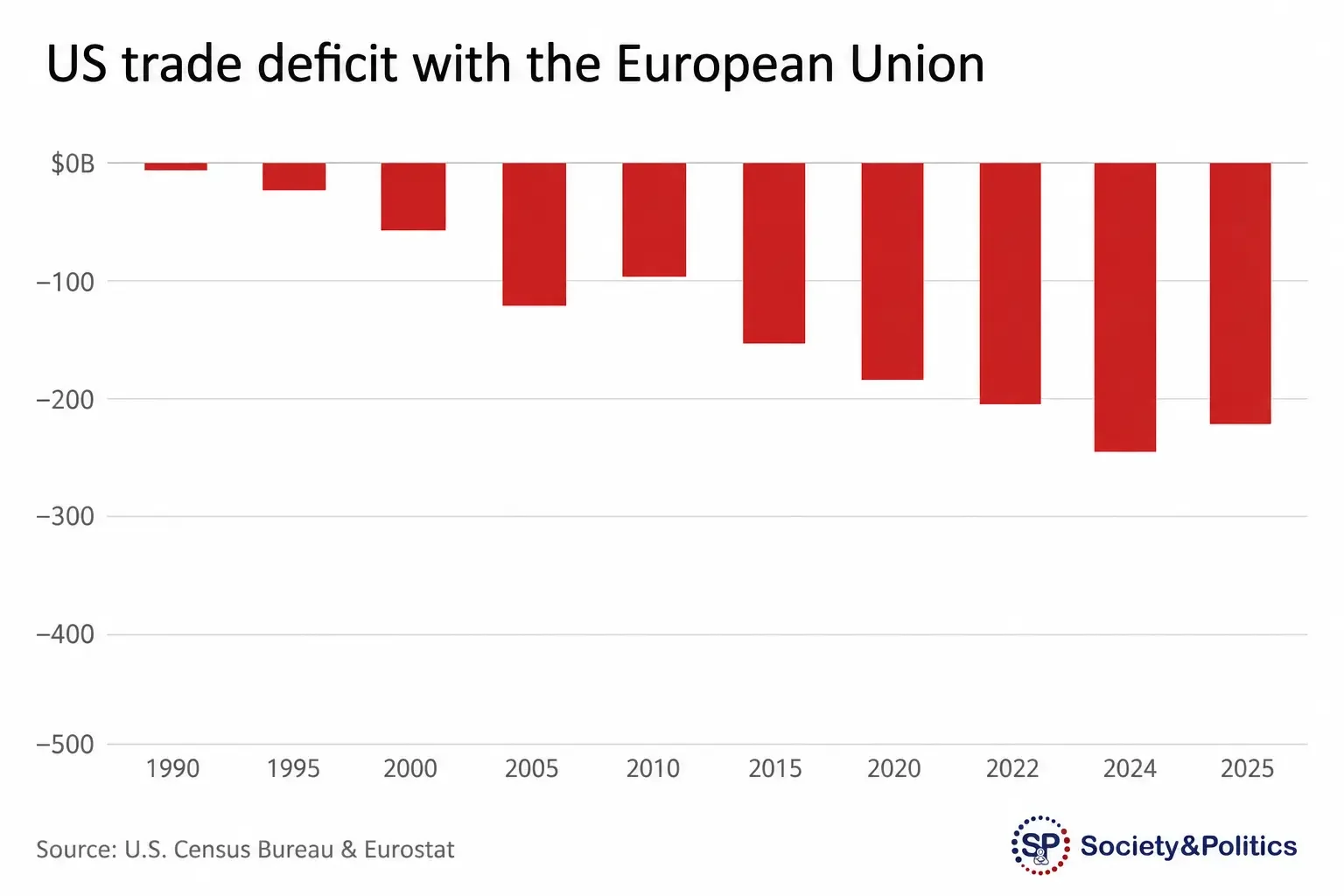
Image by AI/S&P
Approved the Terms of the Turnberry Agreement
Last night, the European Counsil finally approved the terms of the trade agreement reached between U.S. President Donald Trump and European Commission President Ursula von der Leyen in August last year. The agreement is commonly referred to as the Turnberry Agreement because it was concluded in Turnberry, Scotland.
This marks progress in the trade conflict between the United States and the EU that has continued since Donald Trump introduced tariffs last spring. Nevertheless, the EU still has to implement the terms of the agreement and finalize additional agreements that remain the subject of internal disputes within the bloc. Pressure from the United States has been mounting and is unlikely to ease as a result of this development. Yesterday, the Trump administration warned of an impending confrontation if the agreement is not implemented in full - read more here.
The United States’ Objectives
The reason the United States is imposing 15% tariffs on imported goods from the EU is that the U.S. runs a significant trade deficit with the bloc and is demanding trade balance between the parties, see the chart above. Measures introduced over the past year have led to a slight reduction in the U.S. trade deficit.
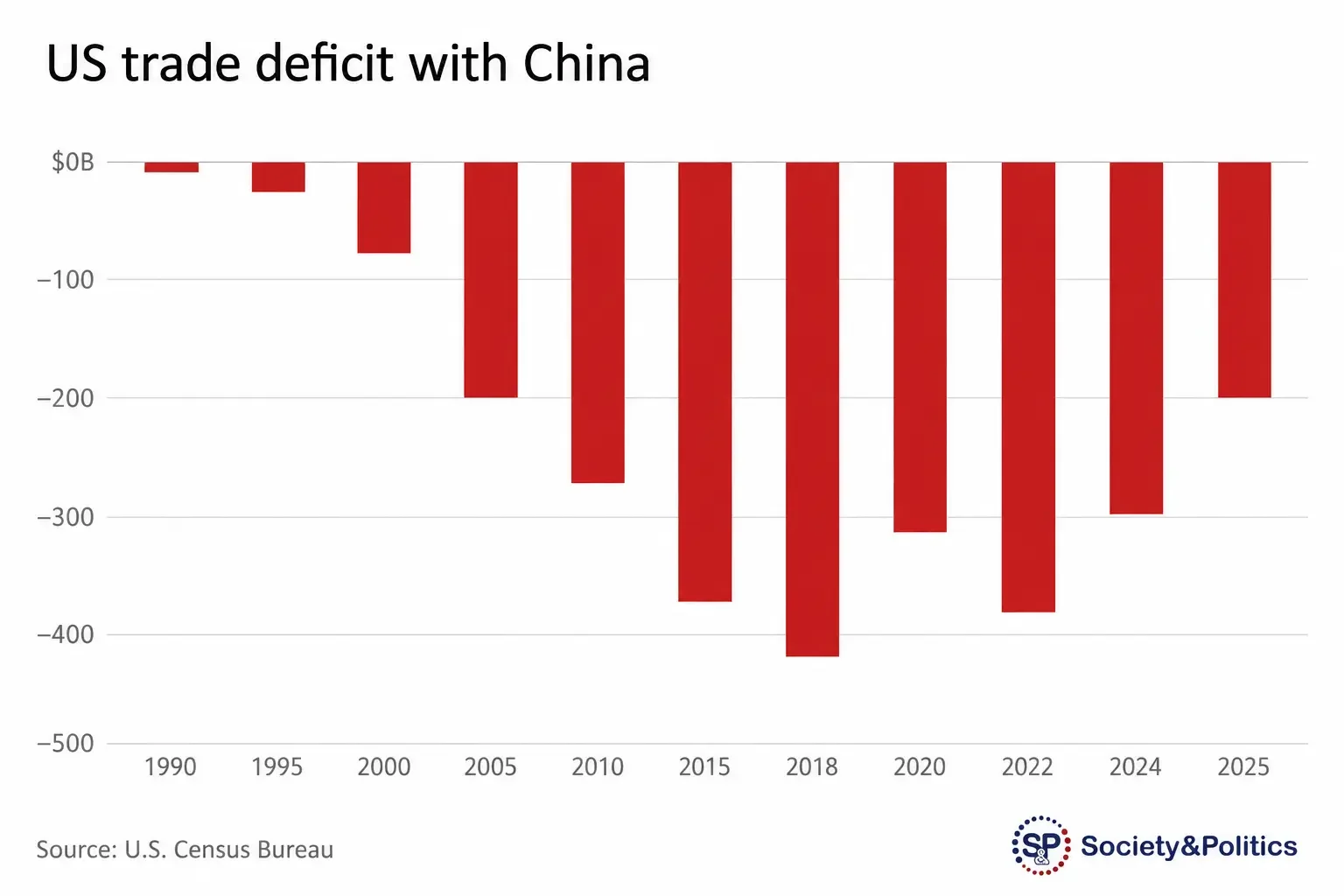
Broadly speaking, the United States has two main objectives: to establish a protected Western trade zone and to phase out imports of critical minerals from China. The first objective is driven by the fact that wage and production costs in the West cannot compete with China and therefore require protectionism. The U.S. trade deficit with China remains substantial, although it has been cut in half in recent years.
As for critical minerals, they are essential for the green transition and for new technologies such as AI. For decades, China has held a near monopoly on the minerals market and has regulated and protected it at its own discretion, including by delaying deliveries to Western defense industries. This represents a major security risk because critical minerals are essential for the production of weapons and military equipment, which explains why Trump is combining trade and security policy.
The Dispute Over Critical Minerals Remains Unresolved
Two key issues remain before the conflict between the United States and the EU is resolved. The EU must gradually phase out imports of critical minerals from China and join the Western mineral supply chain initiative launched by the United States.
In 2023, the EU adopted a minerals regulation known as the Critical Raw Materials Act (CRMA) and has not been willing to make changes to it despite the regulation not functioning satisfactorily. The EU’s mineral stockpiles are so limited that the actual figures are classified for security reasons, but analysts estimate that the reserves would last only a few weeks in the event of war. By comparison, the United States has built up a one-year supply over the past year. The minerals issue is the source of the U.S. threats regarding Greenland, in addition to a little-known dispute over Norwegian mineral deposits - read more about the mineral negotiations here.
SOURCES
European Council
EU-US trade: Council and Parliament strike a deal to implement the tariff elements of the Joint StatementPolitico
US ambassador: EU must honor its trade deal with TrumpUS Census
Trade in Goods with ChinaOffice of the United States Trade Representative
China Trade SummaryUS Census
Trade in Goods with European Union
Content on Society and Politics is based on reliable sources and actual events, providing a news-oriented perspective intented for further debate. To access the article’s author and the related debate, membership on Hudd is required.