

US prepares for conflict with the European Union
The United States has strategically and legally positioned itself for a conflict with the EU this summer. What may appear to be irrational actions by the Trump administration are, in fact, carefully planned. The aim is to pressure the EU into mineral and trade agreements to become less independent of China.
May 3, 2026 | SOURCES | INTERNATIONAL POLITICS
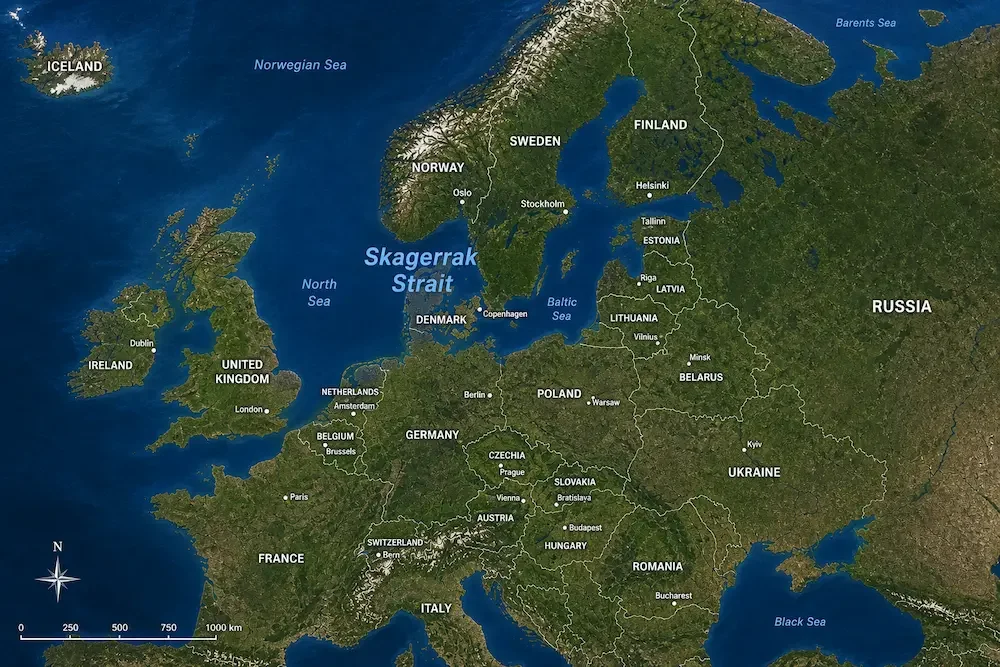
Image by AI/S&P
The United States prepares for conflict
On Friday, U.S. President Donald Trump announced that the United States will withdraw 5,000 personnel from NATO forces in Germany. Apparently following criticism from German Chancellor Friedrich Merz, but in reality, Merz’s statement came at a convenient time. It would affect the EU more to withdraw forces from Germany than from Spain or Italy; it was to expect that the United States would withdraw forces from NATO in order to threaten the EU, perhaps also to reposition them strategically.
The president further announced on Friday that tariffs on cars will be increased to 25%. This follows a prolonged period of negotiations in which Trump has demanded that car batteries from the EU must not be produced using minerals from China. Minerals has a decisive role in the conflict and we will return to the subject throughout this article.
Friday’s measures come as part of a long-term strategic plan by the U.S. administration, following the EU’s unwillingness to voluntarily take part in the U.S. strategy for Western trade and defense.. Over time, the Trump administration has created a difficult negotiating climate with the EU in order to justify sanctions—and possibly stronger measures—to the American public.
The timing is not random. Washington has adjusted its legal framework to allow for expanded or potentially permanent tariffs this summer. Furthermore, the administration has obtained specific legal authorities related to 60 critical minerals designated as essential to national security. In the worst case, this could lead to sanctions and potentially escalate into military action. The period between June 1 and July 24 is decisive for legal reasons.
If the EU does not yield, a confrontation may occur, in which Norway, which is not an EU member, could become involved, as will be discussed below.
There are only two teams: China and the United States
Even before Donald Trump was inaugurated for a second term as president on January 20 last year, he had strategically begun sending signals about the policy the new Trump administration would pursue. Amid the noise, it was difficult to discern the president’s message, but it centered on trade power, military strength, self-sufficiency, and the use of tariffs as a policy instrument.
Trump’s message can be summed up briefly: China has taken global dominance from the United States; now the United States will take it back.
There are only two teams in Trump’s world: China and the United States - or the Western Hemisphere, as he refers to it. The European Union has made itself entirely dependent on Chinese raw materials, but Trump now wants EU to choose: the United States or China. The EU does not want to choose sides, but Trump does not accept this and is seeking to force a decision.
China’s team includes Russia, as well as countries such as North Korea and Iran. Trump sees NATO as part of the United States’ team, but this has not fully played out in practice. The EU wants to trade with China while relying on the United States for security - something Trump does not accept. As a result, U.S. policy directly links trade negotiations to military security.
The EU has not managed to form a solid team
The European Union, which consists of 27 member states, along with three EFTA countries, has, together with its other European neighbors, attempted to form a third team. The situation is complicated by the fact that not all EU countries are NATO members and vice versa, as well as by sovereign countries outside the EU having bilateral trade and defense agreements with the United States. For example, the Arctic island nation of Iceland has a defense agreement with the United States in addition to being a member of NATO.
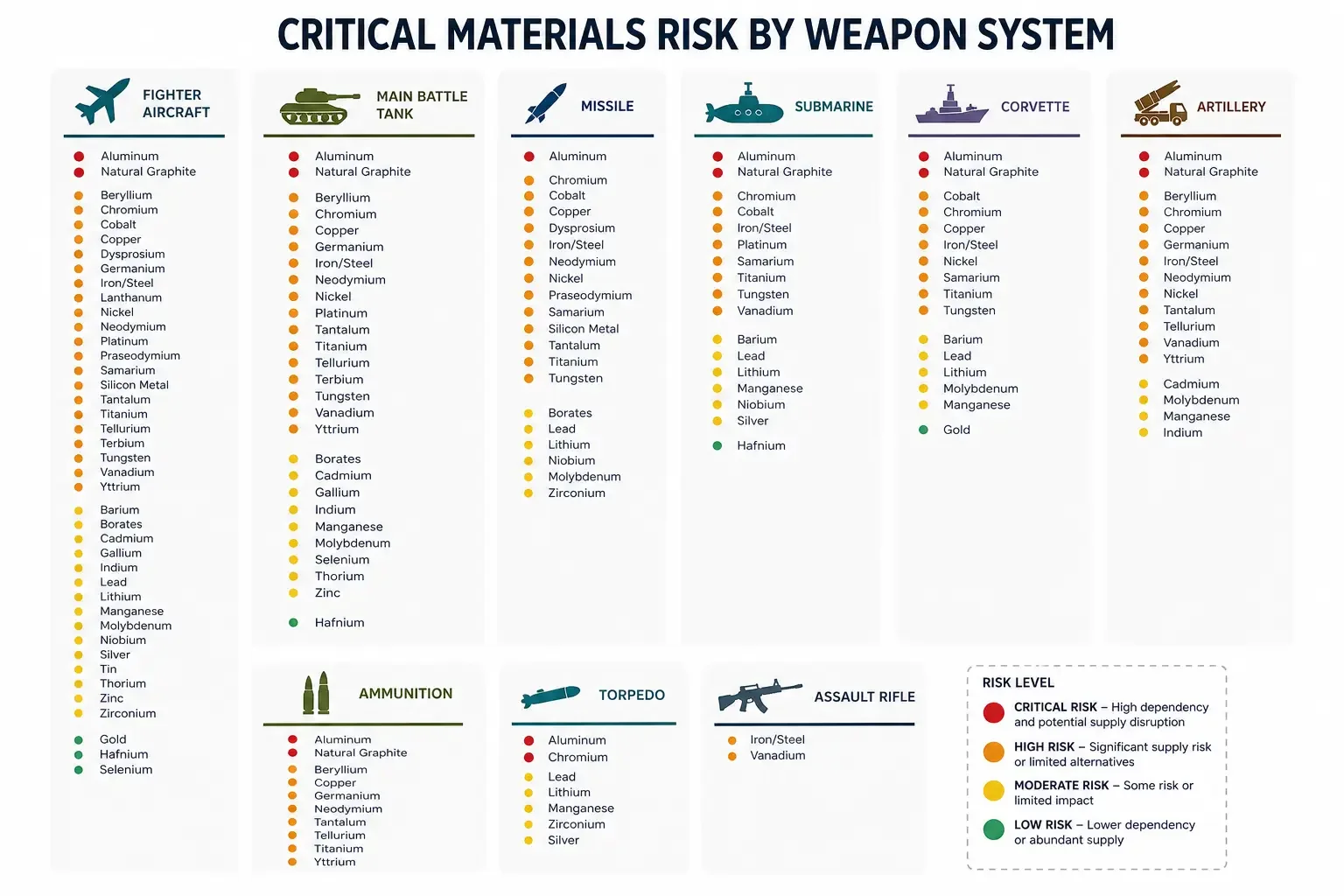
In April, the EU finally agreed on a sanctions package against Russia that also affects China, to which China has responded with warnings. The sanctions against China include restrictions on critical minerals used in weapons production, particularly those linked to Russia’s war in Ukraine.
Following Trump's threats against Greenland, the EU in February gave commitments to enter into cooperation with the US on critical minerals. This was followed in April by a memorandum of understanding and an action plan aimed at concluding a binding minerals agreement, but no minerals agreement has been signed. This is the core of the dispute between the parties. Minerals as raw materials, as well as products made from named minerals, may therefore be subject to tariffs and remain a point of conflict until an agreement is in place.
Most serious for Europe is that it has not succeeded in building alternative supply chains for energy, oil, gas, and critical minerals. The situation for Europe is roughly the same as it was when Trump came to power last year, even though European leaders try to give a different impression. But Trump knows it, and Putin knows it. The most critical factor for the EU in this situation is that there are only four months of stockpiles of critical minerals for weapons production, possibly less. This makes Europe an easy target for Russia.
American strategy and advantages
Over the past year, the United States has initiated new oil and mineral production on its own continent, entered into mineral agreements worldwide, and built a significant stockpile of critical minerals.
In February last year, Donald Trump expelled Ukrainian President Volodymyr Zelenskyy from the White House because he would not sign a mineral agreement with the United States. At that moment, the Trump administration demonstrated that military assistance is contingent on trade, particularly critical minerals. The United States withheld weapons deliveries to Ukraine until the agreement was signed a couple of months later. The agreement severely affected the EU’s access to critical minerals.
In January this year, Trump took action against Venezuela, apprehended President Nicolás Maduro, and transported him to the United States, where he awaits trial for drug-related offenses. During the operation, the United States secured control over Venezuela’s large oil and mineral resources.
At the end of February, the United States attacked Iran and in April secured control over oil and raw material transport through the Strait of Hormuz. Furthermore, through the Middle East alliance, the United States has secured control over the Suez Canal. In March, the United States decided to establish a drone base in Morocco, which would also place it in a position to gain control over the Strait of Gibraltar.
The Arctic and Norway
Trump is particularly focused on the Arctic for several reasons. Transport routes are one; strategic positioning toward Russia is another. The Arctic countries are resource-rich, especially Greenland and Norway. While Trump’s interest in Greenland is well known, his interest in Norway is less widely recognized. Norway is one of the few countries that has not entered into a new trade agreement with the Trump administration and operates under the tariffs that have been imposed, as a result of the mineral conflict between the EU and the United States.
Norway possesses some of the world’s largest deposits of critical minerals. Recently, deposits have been discovered corresponding to more energy than 60 times all the oil and gas Norway has extracted from the seabed over time. Minerals have also been found on the seabed, and it is likely that larger deposits will be discovered in Norway when targeted exploration is undertaken.
In one of the legal processes to be completed by the Trump administration in May, there is an assessment of the Norwegian Labour government’s planned mineral cooperation with the EU. In light of the United States having defined 60 critical minerals as national security, there is reason to expect tariffs and sanctions against Norway if the country cooperates with the EU.
Norway supplies more than 50% of all energy to the EU in the form of oil, gas, and hydropower through the Skagerrak Strait. There is therefore also a possibility that Norway could become involved in the conflict with the EU; the United States may take control of these transport routes to choke off energy supplies to the EU.
PLEASE NOTE
This article is based on a more technical, legal, and detailed article with precise descriptions of events and agreements; you can find it here.
RELATED ARTICLES
SOURCES
This article is based on a wide range of public, legal and government sources; you can find the full list here.
New sources not in the above mentioned list;
NBC News
Trump administration is pulling 5,000 troops from GermanyBloomberg
Trump Says Merz ‘Doesn’t Know What He’s Talking About’CNBC
U.S. is ‘being humiliated by Iran,’ says Germany’s Merz, as Europe’s patience wanesReuters
China condemns EU's inclusion of Chinese entities in sanctions package against RussiaEuropean Commission
EU adopts 20th package of sanctions against RussiaUS/Department of State/YouTube
Secretary Rubio participates in a Memorandum of Understanding Signing Ceremony
Content on Society and Politics is based on reliable sources and actual events, providing a news-oriented perspective intented for further debate. To access the article’s author and the related debate, membership on Hudd is required.