EU Issues Notice of Tariffs on Ferroalloys
Any potential tariffs on ferroalloys would hit Norway’s steel and iron industry. Under the EEA Agreement, tariffs between the parties are prohibited. The notice comes as the debate over Norway’s relationship with the EU intensifies, raising questions about the strategic motives behind the EU’s move.
July 25, 2025 | INTERNATIONAL POLITICS
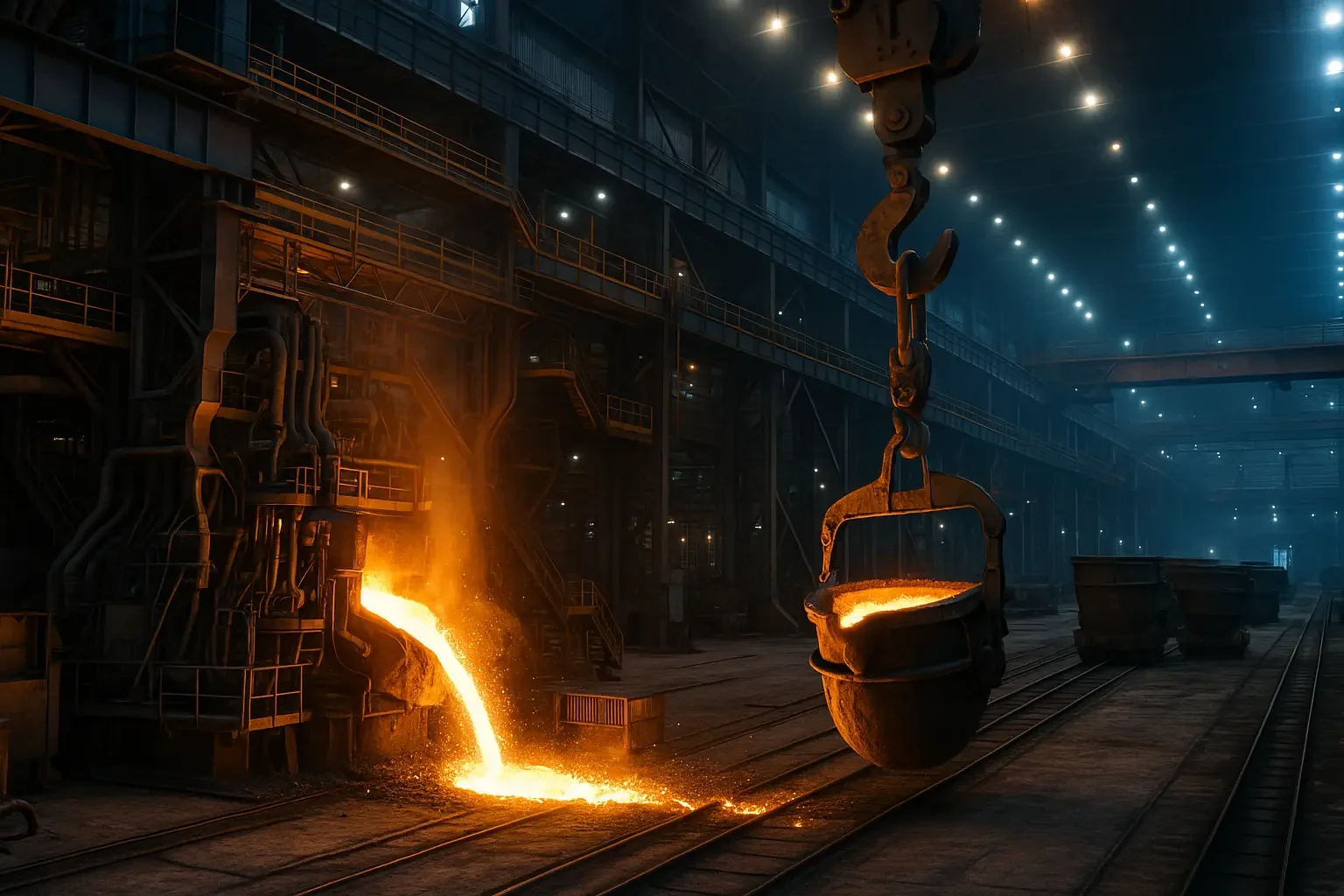
Image by AI/S&P
Notice of tariffs on ferroalloys
This year’s developments make the EU’s notice appear as a piece in a larger game. Could this be a strategic move to secure control over Norwegian natural resources?
Under Article 10 of the EEA Agreement, customs duties between the parties are prohibited. The EU’s notice refers to Article 113, which concerns safeguard measures. According to NRK, the EU claims in the notice that imports of ferroalloys cause “serious injury” to industry within the EU.
Tariffs on ferroalloys would hit the Norwegian ironworks industry. Despite the prohibition on tariffs in Article 10, this is familiar EU policy: Norway is already subject to tariffs on processed fish, which have cost Norwegian industry 20,000 jobs (SINTEF 2020).
Tariffs as an argument for EU membership
Tariffs are one of the instruments through which the EU secures advantages from Norwegian raw materials. Another is legislation, as seen in the electricity directive. In addition, there is quiet but persistent work underway to incorporate the EEA into the Critical Raw Materials Act (CRMA), so that the EU in the future can gain control over Norwegian minerals without Norwegian authorities being able to protect mineral resources and the associated industries. A regulation is the most binding form of EU legislation; a directive is the second most binding, read about the CMRA regulations here.
The current government claims to safeguard the EEA Agreement while at the same time doing everything possible to keep the EU debate out of the election campaign—despite the fact that 34 percent of Norwegian citizens have never had the opportunity to vote on EU membership. If the Labour Party, and for that matter the Conservative Party, had used their time in government to defend Article 10 and the ban on tariffs, it would be plausible to argue that they are protecting Norwegian interests. The absence of such action suggests that the real intention is full EU membership—something that would be entirely acceptable if pursued openly and democratically, allowing the population to vote. Instead, citizens are being deprived of their democratic right to both transparency and influence.
With this in mind, the EU’s notice on tariffs on ferroalloys looks like a move in the effort to bring Norway and its natural resources into the EU. When we also know that the notice is not public but was leaked to the press, it is natural to raise questions. Store, Stoltenberg and Eide have repeatedly stated that Norway could end up in a “triple squeeze” with the EU after Trump announced tariffs. They have been portrayed by the Norwegian press as “saviors,” based on their strong relationships with EU leaders. Today, Eide unsurprisingly responds that the government will oppose tariffs on ferroalloys—meaning that the saviors are being dispatched to tend to their good relations with EU leaders.
Two likely outcomes
Norway avoids tariffs on ferroalloys, and the trio mentioned above emerge as “saviors.” This could point to strategic maneuvering, and to government ministers’ close ties with EU leaders being undemocratic and highly problematic.
Norway is subjected to tariffs, and the government will at some point use this as an argument for full EU membership. The trio in question are outspoken supporters of the EU. Such a scenario could also bring the Conservative Party and the Labour Party closer together during the election campaign.
To safeguard Norway’s interests in this matter, the government should notify the EU of tariffs on all goods containing ferroalloys, in accordance with Article 113, in order to defend Article 10 and Norwegian jobs.
SOURCES
Store norske leksikon (The Great Norwegian Encyclopedia)
FerroalloysEuropalov (European Law)
The EEA Agreement, Article 10Europalov (European Law)
The EEA Agreement, Article 113SINTEF (Foundation for Industrial and Technical Research)
The seafood industryNRK Urix (NRK Foreign Affairs / International Affairs)
The EU warns of tariffs on ferroalloys
Content on Society and Politics is based on reliable sources and actual events, providing a news-oriented perspective intented for further debate. To access the article’s author and the related debate, membership on Hudd is required.
