

Iran war triggers energy crisis on a historic scale
The war in Iran has triggered a global energy crisis comparable to the oil shocks of the 1970s, according to the IEA. The experience from 1973 shows how severe the consequences can be.
Month 23, 2026 | INTERNATIONAL POLITICS
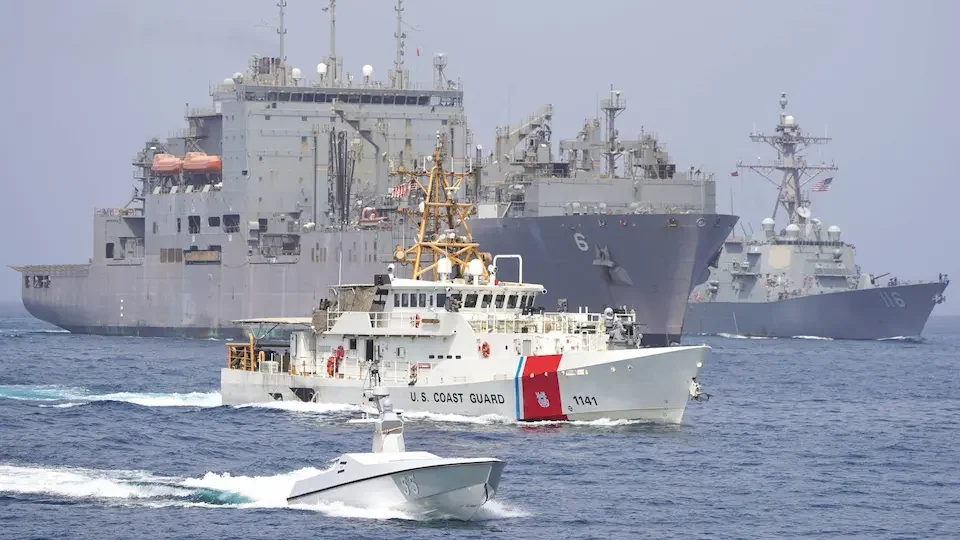
Escort operation in the Strait of Hormuz, photo: U.S. Navy / Wikimedia Commons
Global energy crisis
Fatih Birol, Executive Director of the International Energy Agency (IEA), warns that the war in Iran has triggered a global energy crisis on par with both the oil shocks of the 1970s and the aftermath of the war in Ukraine. According to Birol, the impact of the bombings in Iran and the closure of the Strait of Hormuz was initially underestimated by world leaders.
He states that the crisis has already led to the loss of around 11 million barrels of oil per day and 140 billion cubic meters of gas—more than in previous major energy crises. Birol also points out that disruptions to key commodities such as petrochemicals and fertilizers could further amplify the economic consequences.
He emphasizes that attacks in the Strait of Hormuz, through which about 20% of the world’s oil is transported, have turned a market surplus into shortages and rising global concern. In response, the IEA has released 400 million barrels of oil from strategic reserves.
At the same time, the United States has given Iran a deadline today to reopen the Strait of Hormuz, warning of serious consequences if it fails to do so.
The oil crisis of 1973–1974
The oil crisis of 1973–1974 was a supply crisis in Western countries, triggered when Arab oil-producing states reduced production and imposed a boycott on countries supporting Israel during the Yom Kippur War. This led to acute shortages and sharp price increases, while oil was used as a political tool.
The crisis had both political and economic consequences: Arab states strengthened their economic and political position, while Western countries were forced to adjust energy policies and reduce dependence on imported oil. At the same time, power in the energy market shifted from multinational oil companies to producer states.
In the short term, the crisis led to rationing and restrictions. In Norway, for example, Sunday driving bans were introduced along with other limits on car use. In the long term, the crisis contributed to closer cooperation among industrialized countries, the creation of the IEA, and increased investment in alternative energy sources.
RELATED ARTICLES
SOURCES
The Guardian
Iran war energy crisis equal to 70s twin oil shocks and fallout from Ukraine war, says IEA chiefCNN
Iran defiant as IEA warns energy crisis worse than 1970s oil shocks and Trump deadline loomsStore Norske Leksikon (Great Norwegian Encyclopedia)
The oil crisis 1972–1974
Content on Society and Politics is based on reliable sources and actual events, providing a news-oriented perspective intented for further debate. To access the article’s author and the related debate, membership on Hudd is required.
