

Politicians gain position and benefits through contribution funds
We rarely see words like criminal in the same sentence as the name of a politician. Partly because they have granted themselves immunity and partly because the grey areas are large. Politics as a profession is no longer worthy of the trust system; it must be regulated by law.
February 11, 2026 | NORWEGIAN POLITICS
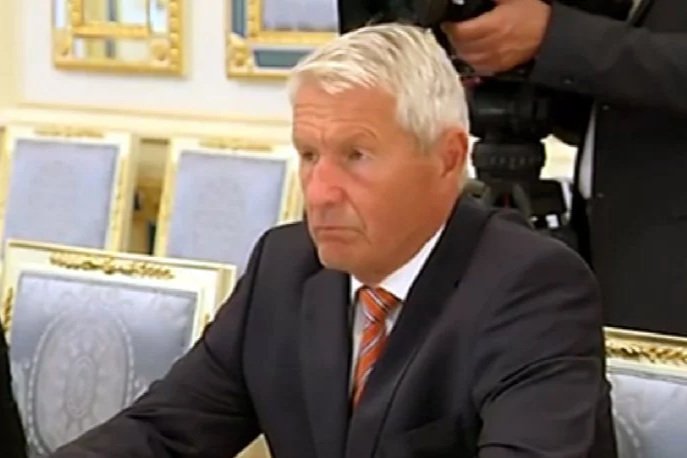
The revelations that have emerged in the wake of the Epstein files expose a serious systemic failure, something that has been made visible through the network surrounding figures such as former Norwegian Prime Minister and Secretary General of the Council of Europe Thorbjorn Jagland. This systemic failure has been built by politicians who seek to advance their own careers. In today’s political landscape, political ambitions are more about personal gain and power than idealism. Norway is a small country, and in order to expand career opportunities Norwegian politicians look abroad; to European or international positions. In the wake of this, a cross-party career system has developed in the Norwegian Parliament based on Norwegian contribution funds. Some wish to downgrade the significance of this by referring to it as a bad culture, while in reality it is an established political career system built on taxpayers’ money.
Over the last twenty years Norwegian aid (subsidies and transfers to non-profit organizations and to foreign countries) has almost doubled. In 2023 the total amount was 250 billion kroner (roughly 25 billion US dollars), which represents more than half of the taxes paid on labor and capital (ref. The Country That Became Too Rich/Martin Beck Holte). At the same time, the number of children living in poverty has risen and the quality of elderly care has declined, alongside a series of other cuts to welfare services.
For years our prime ministers and cabinet ministers have claimed that aid is a moral obligation Norway has. Furthermore, they claim that it is crucial for our small country to have close diplomatic relations abroad. The expression “close diplomatic relations” is a term politicians have established as part of the systemic failure. We now see the result of the manipulation voters have been subjected to; the moral obligation to provide aid is something taxpayers are expected to show so that politicians, through their own failing morals, can set aside Norwegian interests in favor of their own personal gain. It is important to remember that Norway is meant to conclude trade and cooperation agreements through diplomatic negotiations conducted by the state institutions with formal responsibility. “Close diplomatic relations” make negotiations dependent on individuals, something that is completely unacceptable in a democracy. Yet it sounds both good and reassuring when Prime Minister Store and Finance Minister Jens Stoltenberg preach that close diplomatic relations are particularly important in times of geopolitical unrest and use this as an argument for closer ties to the EU; this despite the fact that the Norwegian population has said no to the EU twice. This lack of democratic anchoring ought to worry EU supporters as well. In retrospect this will be judged differently than it is in the present.
A politician’s “close diplomatic relations” are formed over several years, often through participation in seminars and meetings in organizations that receive contributions from the Norwegian state in one form or another. In some cases politicians also hold paid or unpaid positions in these organizations. In practice this means that Norway buys influence for politicians through contributions and donations to organizations around the world. This can to some extent sound reasonable if it were to promote Norwegian interests, but these are often contributions to organizations that have other agendas. On the contrary, Norway should have had a stricter control apparatus; the Office of the Auditor General should have had close oversight of both politicians, aid funds and the effects they have.
The challenges with “close diplomatic relations” arise as a result of the current or future gains such relations can give the individual politician. This affects the constitution of democracy;
High absence from Parliament and from the committees in favor of aid and organizational work. The various professional committees in Parliament shape the policies that are to be presented for voting in Parliament. High absence from Parliament and committees leads to a weakening of Norwegian democracy when elected representatives fail to follow up their duties.
Participation in organizations that provide benefits in the form of exciting travel, fine hotels, dinners and alcohol weakens the politician’s impartiality.
Participation in organizations that provide financial advantages in the form of direct financial compensation for contributions and salary for positions weakens the politician’s impartiality.
Participation in organizations, both with and without financial compensation, creates relationships and networks that promote one’s own (+ family members’ and friends’) careers and which weaken the politician’s impartiality.
Issues of impartiality lead to organizations that do not work for Norwegian interests gaining influence in Norwegian politics through Norwegian politicians.
As mentioned earlier, this career system has been built by politicians over time. They have gradually mixed together the role of politician and the role of diplomat. Politicians are elected to Parliament in order to democratically represent the people and to establish guidelines and legislation for the administration of Norway. The bureaucracy, including the diplomatic service, is supposed to administer what Parliament has decided. Norwegian politicians go far into the administrative role when they conduct diplomacy and are active in a career system that has no anchoring in Norwegian democracy – that is, the people.
In his book “The Country That Became Too Rich,” author Martin Beck Holte points out that in the autumn of 2024 only two out of twenty cabinet ministers have real (at least one year) experience from a private workplace. One out of twenty has education in economics, none have a technical university education, and half have never worked outside politics or interest organizations.
In the original democratic model it was the bureaucracy that was to ensure continuity, while politicians were elected representatives from the population. Norway should return to and specify this model in order to prevent a political elite from governing Norway over several decades, something we are witnessing now.
There should be a maximum term for prime ministers and cabinet ministers; only 2 periods, 8 years in total. Maximum time in Parliament; only 3 periods, 12 years in total. Furthermore, there must be legislation that restricts politicians in order to strengthen democracy;
The possibility to strike out politicians in parliamentary elections; this option was removed by politicians in Parliament in 2021.
Hold politicians accountable through stricter legislation regarding promises, accountability, impartiality and breaches of rules. A law that partly dealt with this was removed by politicians in Parliament in 2008.
Prohibit Members of Parliament from engaging, paid or unpaid, in national and international organizations that receive contributions from Norway, or that in any other way may put the politician’s impartiality at risk.
Introduce a three-year quarantine period for transitions from/to Parliament and organizations and agencies that act as political influencers.
SOURCES
E24
Law professor says Søreide should not have handled the whistleblowing caseiNyheter
Søreide claims she forgot to register two positions in Parliament’s interest registryVG
Historic decision in the Council of Europe regarding Jagland’s immunityVG
Information that Epstein covered expenses for Terje Rød-LarsenNettavisen
Mona Juul required to hand in her diplomatic passportNettavisen
Report on extremely high absenteeism among Norwegian politiciansNRK
Overview of Members of Parliament with the highest levels of absenteeismStore Norske Leksikon
Encyclopedia article on the possibility of striking politicians from electoral listsNRK
Report on how broken political promises have become accepted practiceKagge Forlag
Information about the book “The Country That Became Too Rich” by Martin Bech Holte
Content on Society and Politics is based on reliable sources and actual events, providing a news-oriented perspective intented for further debate. To access the article’s author and the related debate, membership on Hudd is required.
