

Consequences of the Emirates Leaving OPEC
The United Arab Emirates is breaking with the Organization of the Petroleum Exporting Countries (OPEC) as a result of the Iran war. This contributes to new trade mechanisms orchestrated by Donald Trump, which may represent bad news for the EU.
April 28, 2026 | SOURCES | INTERNATIONAL POLITICS
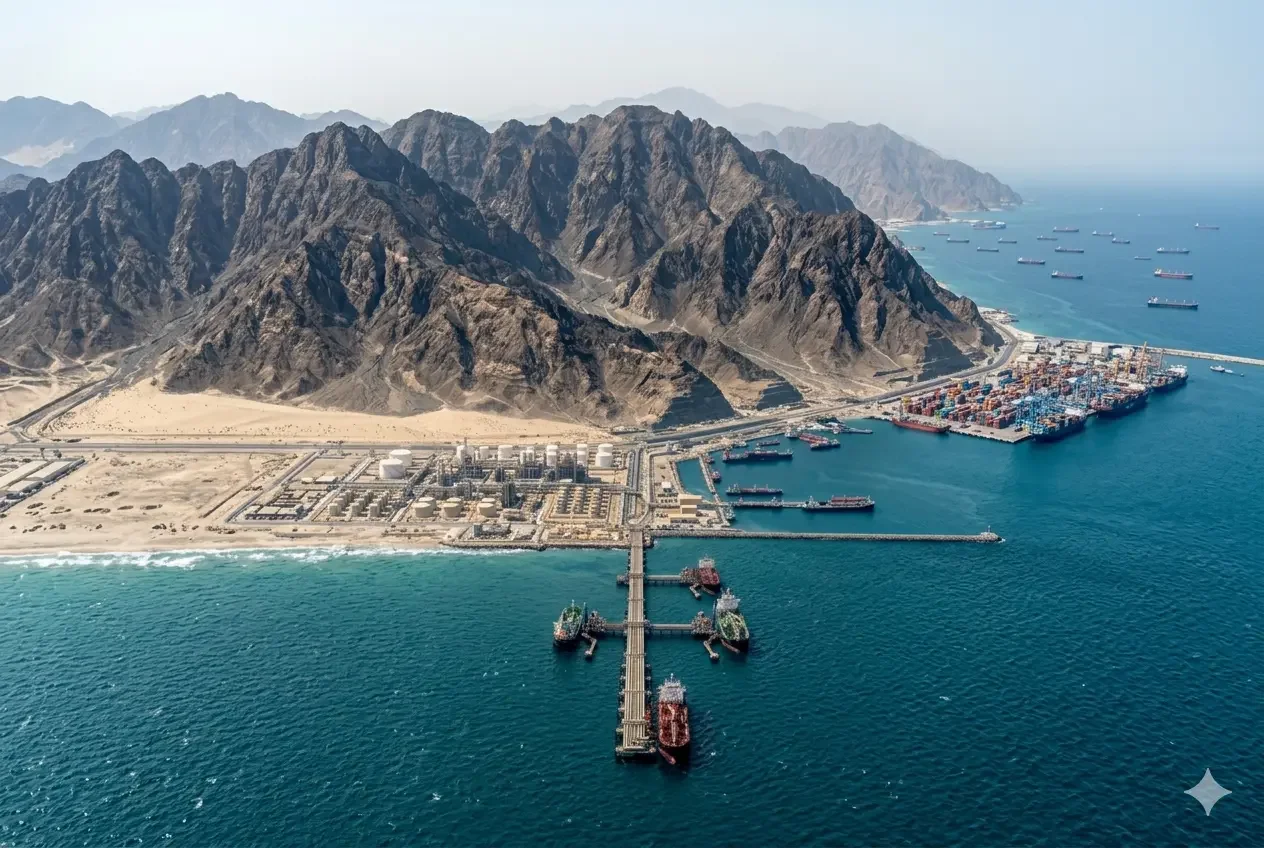
Image by AI/S&P
Strategic break with supranational trade control
The United Arab Emirates (UAE) has decided to withdraw from OPEC, a decision that alters the dynamics of global energy cooperation. After six decades as a member, the Emirates now choose to stand outside the oil cartel as a result of the supply crisis triggered by the war in Iran.
The withdrawal, which takes effect on May 1, is related to long-standing conflicts regarding OPEC's production quotas. Under the leadership of Saudi Arabia, the cartel has forced member states to limit oil production to keep prices high. For the Emirates, which have invested billions in expanding their production capacity, these restrictions have become an economic hindrance. By leaving the organization, Abu Dhabi frees itself from Saudi Arabia's governance and can now produce and sell oil in line with its own national interests and market needs.
A strategic triumph for Trump
The Emirates' exit from OPEC is a victory for President Donald Trump's foreign policy. The US administration has worked purposefully to undermine multilateral cartels. The Emirates' break gives Trump exactly what he needs: the opportunity to negotiate directly with individual countries. Through the split in OPEC, Trump can exert far greater pressure and enter into bilateral agreements that benefit American interests.
For Trump, energy and resource management functions as a security policy tool rather than a pure trade arrangement. The US defines access to critical raw materials as a matter of national security. Washington is establishing legal mandates to ensure that strategic resources in Western countries are managed within an American-led security zone; this work is expected to be completed this summer. Consequently, allies must submit to energy control to maintain the defense alliance with the US, putting both the EU's energy and defense needs under pressure.
This development comes the week after the EU introduced sanctions package 20 against Russia, which throttles energy deliveries from its neighbor to the east. Norway is now the EU's closest, most secure, and largest energy supplier.
Fragmentation of world trade
It will have an impact on world trade when one of the world's largest oil producers breaks out of the established system; OPEC's role as a price stabilizer will be reduced. This must also be seen in connection with the US having secured control over oil resources in Venezuela and critical maritime transport routes in the Middle East; in addition to Hormuz, the US has control over the Suez Canal through the Middle East alliance (Abraham Accords).
In practice, the Trump administration has gained a double grip on the global market: they now control both the raw material access in the West and the physical supply lines in the East. This combination gives the US de facto control over world trade, which no longer follows traditional market principles but is dictated by who controls the resources and the routes they are transported on.
In a normal situation, the result of higher oil production in the Emirates would lead to lower oil prices; this time, it is not certain that it will have such an effect immediately. Although the Emirates have a pipeline to the Gulf of Oman, large quantities must still pass through the Strait of Hormuz.
Norway constitutes a strategic piece between the EU and the US
Norway is not a member of OPEC but has historically operated in a market defined by the cartel's price management. Now that the Emirates have freed themselves from the oil cartel, diplomatic and economic pressure on independent producers increases. However, the pressure on Norway comes primarily as a result of the US being in conflict with the EU. Through oil and trade policy, Norway has defined Europe as virtually its only market (accounting for approximately 90%).
Norway is thus the EU's largest energy supplier in the form of oil and gas; furthermore, Norway has among the world's largest deposits of rare earth elements, making Norway a critical energy supplier for the EU in the future as well. As the US defines raw materials as a security matter and demands that allies submit to American energy control, the EU faces a major challenge that could involve Norway if a conflict arises. This is because, in the worst-case scenario, the US could throttle energy supplies to the EU if the conflict intensifies. Read more about the details of this situation and how the Trump administration has positioned itself strategically and legally for a potential confrontation here.
Last week, however, there was a positive development in relations between the US and the EU after the parties agreed on an action plan aimed at concluding a future binding agreement on the critical minerals supply chain. Furthermore, the EU implemented sanctions package 20 against Russia, which also affects China; this is something Trump has pressured the EU to carry out.
SOURCES
Reuters
UAE leaves OPEC and OPEC+ in major blow to global oil producers' groupThe Daily Tribune News of Bahrain
UAE to exit OPEC after more than 50 yearsThe Guardian
Trump uses Davos address to accuse oil producers of prolonging Ukraine warCouncil on Foreign Relations
Oil Prices and the U.S. Economy: Reading the Tea Leaves of the Trump Tweet on OPEC
Content on Society and Politics is based on reliable sources and actual events, providing a news-oriented perspective intented for further debate. To access the article’s author and the related debate, membership on Hudd is required.