

Sánchez consolidates for power, but it will backfire
Pedro Sánchez seeks to redefine Western alliances through migration policy, progressive socialism, and partnerships with the Chinese dictatorship—contributing to rising geopolitical tensions, pushing Trump closer to Morocco
April 20, 2026 | SOURCES | INTERNATIONAL POLITICS
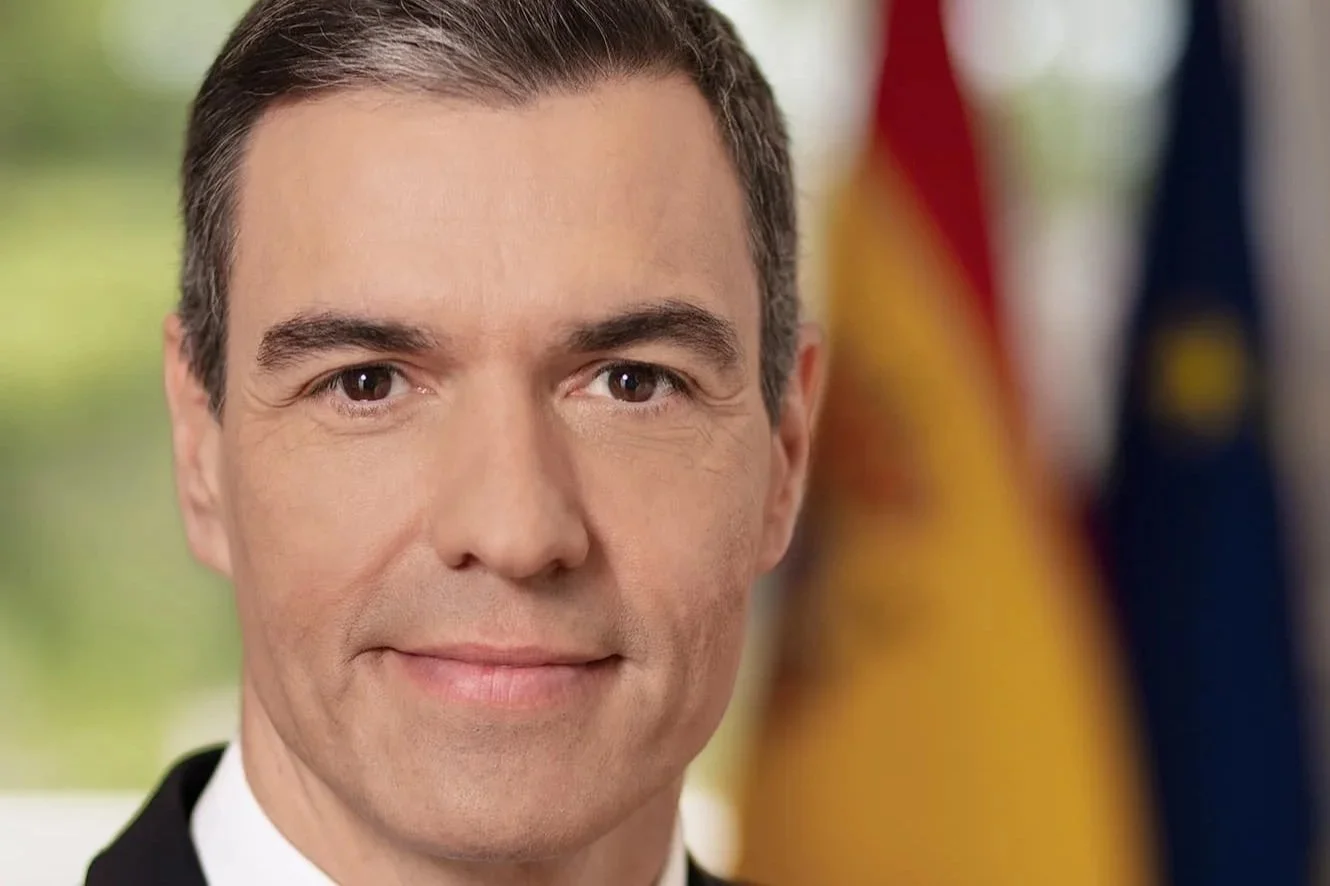
Photo: Foto: Ministry of the Presidency. Government of Spain, lamoncloa.gob.e
Global Progressive Mobilisation
Pedro Sánchez has assumed a new and aggressive role in international politics. This weekend, the Spanish prime minister delivered a speech at Global Progressive Mobilisation (GPM), where he is leading the formation of a new global bloc aimed at challenging Western conservatism through progressive social democracy, technocratic control, and alliances with the Global South. In his speech, Sánchez appealed with visionary force to global solidarity, social justice, and the need for a community that protects the most vulnerable in the face of future crises. Behind this suggestive rhetoric lies a stated objective to transform the traditional understanding of what it means to be an ally of the West.
Geopolitical crisis as a political tool
Sánchez applies methods developed during the COVID pandemic. Under the state of emergency, he implemented radical political measures, including establishing close alliances with China. This laid the foundation for Sánchez’s power structure.
During March and April this year, Sánchez has repeatedly challenged Trump’s vision for Western trade alliances, as the American president seeks to make the West independent of China. Sánchez refuses to join the US-led supply chain for critical minerals (FORGE), a position he shares with the EU and mineral-rich Norway, read more here.
Challenges the US, the Middle East and the EU
Sánchez has also challenged the United States and its Middle Eastern allies in the Abraham Accords, first by denying the use of Spanish bases and airspace in the war against Iran, and then by urging the EU to cut ties with Israel. Rhetorically, he frames this as a defense of international law and a necessary fight against Western double standards, insisting that the same moral principles must apply in the Middle East as in Ukraine.
As a consequence, Sánchez’s actions may contribute to a situation in which the Middle Eastern alliance blocks shipping through the Suez Canal, delaying the flow of goods from China as vessels are forced to reroute around Africa. This poses a threat to European industry, which Sánchez may benefit from, as it creates an opportunity to position Spain. The resulting economic shock and shortages of goods could create a climate that justifies state intervention in the market and the introduction of emergency laws. While this is not essential to Sánchez’s ideological goals, the situation could enable the realization of strategic plans to establish Spain as the new main gateway for European transport. This would not only make the European continent dependent on Spanish-controlled infrastructure, but also contribute to bringing the EU closer to China.
In 2020, during his first presidential term, Donald Trump recognized Morocco. In January this year, King Mohammed VI agreed to participate in Trump’s peace board. In early April, Trump announced that the United States is establishing a drone base in Morocco, which could indicate that the U.S. is preparing for a military conflict in the Strait of Gibraltar.
Strategic break with the West
To secure a new power base, Sánchez is breaking with the traditional ties of the Western security community. By rejecting a Western, US-led supply chain for critical minerals, Sánchez is also undermining the development of Spanish industry. The country is entirely dependent on new green technology to address the serious climate challenges it faces.
Sánchez deliberately chooses vulnerability over security, filling this gap with 19 strategic agreements signed with Beijing earlier this month. By tying Spanish infrastructure and technology to China, he chooses a partner that supports an authoritarian model of governance over Western market freedom. He is using the geopolitical situation to pivot toward China instead of securing Spanish industrial independence. It is therefore reasonable to believe that this is a strategy Sánchez has developed in cooperation with China.
Demographic and democratic change
Alongside the economic shift, Sánchez is carrying out a demographic transformation. He positions Spain as the “mother of migration,” thereby taking an ideological distance from conservatism. Migration policy increases Sánchez’s popularity and may secure re-election, while also functioning as a strategic measure to neutralize political opposition rooted in a population’s national and ethnic identity.
This development is reinforced by Sánchez’s drive to strengthen supranational bodies such as the EU, Socialist International, and the UN at the expense of national sovereignty. By transferring power to unelected technocratic institutions, he creates a system of governance shielded from direct popular opposition and democratic processes.
The moral contradiction
Sánchez’s project collides in the meeting between idealistic rhetoric and the authoritarian reality in Beijing. A logical inconsistency arises when he promotes a vision of humanism and minority protection while binding Spain to a dictatorship known for systematic repression and mass surveillance. By positioning himself as a defender of democracy in the West while maintaining a partnership with a Chinese one-party state, he also reveals a moral contradiction. He demands respect for international law in the Middle East, yet sacrifices universal human rights to secure Chinese capital and technocratic control.
European polarization
Pedro Sánchez now appears as a driving force behind political polarization in Europe. This development is a direct response to Donald Trump and the right-wing wave he represents—a wave Sánchez described as “dead” in his speech this weekend. In reality, it is being reinvigorated by Sánchez’s rhetoric.
Society and Politics has previously expressed concern that Europe is moving away from the liberal center. Such a development contributes to intensifying the level of conflict in geopolitics. As fear-based rhetoric increasingly shapes political debate on both sides, there is reason to take this seriously. The public should be aware of the dynamics now unfolding and avoid being drawn into a polarization that further deepens divisions.
SOURCES
DRM News
FULL SPEECH: Spain’s PM Sánchez Calls Out Far-Right, Unveils Vision for New World Order | AC1GReuters
Global leftists rally in Spain hoping to spark resurgence against far rightThe Guardian
Spain denies US permission to use jointly operated bases to attack IranThe Guardian
Spain closes airspace to US military over Iran war, widening rift with USLe Monde
Pedro Sanchez once again visits Beijing and embraces closer ties with ChinaLe Monde
Why Morocco's king accepted to join Trump's 'Board of Peace'Firstpost
Trump Pushes Morocco Drone Hub as US Rewrites Africa Strategy | Firstpost Africa
Content on Society and Politics is based on reliable sources and actual events, providing a news-oriented perspective intented for further debate. To access the article’s author and the related debate, membership on Hudd is required.