

Trump’s U.S. strategy and the relationship with Europe
Trump’s national security strategy paint a clear picture of the direction the United States is heading. The strategy has implications for Europe’s security, economy, and political room for maneuver, and shows what expectations the U.S. has for its allies.
December 11, 2025 | INTERNATIONAL POLITICS
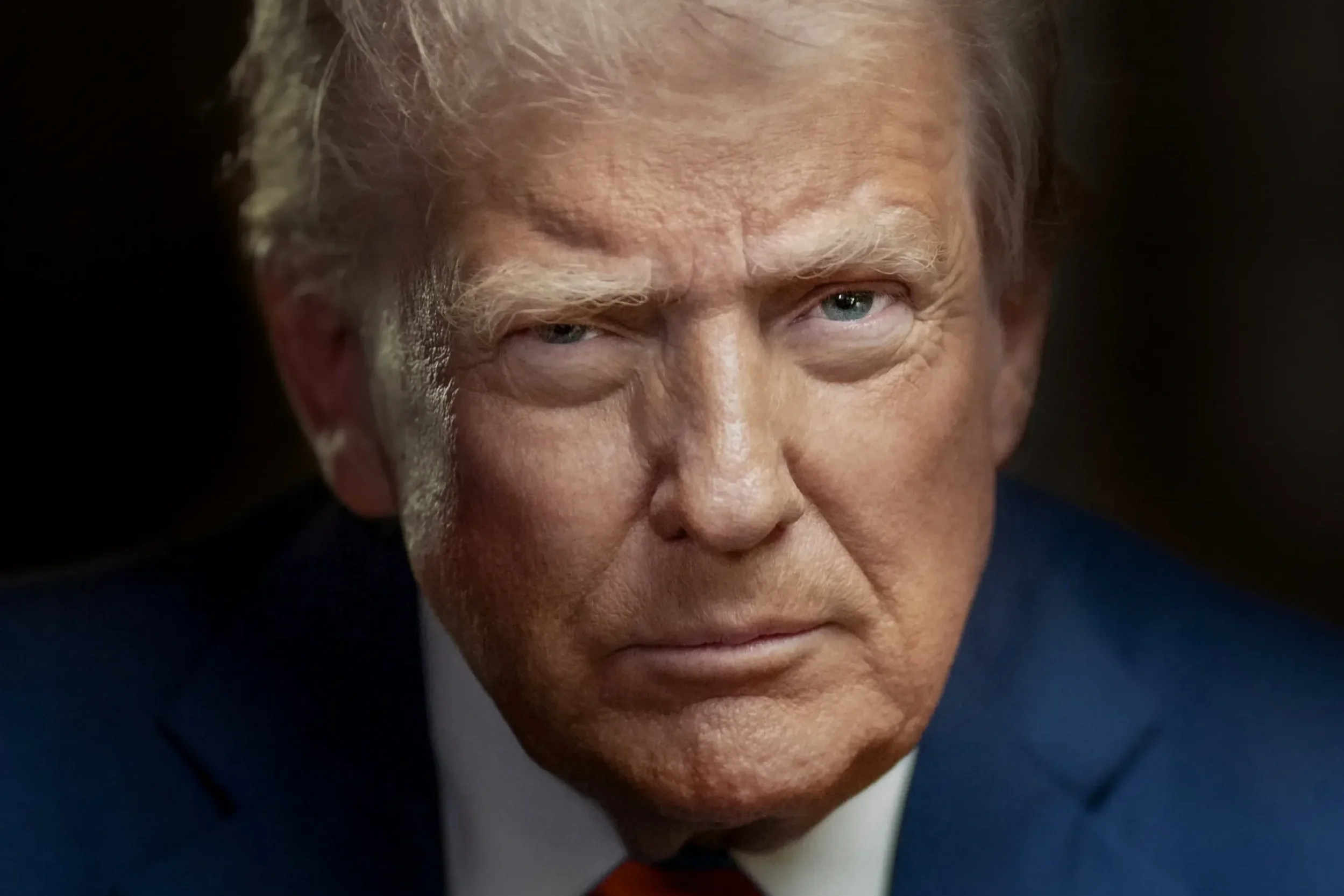
Foto: Official White House Photo (Public Domain)
In an interview with Politico on Tuesday, Donald Trump delivered several statements about Europe. These align with and elaborate on earlier remarks from the president, including his speech at the United Nations in September. The comments are drawing attention because they are direct and undiplomatic. He says some European leaders are capable while others are not; he has good relations with some, others less so. He generally believes European leaders talk too much and act too little, describing Europe as weak.
On Ukraine, Trump says Zelenskyy and Putin hate each other, which makes dialogue difficult. He makes no secret of viewing Russia as the stronger party in the conflict and argues that it is time for both Zelenskyy and other European leaders to accept that parts of Ukraine are lost. He nevertheless notes that Europe is entitled to keep the war going for as long as it wishes, but that it will not end well and the losses will be great.
Trump goes on to say that Europe faces major trade challenges, that European countries are gradually weakening economically, and that their leaders are not smart enough to reverse the trend. Still, migration is his main focus in the 45-minute interview. Trump argues that the Western world is being destroyed by migration and that it must come to a halt. He says he sees for himself what is happening to Europe and adds that Europe was once one of the greatest places on earth. He argues that the change is driven by nations absorbing large migrant groups with foreign value systems, who then gain more influence in positions of power. This, he says, causes European countries to lose their original identity and eventually their sovereignty. He cites Paris, London, and Sweden as examples of what he calls terrible changes, and points to Poland as a country that has managed immigration well. Trump believes Europe will be ruined within 20 years unless sweeping changes are made, the most important being to close the borders to migrants, as he says he has done in the United States.
Trump recently presented a national security strategy for the United States. In the Politico interview, he says he is the world’s most transparent politician, and the national strategy reflects that claim. The strategy shows that Trump works in a targeted manner, not unpredictably or randomly as some like to portray it. A more accurate observation seems to be that he is willing to change tactics if they fail, something repeatedly seen in his efforts to mediate between Ukraine and Russia — which leaves an impression of chaos. He states in the interview that he believes European leaders simply do not know what to do. Let us now take a closer look at Trump’s security strategy.
The United States’ National Security Strategy
The strategy opens by stating that it is not rooted in traditional political ideology. It is driven primarily by what works for the United States: “America First.”
The document reflects elements of American organizational psychology in the way it presents its goals. Americans are to be skilled, hardworking, and proud. The strategy emphasizes democracy and freedom—economic freedom in particular. The U.S. is to succeed by putting America first in all areas: for its citizens, its industries, and global trade. The country’s interests and borders are to be guarded by the military, which is expected to operate closer to home rather than taking part in other nations’ conflicts. The U.S. will promote innovation in its industries and provide jobs for its own citizens. World trade is to follow principles of self-sufficiency and fairness, with tariffs as one of the tools. The strategy cites Alexander Hamilton, one of the nation’s founders, who argued that the newly established state had to become self-sufficient in raw materials. The U.S. will secure access to critical minerals and materials through domestic production and alliances; this also means that the global market will be monitored by the intelligence services. Furthermore, the U.S. aims to reclaim energy dominance—oil, gas, coal, and nuclear power.
What has drawn the most attention in the strategy is the section about the Western Hemisphere. After what it describes as years of neglect, the Monroe Doctrine is to be revived to restore U.S. superiority in the Western Hemisphere. James Monroe was president when he introduced the doctrine in 1823. In brief, it set out that the United States would: 1) not interfere in European affairs; 2) recognize, but not intervene in, other colonies on the American continent; 3) close the Western Hemisphere to new colonies; and 4) regard European interference in states on the American continent as a hostile act against the U.S.
President Trump has introduced additions to the doctrine referred to as the Trump Corollary, which is intended to ensure the United States’ access to strategically important geographic areas across the entire American continent. The corollary is also designed to prevent competitors outside the Western Hemisphere from placing forces, owning, or controlling strategically important assets in the Americas that could threaten U.S. power, priorities, or security interests.
The United States’ objectives for the Western Hemisphere are summarized as “Enlist and Expand.” The United States will engage established partners in the hemisphere to control migration, stop the flow of narcotics, and strengthen stability and security on land and at sea. At the same time, the U.S. will expand by cultivating and strengthening new partners, while enhancing its own appeal as the preferred economic and security partner in the hemisphere.
The strategy also explains what the United States wants in and from the world. The NSS states that the U.S. wants to ensure the Western Hemisphere remains stable and well-governed enough to prevent and discourage mass migration to the United States. It also notes that the U.S. wants to support its allies in preserving Europe’s freedom and security, while restoring Europe’s civilizational self-confidence and Western identity.
The document declares that the era of mass migration is over and describes President Trump as having cemented his legacy as “The President of Peace”.
The United States will be prepared to assist friendly states—potentially through more favorable treatment in trade, technology sharing, and defense procurement—if they voluntarily assume greater responsibility for security in their own neighborhoods and align their export controls with U.S. interests.
The U.S. will strengthen critical supply chains in the Western Hemisphere, reduce dependencies, and enhance American economic resilience. Partnerships will be structured in ways that benefit both the United States and its partners, while making it harder for non-hemispheric actors to expand their influence.
The strategy says the United States will reward and encourage regional governments, political parties, and movements that generally align with U.S. principles and strategic goals. It also states that the United States will not overlook governments with differing views if they nevertheless share interests and wish to cooperate with the U.S
Conditions for U.S. partners—and for any assistance the United States provides—must be tied to reducing hostile foreign influence, whether through control of military installations, ports, and key infrastructure, or through the acquisition of strategic assets in a broader sense.
In a chapter titled “Promoting European Greatness,” the strategy addresses the United States’ relationship with Europe. It notes that continental Europe’s share of global GDP has fallen from 25 percent in 1990 to 14 percent in 2025, attributing part of this decline to national and transnational regulations that, in the strategy’s assessment, undermine creativity and industriousness.
Here follows renditions from the chapter on Europe
The economic decline in Europe is overshadowed by the real and far more serious prospect of civilizational erasure. Europe faces extensive activities by the EU and other transnational bodies that undermine political freedom and sovereignty, migration policies that are transforming the continent and creating conflict, censorship of free speech and suppression of political opposition, falling birth rates, and a loss of national identities and self-confidence.
This lack of confidence is most evident in Europe’s relationship with Russia. European allies have a significant hard-power advantage over Russia by almost every measure, except for nuclear weapons. As a result of Russia’s war in Ukraine, European relations with Russia are now heavily strained, and many Europeans view Russia as an existential threat.
The Trump administration finds itself at odds with European officials who, it says, have unrealistic expectations about the war and are locked in unstable minority governments, many suppressing basic democratic principles to stifle the opposition. This is strategically important for the United States precisely because European states cannot reform themselves if they are mired in political crisis.
Nevertheless, Europe remains strategically and culturally crucial for the United States. The transatlantic trade relationship remains one of the pillars of the global economy and of American prosperity. The United States cannot afford to discount Europe — that would contradict what the strategy seeks to achieve. American diplomacy should continue to defend genuine democracy, freedom of expression, and unreserved celebrations of the individual character and history of European nations. The goal should be to help Europe correct its current course. The United States will need a strong Europe to compete successfully and to work with the U.S. to prevent any rival from dominating Europe.
In the long term, it is more than likely that some NATO members will, within a few decades, become majority populations not of European origin. It is therefore an open question whether Europe will see its place in the world, or its alliance with the United States, in the same way as those who signed the NATO pact did.
Commentary from Society and Politics
The part of the European public that has closely followed how this year has unfolded is unlikely to be surprised by the strategy. Those who have managed to look past Trump’s undiplomatic, direct, and at times rude behavior have already grasped what his strategy is and which methods he employs. Trump is probably quite right that Europe’s leaders do not know what to do. First, he insults them intellectually, and then he insults the entire European Union and what it stands for. Even so, we should expect that Europe’s leaders collectively have the intellect to set the insults aside, study Trump’s strategy, understand how it affects Europe, and determine how to handle it. Trump has outmaneuvered them, and he appears openly disappointed that they are not keeping up with his vision for the Western Hemisphere.
If the EU does not study the strategy thoroughly and understand what it implies, things could go very wrong for Europe—exactly as Trump predicts. Not necessarily because of migration, as he emphasizes, but rather because the EU lacks a sustainable strategy for the future. The goal was to establish the European Union; now that it is in place, the EU is preoccupied with internal diplomacy and an enormous bureaucracy.
The EU faces major challenges, even if they are not exactly as Trump presents them. The EU has not managed to increase its gross domestic product (economic growth) in parallel with population growth. The EU must source a large proportion of its energy and raw materials for the industry from outside the union, which means the internal market cannot generate long-term real economic growth.
When comparing the European continent with competing regions, the EU is resource-poor—particularly when it comes to critical minerals. A general lack of resources is a reality the EU has failed to account for. This profound weakness strikes at the core of the EU’s concept of the internal market. Furthermore, the EU is heavily constrained by layers upon layers of bureaucracy between the public, businesses, and Brussels – what the U.S. strategy refers to as national and transnational bodies. This not only impedes development; it is also extremely costly.
In addition to natural resources, the major difference between the United States and Europe is that Europe has abandoned Christian values. Liberalism has dominated Europe for decades, making religious affiliation irrelevant to politics. Most Europeans support this development on the basis of equality. The separation of state and religion became a theme in Europe even before the major migration wave, but it is fair to argue that migration would not have reached this scale without liberalism. That does not mean the EU must shift to the right and embrace conservatism to climb out of the quagmire, even if the rightward winds suggest the public sees it that way. The real challenge European leaders face now is their inability to accept the situation as it is—something essential if they want to avoid a conservative turn. The EU struggles to unite—or pull itself together, if you will. There is a real risk that EU countries will act independently, something we have already seen examples of. More may break away as Britain did, in which case they would likely find an ally in the United States.
It has always been, and will always be, the case on this planet that every living being must adapt to hierarchy. Natural laws dictate that one will lose if one opposes forces one cannot match. If one risks losing, one should carefully assess what that loss entails. Donald Trump believes Europe lacks self-confidence, but it may be more accurate to say it lacks self-insight. Europe’s leaders should look deeply within and consider the consequences of their actions for the continent’s future.
As for Norway, the Labour Party—and the Conservatives, for that matter—have chosen an EU that is in deep crisis. They believe Norway is responsible for supplying the EU’s internal market and industry with raw materials such as fish, oil, gas, renewable energy, and minerals—without Norway getting much in return. EU membership would severely damage Norway’s economy: our resources would disappear into an economic system that does not generate real GDP growth. The EU’s internal market is not viable, even with Norwegian natural resources. More importantly, the EU is not capable of defending us against Russia, read more here.
If it was not clear before, the U.S. national security strategy shows what the United States expects from its allies. The expectations are high, but the U.S. is also in a position to impose them. The U.S. forces no one; it invites cooperation on its terms. Not cooperating means one cannot expect support from the United States, which has consequences for access to critical raw materials, technology, trade, and military security. It is take it or leave it.
Norway should promptly enter into a mineral and defense agreement with the United States to secure peace and prosperity for current and future generations. Even the EU benefits from Norway remaining outside the Union; Norway’s resources would be safe from Putin if we were directly allied with the United States. This would ensure the EU has a close and reliable ally for raw-material supplies—both directly from Norway and from the countries Norway would then be free to align with.
RELATED ARTICLES
SOURCES
Politico
Trump InterviewWhite House
U.S. National Security StrategyABC News (YouTube)
Trump addresses United Nations General AssemblyBritannica
The Monroe Doctrine
Content on Society and Politics is based on reliable sources and actual events, providing a news-oriented perspective intented for further debate. To access the article’s author and the related debate, membership on Hudd is required.
