

Iceland said no to resuming EU negotiations
Icelanders showed strength and self-confidence in rejecting EU membership. The country has no military of its own, but understands the value of fish and minerals. They have established that the EU is for resource consumers, not resource owners.
August 30, 2026
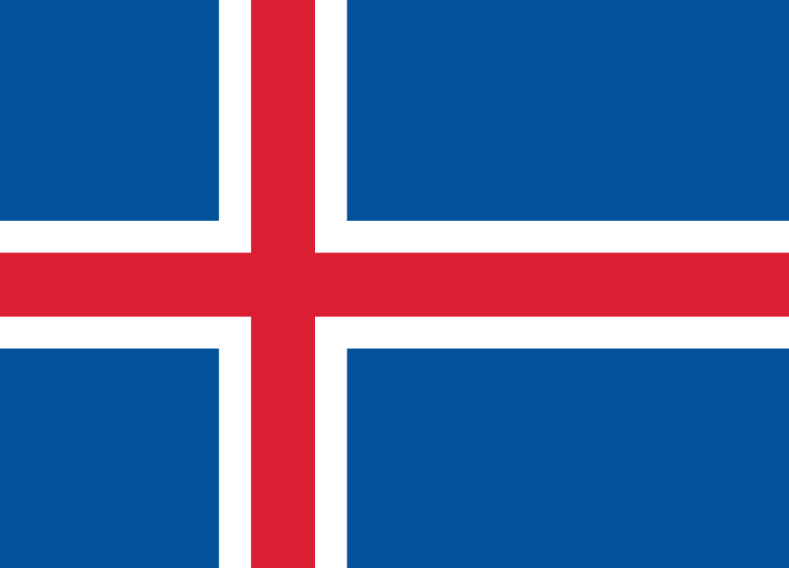
Flag of Iceland
Has fish and minerals, but no army
Iceland entered this referendum with two vulnerabilities pointing in opposite directions. Economically, the country rests on resources: fish and energy-intensive metals industry. Militarily, it rests on outside support, as the country has no army of its own. It has NATO and a bilateral agreement with the United States from 1951. This leaves Iceland exposed to economic coercion from both sides of the Atlantic, without the means to defend itself against either.
Pressure from the EU
The European Union has invested time and prestige in the Icelandic referendum. The EU needs Iceland because of its strategic position in the Arctic and its natural resources. Brussels speaks of European cohesion and wants to strengthen its position in the Arctic with Canada on the western flank and Norway on the eastern flank.
The EU nonetheless walked into its own protectionist trap. In November 2025 it adopted safeguard tariffs on ferroalloys and included the EEA countries Norway and Iceland for the first time. Iceland's foreign minister, Þorgerður Katrín Gunnarsdóttir, stated that the measure breaches the spirit of the EEA Agreement and withheld her signature from a defence declaration with the EU.
The double standard in Brussels had been exposed. The EU protects industry in the large Central European countries while treating allied resource owners as a threat, despite depending on them to meet the unions unlimited demand for resources.
Brussels' promises of flexibility for the fisheries sector in future negotiations therefore fell flat in Iceland. The voters were not convinced.
Pressure from the United States
Trump's demands for control over Greenland influenced the campaign. Iceland lies 290 kilometres away, and the question was obvious: is Iceland next? Iceland's prime minister, Kristrún Mjöll Frostadóttir, has called it a massive problem that leaders of the free world use aggressive and threatening rhetoric.
The US, like the EU, wants control over both the Arctic and its natural resources. Where the pressure from the EU is protectionist in nature, the pressure from the US is both protectionist and power-based.
As Erlingur Erlingsson notes in Just Security, Denmark cannot invoke NATO's Article 4 in the Greenland conflict when the aggressor is the alliance's strongest member, the US. The same applies to Iceland, which in addition has a defence agreement with the US.
The yes side argued that the EU could provide the protection NATO no longer guarantees, but the fact is that the EU does not have sufficient mineral resources on its own soil to produce enough weapons to defend any EU country for many years to come.
The no side pointed out that EU-membership provides no defence capability, only lost control over what Iceland actually owns.
The result
RÚV reported on Sunday that the no side won by 52.5 to 47.5 per cent. The yes side led for a long time on votes from the capital, Reykjavík, before the districts turned the result. Turnout was on a par with the 2024 parliamentary election.
The referendum is advisory, but the government has committed to following it and had stated in advance that a no would settle the matter.
The way forward for Iceland
Iceland was split down the middle on EU membership. The divide follows geography and industry, capital against districts.
The problems that drove the yes side remain. The policy rate stands at 8 per cent against the EU's 2.25, the króna is volatile and mortgages are expensive.
Iceland must now unite its people around a common goal of protecting its natural resources, strengthening its industry and securing its military position for the future.
The EU is for resource consumers, not resource owners
EU trade policy is made for resource consumers, not resource owners. Neither Iceland nor Norway has managed to bring prices and interest rates down to EU levels under the EEA Agreement. The reason is that the value of natural resources cannot be fully realised under EU legislation. The situation would grow worse under full membership, as control over those resources would be weakened further.
The ferroalloys case should have changed the course of the Norwegian Labour government on EU membership. Unlike the protests from Iceland, the government's response suggested it would use the tariff as an argument for EU membership rather than reject it under Article 10 of the EEA Agreement, which prohibits tariffs between the parties.
Icelanders have answered the question Norway has avoided for thirty years: should a country that owns fish, hydropower, oil, gas and minerals bind itself to a union that first and foremost represents the buyers? Iceland's answer was no, and it strengthens the Norwegian no side.
For the United Kingdom, the signal points in the same direction: there is a viable position outside the EU, and new oil production is now being planned where EU rules would have imposed limits.
These are signals that the North Atlantic countries — the United Kingdom, Greenland, Iceland and Norway — should unite around a trade policy that serves resource owners.
Read about Norwegian minerals and the Labour government's plan to hand control over them to the EU in the Mineral Petition.
RELATED ARTICLES
SOURCES
Euronews
Iceland votes 'No' to further EU accession talks in tight resultABC News/AP
Trump's Greenland threats cast a shadow on Iceland's voteJust Security
Is Trump pushing Iceland into the EU?Euractiv
Iceland will not sign defence statement as initial reaction to EU metal trade safeguardsRegjeringen.no
Safeguard measures on ferroalloys
Content on Society and Politics is based on reliable sources and actual events, providing a news-oriented perspective intented for further debate. To access the article’s author and the related debate, membership on Hudd is required.