
US considers retreat from Germany after Merz statements
Criticism from Merz and European leaders is raising the level of conflict and serves Trump’s strategy better than Europe’s own interests. Here’s why.
April 30, 2026 | SOURCES | INTERNATIONAL POLITICS
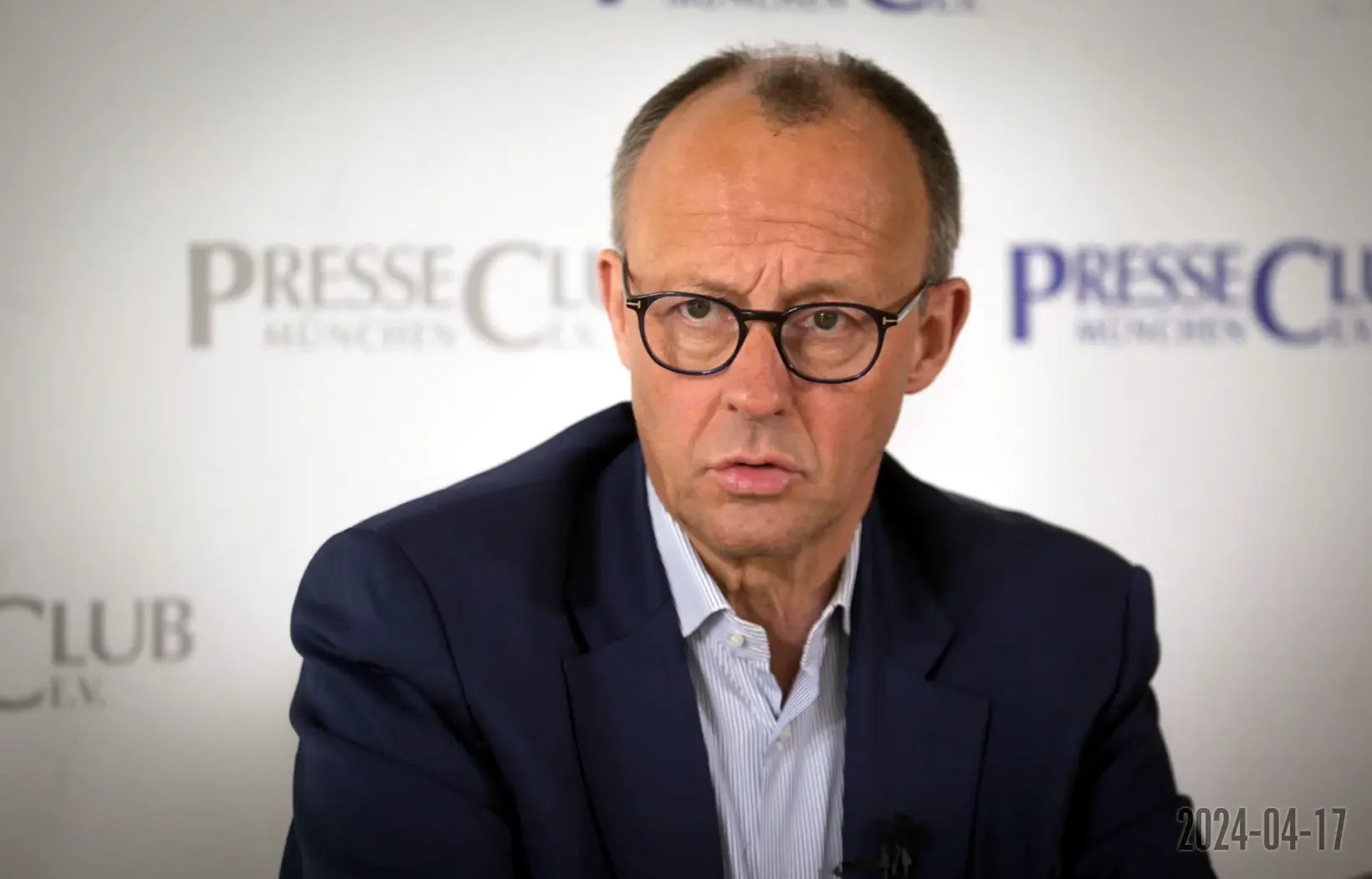
Friedrich Merz, Photo: Michael Lucan, Wikimedia Commons, CC BY-SA 3.0
Merz says the US is being humiliated by Iran
The war between the US and Iran has developed into a deadlocked conflict, in which the US now controls the Strait of Hormuz—a key route for global oil transport. At the same time, negotiations have stalled, and Iran will not agree to new agreements related to its nuclear program on the terms set by the US.
Earlier this week, German Chancellor Friedrich Merz issued sharp criticism of the US and stated that the country is, in practice, being “humiliated” by Iran. He pointed out that diplomatic efforts have not succeeded as Europe had hoped, and also highlighted the economic consequences for Europe, particularly through higher energy prices and uncertainty.
Trump says Merz is uninformed
President Donald Trump reacted immediately to the criticism and stated that Friedrich Merz “does not know what he is talking about.” At the same time, he rejected the claim that the US is being humiliated by Iran and directed criticism at Germany following the remarks. It is also the case that the EU has chosen not to participate militarily in the conflict, which underscores the distance between the American and European positions.
The conflict escalates
Afterwards, Friedrich Merz has tried to tone down the remarks and stressed that the relationship between Germany and the US remains good, despite the disagreement. However, this did not succeed. Last night, Donald Trump wrote on Truth Social:
“The United States is studying and reviewing the possible reduction of troops in Germany, with a determination to be made over the next short period of time. Thank you for your attention to this matter!”
The statement shows that the US is considering reducing its military presence in Germany, which could have consequences for the security balance in Europe.
Europe is divided
Europe appears divided in the face of the conflict. The United Kingdom, France, Germany, and Spain—led by Keir Starmer, Emmanuel Macron, Friedrich Merz, and Pedro Sánchez—have made different political statements. The European heads of state have only managed to unite around diplomatic methods in the conflict with the US, which have not been successful. Despite increased defense budgets and rearmament, it amounts to too little and too late to assert themselves militarily; moreover, the rearmament was initiated by Donald Trump and American presidents before him.
Pedro Sánchez has taken the conflict furthest by moving to concrete countermeasures. Spain has strengthened cooperation with the US’s arch-enemy China, which has created such great tension in its relationship with the US that it also has consequences for Europe, read more here.
Critical negotiations
In parallel, the EU’s negotiating position has been weakened after the union’s central trade negotiator, Sabine Weyand, resigned as a result of disagreements linked to the agreement framework with the US. This contributes to the impression of a Europe that is less able to act collectively in the face of growing external pressure.
However, the EU has conceded to the US in two key areas. It has introduced a 20th sanctions package against Russia that also affects China, which has responded with a warning, read more. Furthermore, the EU has signed an action plan to enter into a minerals agreement with the US, read more. It is possible that the EU is buying time in this way, but from the US perspective it is crucial that the EU actually signs the minerals agreement.
Developments in line with Trump’s strategy
The developments can be seen in connection with the US national security strategy, published in November, in which Donald Trump signaled a desire to invite Europe into a new world order on American terms. If the EU as a whole, and/or NATO members, oppose a multilateral agreement with the US, Donald Trump plans to enter into bilateral agreements with individual countries. A split in Europe would therefore support the American strategy, read more here.
The pressure the US is exerting on Europe, through control over resources such as oil, minerals, and other critical raw materials, appears to be part of Trump’s strategy. Europe’s lack of resources forms the core of the conflict, and in practice there are only two sides to join: China or the US. A little over a year after the trade war began, the EU has made very little progress toward establishing a third side together with the EEA, Canada, Australia, and other NATO countries—even raw material stockpiles remain very limited.
Both industrially and militarily, Europe faces significant challenges that are only communicated to a limited extent to the population, contributing to a false sense of security about what Europe can achieve on its own.
It appears likely that the US will in fact withdraw forces from Germany, and a conflict could further arise if the EU does not conclude new and decisive trade agreements with the US this summer. The US has positioned itself both strategically and legally for a possible confrontation with the EU between June 1 and July 24; read all the details in the complex picture here.
SOURCES
Truth Social
Message from Trump regarding possible reduction of Troops in GermanyReuters
Germany's Merz says relations with Trump are good despite spat over IranBloomberg
Trump Says Merz ‘Doesn’t Know What He’s Talking About’Financial Times
EU’s top trade official leaves after clashing over Trump dealCNBC
U.S. is ‘being humiliated by Iran,’ says Germany’s Merz, as Europe’s patience wanesThe Hill
Trump slams Merz, Germany after chancellor’s Iran ‘humiliation’ remarksWhite House
U.S. National Security Strategy
Content on Society and Politics is based on reliable sources and actual events, providing a news-oriented perspective intented for further debate. To access the article’s author and the related debate, membership on Hudd is required.