

The European Union cannot defend Greenland against the US
Europe lacks both military capability and control over critical resources. Yet political leaders act as if the union possesses strategic leverage, while reality points to powerlessness and mounting security risk.
January 6, 2026 | INTERNATIONAL POLITICS
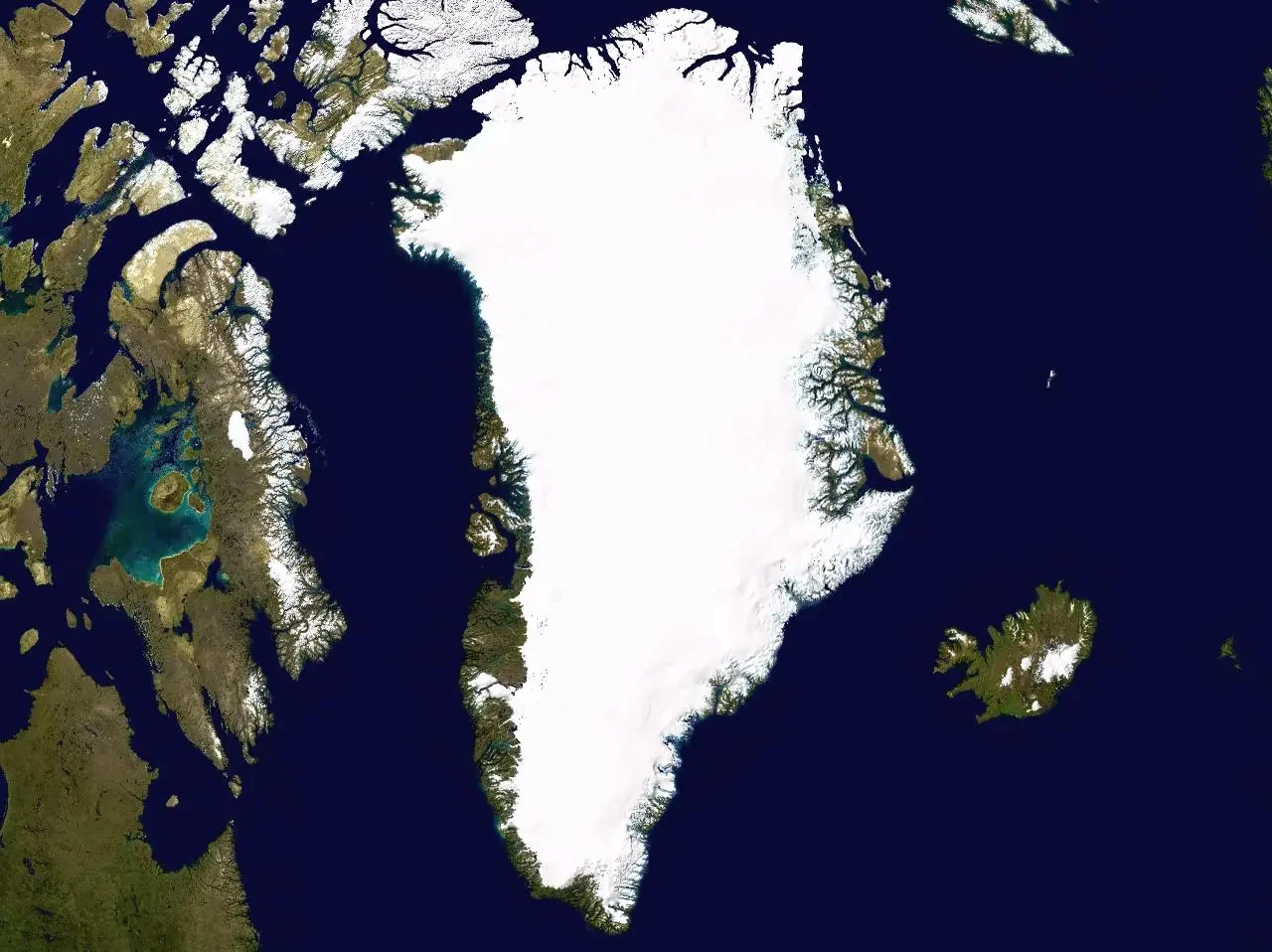
Image by AI/S&P
Europe's population is misled about defence capability
Large segments of the European population appear to believe that Denmark, and the British-European defense alliance that would remain within NATO if the U.S. annexes Greenland, would be capable of defending the island. This is not the case, but European leaders’ statements are so evasive that they create the impression that Europe has real defensive capacity.
Unless Europe chooses to ally itself with the authoritarian regimes of Russia or China, the United States can simply declare that it has annexed Greenland. It is also possible that China and Russia, on their own initiative, would oppose a U.S. annexation of Greenland.
The minerals in Greenland have military security significance
Greenland is important to security in the Arctic, now more than ever as the ice melts. Global warming also makes the island’s natural resources—minerals and oil—accessible for extraction. Over the past year, Society and Politics has published several articles to highlight that the tense geopolitical situation is driven by competition over minerals. Natural resources are decisive for military security and global power; therefore, these resources must also be accessible in a wartime situation, meaning they must be located on one’s own territory.
Europe has few mineral resources on its own continent and would run out of minerals for weapons production after only a few months of war. Society and Politics holds that European leaders are violating the democratic principle of transparency by withholding this information from the public.
Without mineral resources, protests have no value
The only thing European heads of state have the sense to do is protest. They have protested a great deal against the American president over the past year, without it leading to anything other than a very strained relationship between the US and the EU. Whatever one may think about Trump and the American administration, they are the strongest in the Western Hemisphere, and neither the public nor the European leaders have managed to come to terms with that.
In sheer contempt for Trump and his methods, Europe has lost its way and ignored the most important law of nature of them all: the right of the strongest. Faced with the strongest, dialogue goes further than protest; the European leaders have ignored the actual conditions and behaved like defiant children, quarrelling among themselves and putting the entire union at risk. At the same time they have led the public to believe that there is power behind these protests.
European resource crisis
Europe is in the midst of a severe energy and resource crisis caused by trade policy and a lack of resource planning. EU policy has been to import natural resources in order to produce within its own industry; therefore, tariffs have been imposed on a range of processed raw materials, such as processed fish and ferroalloys. Now a corresponding policy is hitting them, but they are unable to recognise it.
In the Norwegian budget agreement concluded between the Labour Party, the Centre Party, the Socialist Left Party and the Red Party this autumn, it states: "The strategy shall take into account Europe's need for secure energy supplies." Furthermore, extraction of minerals on the seabed has been halted for the current parliamentary term.
As regards minerals on land, the Labour government will hand control over these to the EU under a regulation called the CRMA. The consequences for Norway of the electricity directive ACER are only a drop in the ocean compared with the effects of the government's policy and the budget agreement.
Norwegian resources and value creation will disappear into the black hole that the EU's economy is; it becomes even worse when the government places all its cards in a union that cannot provide military security.
Trump's protectionist policy means that control over natural resources will secure raw materials and cheap energy. This is nothing other than what China has done since the 1970s, and which has formed the basis for its incredible growth from a developing country, via a developed country to a technology nation, becoming the world's most powerful country. In a matter of months, Trump has taken back some of the world's power and consolidated his position as the ruler of the Western Hemisphere. The EU is in a deeper crisis than European leaders and the mass media communicate.
The Labour government is failing Norway
S&P believes the Labour government has failed by not concluding a tariff and trade agreement with the US covering mineral resources from Norway in exchange for weapons from the US. That would have given Norway military security from the US.
The EU's minerals regulation should be stopped when it comes to a vote in the Storting; it will be catastrophic for future generations that we hand control over Norwegian minerals to the EU. It is very hard to understand how the Labour government has led Norway into danger of war when it could have been avoided; the only explanation is that the government's strategy is to lead Norway into the EU.
Read more about the minerals regulation CRMA in Mineral Petition.
Content on Society and Politics is based on reliable sources and actual events, providing a news-oriented perspective intented for further debate. To access the article’s author and the related debate, membership on Hudd is required.
