

USA and Europe still on diverging paths in Munich?
The US and Europe do not stand significantly closer at the Munich Security Conference, despite the concluded declaration of cooperation on critical minerals and a diplomatic tone.
February 14, 2026 | INTERNATIONAL POLITICS
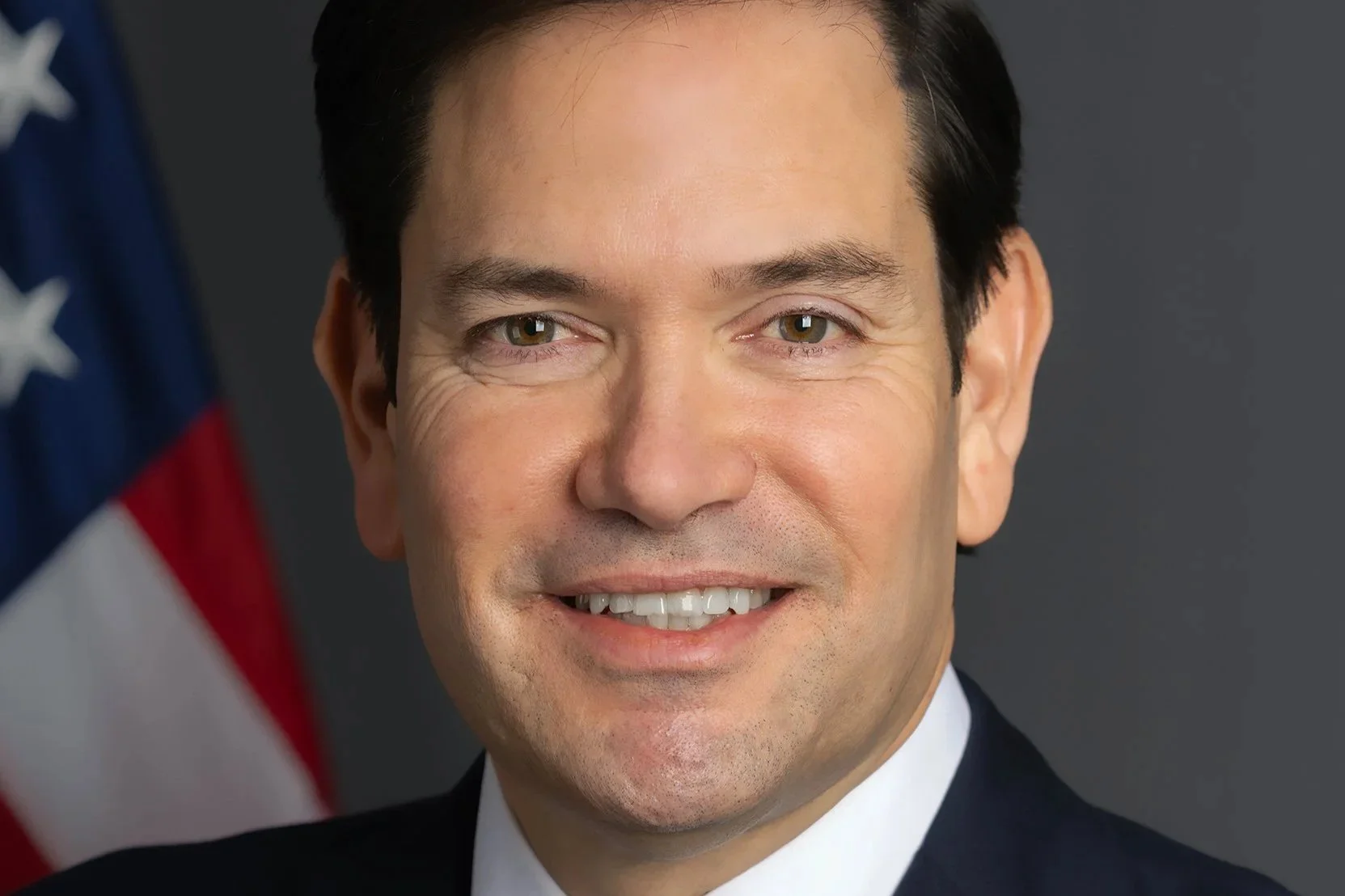
Official portrait of Secretary Marco Rubio (Official State Department photo)
Attends the Security Conference with the Greenland crisis resolved
US Secretary of State Marco Rubio arrives at the Munich Security Conference with the Greenland crisis resolved, at least temporarily. On 4 February, a historic ministerial meeting was held in Washington, known as the Inaugural Critical Minerals Ministerial. The meeting was chaired by Rubio and brought together representatives from 54 nations, including the European Commission. Norway attended as an observer.
During the meeting, the EU entered into a declaration on minerals cooperation with the United States and Japan. This is the first formal sign that an agreement has been reached on Greenland, as NATO Secretary General Mark Rutte and Donald Trump stated at the World Economic Forum meeting in Davos in January. There, critical minerals were elevated from a trade issue to a central element of NATO's collective resource defence.
A conciliatory speech
Marco Rubio spoke today to European leaders at the Security Conference. This year's speech was more conciliatory than last year's, delivered by Vice President JD Vance, a point he made himself – that the United States may come across as direct and abrupt, but that this stems from concern about Europe's development.
The US strategy
In the speech, Rubio focused on the close historical, cultural and religious ties between the US and Europe and even stated that America was a child of Europe. He based the speech on President Trump’s efforts to restore and renew the United States, with a vision of continued sovereignty, renewed pride, vitality and future prosperity. He says the US can do this alone, but that the US wants Europe to share the vision and restore and renew in cooperation with them. He urged Europe to stop being ashamed and instead be proud of its cultural heritage — with a clear reference to migration. He said the US needs courageous allies capable of defending themselves and who will pass strong and sovereign nations on to their descendants.
At the same time, Rubio says the Western world has failed because its own defense capability has been replaced with participation in international organizations that do not have the ability to resolve conflicts, referring among other things to the war in Ukraine. He further says other powers have used this situation to build critical production chains (supply chains) within energy and critical minerals in order to control the world, and that this power is abused by restricting and sanctioning deliveries. He did not mention the powers by name, but it is implied that he is referring to Russia in energy and China in critical minerals.
Today’s speech from Marco Rubio was fully in line with the American security strategy published in November last year, read more here.
Comment from S&P for context
Europe is in such a severe mineral shortage that it will run out of weapons after a few months of war; there are already problems producing enough weapons for the war in Ukraine. China’s monopoly on critical minerals was the triggering cause of Donald Trump initiating the trade war one year ago; below you will find links to several articles on this topic. Over the past year the US has significantly improved its mineral situation by initiating new mineral extraction domestically, entering mineral agreements with a number of countries, “securing” mineral resources in Venezuela and through investments in mining companies around the world. Europe has entered a small number of mineral agreements and launched extraction projects, but is highly exposed because there are few mineral resources on the European continent. Europe is 98% dependent on China for rare earth elements and 70 to 90% dependent on other critical minerals. Deliveries to weapons production will be cut off by the enemy in a war; in this picture it must also be emphasized that the US controls transport routes in the Middle East and elsewhere in the Western Hemisphere, including Greenland.
Europe’s response to the US strategy
After Rubio’s speech, Norwegian Prime Minister Jonas Gahr Støre told TV2 that Europe should cooperate with the US in some areas, such as critical minerals. The Norwegian prime minister has, however, stopped such cooperation repeatedly over the past year; the statement is therefore remarkable and may be interpreted as reality beginning to sink in, read more here.
Both the EU, NATO and all security authorities in Europe define Russia and China as the greatest security risks and base European defense on the assumption that the US will come to the rescue if a NATO country is attacked. Despite Europe strengthening its own defense, independent defense is far into the future, if it is possible at all; read statements from the current and former NATO chiefs here. The US has made it completely clear for over a year that defense presupposes trade; therefore it should be noted that despite Rubio’s diplomatic tone today, it is emphasized that the US will restore and renew without Europe — this means Europe must choose the US as its primary trading partner. The EU has responded to the trade war by entering new trade agreements with Switzerland, India, Indonesia and Mercosur (South American countries); a new agreement with China may also come.
Earlier this week the EU, through President von der Leyen and President Costa, issued a statement launching the 28th regime. In short, this regime entails the EU introducing more regulations and fewer directives. A regulation is a law that replaces the member state’s own legislation; a directive is a law where the country can adapt its own legislation. In the statement, directives are described as gold-plating that hinders development in the EU; member states concerned with their own sovereignty will see this as centralization of power. Furthermore, the 28th regime will establish a common savings and investment union including market integration and a new corporate form, EU Inc. It is clearly stated that the EU will establish the 28th regime regardless of support; it will be implemented with only nine of 27 member states.
Regarding migration, several EU countries have introduced stricter measures over the past year; there is movement both in political leadership and the population concerning migration. That social-democratic countries such as Norway introduce stricter rules may be recognition that a migration challenge exists — but it may also be strategically motivated in relation to the conservative wave, influence from the US and the prospect of losing voters.
Conclusion
In the US security strategy it is clearly stated that the US will support politicians and countries that share their vision for the Western Hemisphere. The EU is a fragile institution where internal tensions occur; this is something the US will exploit. The EU’s 28th regime may lead to new internal divisions. The conservative wave that has reached Europe will be strengthened as a result of contributions from the US. Although in the past month we have seen more diplomatic conduct from the US both internationally and domestically, this is probably linked to the election campaign ahead of the midterm election in the US in November. If the new Congress is composed such that Donald Trump can return to previous conduct, the situation will become tense again.
In any case, if Russia were to attack in any form — cyberwarfare is most realistic — the US will likely set conditions for military contribution. This could lead European countries to enter bilateral trade and defense agreements with the US, read more here. Europe’s strategy is based on the assumption that Russia does not attack; an attack would also lead China to fully or partially stop mineral deliveries to Western arms industry — something it is already doing in relation to the war in Ukraine.
Update 15 February 2026
Late Saturday evening, Marco Rubio announced that Norway and the United States are entering into a mineral partnership; read more here.
Content on Society and Politics is based on reliable sources and actual events, providing a news-oriented perspective intented for further debate. To access the article’s author and the related debate, membership on Hudd is required.
