

Through nine incidents, Store has put Norway’s security at risk
The geopolitical developments of the past year are difficult to grasp, and even harder to interpret and place in context. This article present a series of incidents and decisions that illustrate how Prime Minister Jonas Gahr Store has led Norway into a position of security risk.
January 12, 2026 | NORWEGIAN POLITICS
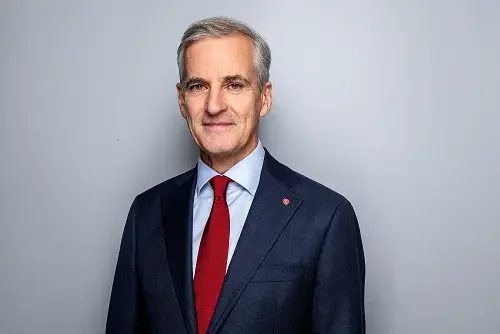
Prime Minister Store, Photo: NTB Communication / Office of the Prime Minister
The US wants to control the Arctic
The American president Donald Trump has said that the United States wants control of the Arctic. At present, it appears that the United States, in one way or another, is going to take control of Greenland. East of Greenland lies Iceland, which has no armed forces of its own, but is a NATO member and has had a defense agreement with the United States since 1951. Iceland is also set to hold a referendum on EU membership before the end of 2027.
Svalbard constitutes the eastern flank toward Russia in the Arctic, and it is natural that the United States regards the archipelago as strategic. Norway has full and unrestricted sovereignty over Svalbard under the Svalbard Treaty of 1920. The Soviet Union acceded to the treaty in 1935. Under Article 9 of the treaty, Norway may not establish military bases on the archipelago and the area must never be used for war purposes. The treaty is also signed by the United States.
The US can take control independently of NATO
If the United States were to seek military control of Svalbard, Russia would likely respond. It would therefore be smarter for the United States to take control of Norway. This would also give the United States control over Norwegian natural resources and, through them, influence over the EU. Even so, the threat from Russia is greater than the threat from the United States, considering what the two regimes represent. Because of Western sanctions, Russia has become highly dependent on China. The threat from Russia must therefore be understood to include the threat posed by the Chinese regime.
It is likely that the United States sees it as an advantage that Norway and Iceland are not EU members, and this is probably something the Trump administration will exploit. Among other things, the United States notes in its national security strategy that it will support parties and politicians who support its vision for the West. This implies that the United States will intervene in the EU debate both in Iceland and in Norway in order to prevent EU membership. And although many do not consider this possibility, it may also be an advantage for the EU that Norway and Iceland are not EU members. Society and Politics will examine this more closely in a later article.
After Donald Trump took office as president in January last year, the U.S. administration has been transparent and clear about what it wants to achieve. Unfortunately, so-called “experts” used by the mass media have urged the public to take the Trump administration with a grain of salt. The tone has, however, become more nuanced after the United States published its national security strategy in November last year, where U.S. plans are set out in black and white, and after the action against Venezuela’s president Maduro on January 3 this year.
European and Norwegian national leaders have found it very difficult to navigate geopolitics and have made several mistakes that could prove catastrophic for Europe as a continent. Among other things, the EU has not implemented the trade agreement concluded between Ursula von der Leyen and Donald Trump in Scotland in July last year.
Nine mistakes by Jonas Gahr Store
We will now take a closer look at the Norwegian Labour government's failed assessments, decisions, strategic choices and actions under the leadership of Prime Minister Jonas Gahr Støre. While this piece puts the spotlight on Støre, it is right to point out that the government was strongly shaped by Jens Stoltenberg's return to government as finance minister in February last year.
September 2024 – Memorandum with the United States on minerals cooperation
The government, at that time consisting of the Labour Party and the Centre Party, enters into a memorandum on future minerals cooperation with the United States under the Biden administration. The memorandum is signed by Foreign Minister Espen Barth Eide.
November 2024 – Store promises Trump mineral deliveries
Donald Trump wins the U.S. election, and Prime Minister Store sends Trump a personal letter of congratulations in which he writes, among other things:
“Being one of the largest suppliers of critical minerals to the U.S., with the largest-proven deposits of rare earth elements in Europe, Norway is committed to deliver sustainable supply chains for advanced US manufacturing.”
This is nothing less than a promise to the incoming American president of deliveries of critical minerals from Norway to the United States. It is entirely plausible that the American president considers Jonas Gahr Store to have broken this promise, which would be very serious for Norway.
January 2025 – Norway and the United States issue a joint report on critical minerals
A few days before Donald Trump is inaugurated as president for the second time, the United States and Norway publish a joint report on mineral extraction.
March 2025 – Decision to incorporate the EU regulation CRMA into the EEA Agreement
The EU is facing an acute shortage of minerals in general, and of critical minerals and rare earth elements used, among other things, in the defense industry. There are few resources of critical rare earth elements on the European continent, and none of them are being extracted. At the same time, it takes 10 to 15 years to establish mining operations. The EU’s mineral stockpiles would be depleted and weapons production halted after only a few months of war. The EU already struggles to deliver sufficient weapons to the war in Ukraine.
On February 28, Donald Trump expelled Ukrainian president Zelenskyj from the White House because he refused to sign a minerals agreement with the United States without receiving military security guarantees. Trump had also indicated that he was pursuing minerals in, among other places, Greenland, and he had announced tariffs. Taken together, the situation was highly unclear in the spring of 2025. Prime Minister Store and Finance Minister Stoltenberg said that Norway could be hit harder than other countries and that Norway was at the back of the line in negotiations with the United States. They argued that the solution was closer cooperation with the EU.
In a press release on March 28, the Labour Party government announced that it was working to implement the CRMA minerals regulation into the EEA Agreement. The government did not disclose that the EU regulation would encroach on Norwegian sovereignty and Norway’s control over Norwegian minerals. CRMA is more intrusive than if Norway had transferred control over oil to the EU in the previous century. No date has yet been set for parliamentary consideration of CRMA, but both the EU and the Labour Party are actively working to ensure that this happens as soon as possible.
The press release from the Labour Party government was highly premature given the stage of CRMA in the decision-making process. It instead appears to have been a strategic exercise aimed at signaling to the United States that the government was reserving Norwegian minerals for the EU. The press release came only four days before Donald Trump publicly announced the tariff rates he had warned about since January.
What the Labour Party government likely saw as a smart move to protect Norwegian mineral resources from the United States was in reality an unwise move that signaled to Trump that Norway was not willing to cooperate. Seen in light of the promises made by Store in the congratulatory letter only months earlier, this is striking, even from a traditional diplomatic perspective, and may have been perceived as directly hostile by the Trump administration.
April 2025 – Store and Stoltenberg meet Trump at the White House
Despite the Norwegian prime minister having claimed in Norwegian media that Norway would be far back in the negotiating queue, Norway became one of the first countries to meet Donald Trump after his inauguration and tariff warnings. Norwegian media credited Store and Stoltenberg for this, while it is more likely that Trump wanted to assess where the Labour Party government actually stood regarding the minerals that had been promised.
In the weeks before the meeting, Trump had said that military support from the United States comes through trade and arms agreements. The United States had imposed a 15 percent tariff on Norway, and this became the media’s main focus ahead of the White House meeting on April 24. Norway exported approximately 3.7 percent to the United States, while imports were somewhat higher. In the broader context, trade between the United States and Norway must be described as insignificant for the United States. Trade in minerals would make Norway far more interesting.
The meeting did not result in anything concrete, but it was confirmed that minerals and weapons were among the topics discussed. At this point, Norway was approaching a decision on the purchase of new frigates.
The meeting was widely portrayed as undramatic. The press described it as a success and emphasized that Store and Stoltenberg were not expelled, as Zelenskyj had been. Both Norway and the United States said that tariff negotiations would continue. Nevertheless, the U.S. administration emerged with important knowledge about the government’s new close relationship with the EU and where its priorities lay.
Store and Stoltenberg thus signaled that Norway would not enter into agreements with the United States that could harm the EU-oriented approach planned by the Labour Party government. This message was likely deliberately conveyed in Washington, but it was neither smart nor forward-looking.
July 2025 – The Labour Party government fails to secure a trade agreement with the Trump administration
The Labour Party government fails to negotiate a trade agreement with the United States before the July 30 deadline, and Norway is subjected to tariffs from August 7. There are indications that the government did not wish to succeed in the negotiations, despite the minister of trade saying that negotiations had been active and difficult, without going into detail. The consequences for Norwegian industry are discussed in the press, but the security implications are largely overlooked.
Both Norwegian and European media appear to place uncritical trust in the European defense alliance and the strategy for a defense-secure EU by 2030.
While the United States has secured mineral access around the world over the past year, the EU has not improved its access to minerals. The opposite has occurred. The EU has been severely affected by the U.S. minerals agreement with Ukraine in May, which gives the United States control over 50 percent of Ukraine’s minerals. Ukraine is Europe’s largest mineral producer, with large parts of its resources located in Russian-occupied areas. This has placed the EU in conflict with the United States over whether these areas should be ceded to Russia in a peace agreement.
Defense security depends on self-sufficiency in minerals. The EU plans to be 35 percent self-sufficient by 2030, an ambitious plan that does not account for mineral needs in wartime. The risk of war is imminent, and neither Russia, China, nor the United States is waiting for Europe to develop defense capability. The EU risks being reduced to a pawn in the struggle for global power.
Europe cannot become defense-secure in the foreseeable future. Minerals from Norway are important for the EU, but neither Norwegian nor Ukrainian minerals can make Europe self-sufficient. These resources are already factored into the EU’s CRMA regulation, which does not account for wartime mineral needs.
This situation makes it a major security risk for Norway not to enter into a trade agreement with the United States. Donald Trump has made it clear that the United States prioritizes military support for countries that have trade agreements with the United States. At this point, the situation was far clearer than when Store and Stoltenberg met Trump in April. This casts the Labour Party government’s reliance on a weakened EU in a sharper and more troubling light.
August 2025 – Norway purchases frigates from the United Kingdom
In late August, it is announced that the government has decided to purchase frigates from the United Kingdom, rejecting the United States. This must already have been known to the United States, given that no trade agreement had been concluded. The decision nevertheless reinforces the impression that Norway does not prioritize its relationship with the United States.
October 2025 – Appointment of the Nobel Peace Prize laureate
Donald Trump expects to receive the Nobel Peace Prize for having entered into a memorandum on peace in Gaza. The peace agreement, however, comes too late for Trump to be considered for that year’s award, according to the Nobel Committee. Trump is likely to believe that the Norwegian government should have intervened. The choice of Maria Corina Machado is widely interpreted as geopolitically motivated.
December 2025 – Seabed minerals
The final negotiating card Norway held disappeared during budget negotiations between the Labour Party, the Centre Party, the Red Party, the Green Party, and the Socialist Left Party. In the budget agreement reached, seabed mineral extraction was postponed by another four years. Norway could have entered into an agreement with the United States on seabed minerals, but this option has now been closed.
Summary
For each of the events described above, the Labour Party government had the opportunity to change both tactics and direction. Norway has no negotiating leverage left unless the government changes course and reverses some of its decisions. The negotiating window may still be open, but Store must acknowledge that once the window is fully closed, coercion could be the only alternative.
Society and Politics will return with an article examining the different scenarios that may unfold next in the geopolitical game.
Perhaps you think it was impossible to foresee what would happen. It was not that difficult; Society and Politics foresaw it. See the article from March 5 last year.
This article is intended as information and documentation for the future record.
SOURCES
Regjeringen (Government of Norway)
Congratulatory letter from Jonas Gahr Støre to Donald TrumpEU (European Union)
European defence readiness 2023PBS News (Public Broadcasting Service)
A timeline of Trump’s tariff actionsThe Guardian
A Swedish mine becomes the first to extract critical minerals in the EUBloomberg
US firms are snapping up the rare earths Europe needs to rearmGovernment of Iceland
National securityStore norske leksikon (The Great Norwegian Encyclopedia)
The Svalbard Treaty
Content on Society and Politics is based on reliable sources and actual events, providing a news-oriented perspective intented for further debate. To access the article’s author and the related debate, membership on Hudd is required.
