
The EU demands control over Norwegian resources
The European Union is exploiting the geopolitical situation to centralize power in Brussels and refers to the new EU as the 28th Regime. This will have major consequences for Norwegian welfare and sovereignty.
February 26, 2026 | NORWEGIAN POLITICS
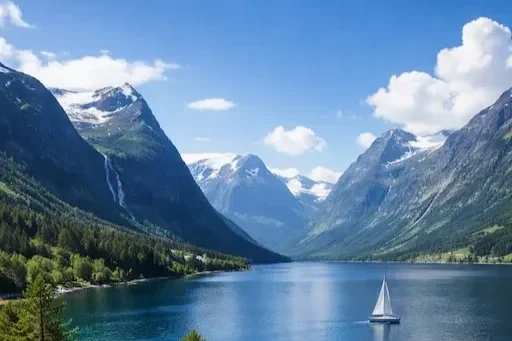
Image by AI/S&P
Centralization of Power
Through the EEA Agreement, the EU has gained steadily increasing legal authority over Norwegian natural resources. The background is that Central Europe faces a major deficit in natural resources. Over 32 years, the Central European countries, which hold the greatest power in the EU, have gradually introduced new directives and regulations in which they first secure access to, and subsequently control over, other countries’ resources, including Norwegian resources. They have achieved this by developing an intricate framework of rules and legislation that in practice ensures EU control.
A directive is a law that a country must implement, but the country may adapt the law to some extent to its own conditions, provided these do not restrict the directive. A regulation is the strictest form of law in the EU legal framework and must be implemented as written in the country’s legislation. A very large number of EU directives are later converted into regulations. This method is used to bring member states on board with legislative changes without creating excessive resistance in the member states. However, EU leaders believe this results in new EU laws being introduced too slowly and have announced that more EU regulations will be introduced in the future, and that fewer laws will first proceed as directives. For the same reason, there is an expressed desire to restrict the veto right. The power-consolidating and authoritative direction the EU is now taking has been termed the 28th Regime.
Over the years, Norway has incorporated more than 14,000 EU laws into Norwegian legislation. There are no figures on how many Norwegian laws have had to yield to these, but it nevertheless represents a significant dilution of Norwegian law and Norway’s sovereignty.
Norwegian Natural Resources
The EU now seeks to secure greater control over Norwegian hydropower by introducing tariffs on electricity delivered through subsea cables to Central Europe (ACER). This is a typical strategy from the EU: they enter into agreements to purchase Norwegian resources through a directive, and subsequently impose tariffs to control those same resources in various forms. The recently introduced tariff on ferroalloys is one example; another is tariffs on processed fish.
Last week, the EFTA Court ruled that the Norwegian continental shelf is included in the EEA Agreement. This means that the EU will next introduce new directives and regulations through which it will gain control over the resources on the seabed. This does not only mean oil and gas, it will also include mineral deposits. The EU will take control over Norwegian minerals through an intricately constructed minerals regulation called the CRMA (Critical Raw Materials Act). The Labour Party announced that it would incorporate the CRMA into Norwegian law already one year ago and has adapted a new Norwegian minerals law accordingly. The ruling from the EFTA Court means that through the CRMA, the EU will not only gain control over minerals on land, but also on the seabed. The minerals regulation will in practice result in the EU gaining control over Norwegian mineral resources; read more in the Petition on Control over Norwegian Minerals.
Norwegian Sovereignty and Welfare
It is highly demanding for the Norwegian population to gain an overview and understanding of what EU regulations entail for Norway. The Norwegian press is failing in its social responsibility in this field. The EU is more decisive for Norway’s future than we are given the impression of. To put it in a simple metaphor: imagine Norwegian natural resources as raw juice, and the EU continuously adds more water, turning the raw juice into a very weak and diluted lemonade. We are in the process of handing over a country to our successors that is not rich in natural resources, even though they exist in large quantities. This will lead to our welfare being reduced and our sovereignty being erased by a more authoritarian EU.
Some may think there are no alternatives. Of course there are. Norway can restore both lost welfare and lost sovereignty. The EU is entirely dependent on Norwegian resources, especially in a time of global unrest; they need resource deliveries from the European continent. Norway holds the strongest negotiating card in all of Europe. Our natural resources are in demand across the world, and we should enter into trade agreements not only with the EU, but also with other countries. We should diversify trade across multiple partners to minimize risk. It is poor trade and security policy to be dependent on one major trading partner, even though the part of industry that has made itself dependent on the EU will tell you otherwise.
Society and Politics encourages the Norwegian population to familiarize themselves with what the EEA/EU actually entails and not allow themselves to be influenced by the rhetoric of fear promoted by some Norwegian political parties. Fear rhetoric is a deliberate strategy to gain support for the centralization of power in Brussels, where many Norwegian politicians are motivated by their own career opportunities. Let us make it clear: it is not the case that Norway would receive enough votes in the European Parliament to safeguard Norwegian interests.
SOURCES
Teknisk Ukeblad
The EU directive they have warned about for years is now comingFinansavisen
Shock proposal: EU wants to impose a 25 percent fee on Norwegian grid tariffsGovernment of Norway
Consultation – Proposal for new regulation on trans-European energy infrastructureThommessen
EFTA Court rules that the EEA Agreement applies on the Norwegian continental shelfFinansavisen
New ruling could have major consequences for the Norwegian continental shelfEuropean Union
Statement by President von der Leyen with President Costa following the informal EU leaders’ retreat (28th Regime)European Union
HR/VP Kaja Kallas: Keynote speech at the European Defence Agency Annual Conference 2026European Union
Critical Raw Materials ActEUR-Lex (European Union)
Critical Raw Materials Regulation
Content on Society and Politics is based on reliable sources and actual events, providing a news-oriented perspective intented for further debate. To access the article’s author and the related debate, membership on Hudd is required.
